

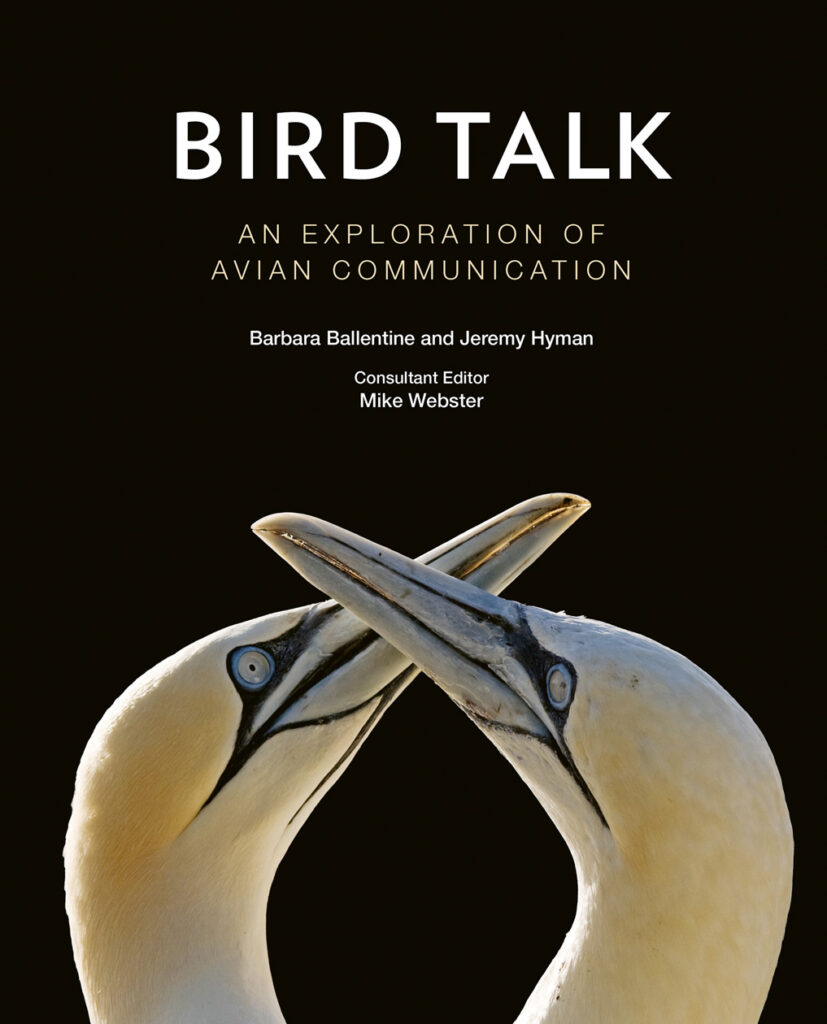
Hardback | May 2021 | $ 44.99
ISBN: 9781486315307 | 192 pages |
254 x 203 mm
Publisher: CSIRO Publishing
Colour photographs, Illustrations
WA Naturalists’ Club accession number A4046
Bird Talk is illustrated with beautiful colour images and clear explanatory diagrams, and it is a pleasure to peruse. Seven theme-based chapters follow an introductory discussion of What is Communication? and each chapter could be read separately. A useful bibliography of further reading is organized according to each chapter’s theme and the index uses common names of bird species.
The introduction refers to signal detection theory and the sensory systems of vision and hearing. Communication Channels considers: vocalizations, non-vocal sounds, plumage, olfaction, and movement displays. Male-Female Communication looks at: favoured traits, female mating preferences, song, plumage, and displays and dances. Territoriality and Dominance deals with: competition and defence, song as defence and threat, threat assessment, and appearance and dominance. Parent-Offspring Communication includes: conflict in bird family life, and begging signals. Warning Signals are: alarm calls, non-vocal alarm sounds, eavesdropping, deception, and visual displays. Group looks at: flocks, contact calls, group recognition, and food call. Communication in a Noisy World covers: environmental noise, and consequences of altered signalling. Concepts discussed are supplemented by examples from around the globe, including all continents and oceans. These include references to birds in Australia, such as: Superb Lyrebird; Zebra Finch; Galah; Great Egret; Bowerbird; Budgerigar; Crested Pigeon; Horsfield’s Bronze Cuckoo; Superb Fairywren; Large-billed Gerygone; Little Bronze Cuckoo; Noisy Miner; Red-rumped Parrot; Parakeet; Buff-banded Rail; Chestnut-crowned Babbler; Crimson Rosella; Silvereye; and White-browed Scrubwren.
This book makes the findings of recent scientific research about avian communication accessible for general readers, keen bird watchers and students. It is a welcome resource for educational and community libraries, as well as personal collections.
Gabor Bedo