Northern Suburbs Branch Meeting: July 2021

We completed our Geology mini-series with a presentation on micro-minerals by John Reeve who began by telling us he joined the Junior Naturalists after the first of numerous encounters with the inspirational Harry Butler. This resulted in him spending many Saturday afternoons in the WA Museum’s Mineral Gallery before each club meeting.
Another early highlight of his ‘‘hobby” was to receive an unexpected response to a letter he wrote to the Smithsonian Institute. Not only to his surprise, did they respond, they included a magazine which lead to John being able to make contact and trade with overseas collectors.
After finishing High School in 1964 John joined the mineral exploration arm of American company Pickands Mather and while working for them completed a Diploma of Metallurgy at Perth Technical College at night school.
After more time with Pickands Mather John joined the staff of Western Mining Corporation’s Exploration Division in Kalgoorlie which, because of its scientific and innovative approach to exploration, he likened to a university.
John’s last job was as Curator of the Edward deCourcey Clarke Earth Science Museum in the School of Earth Sciences at the University of Western Australia, a post he held for eight years before retiring.
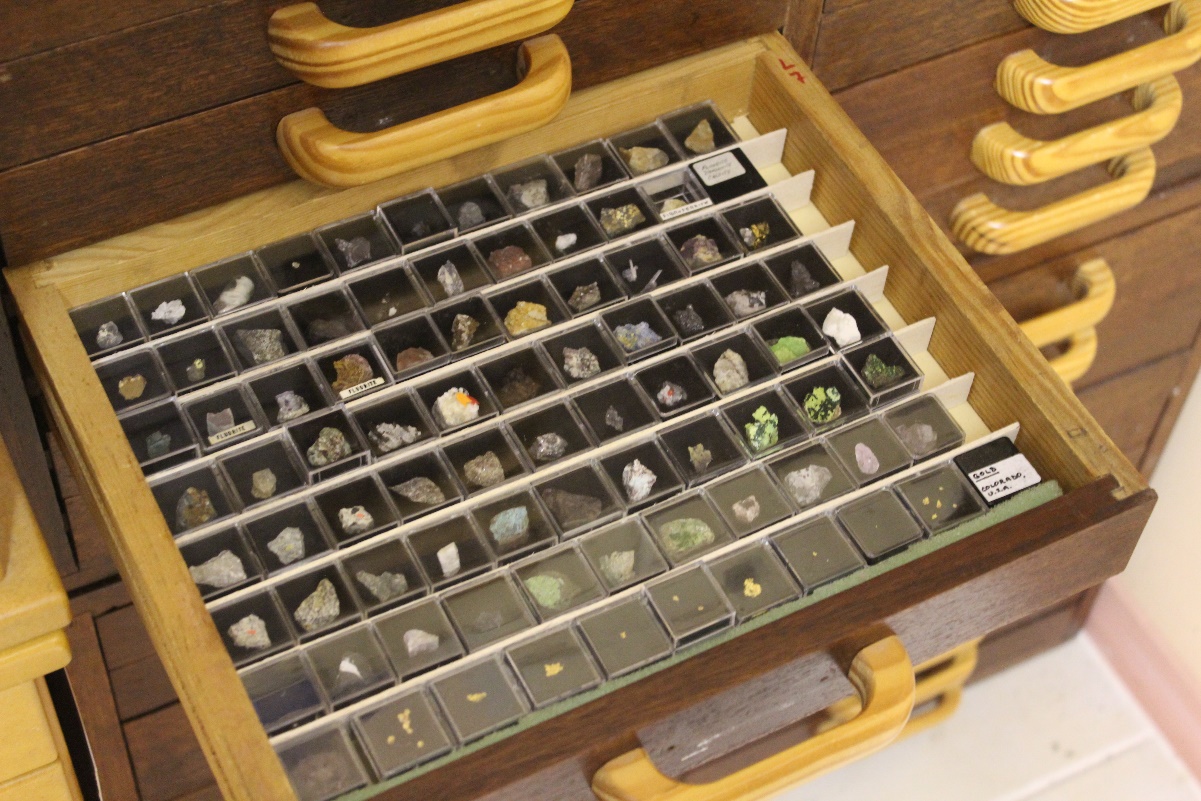
John explained that while museums require large pieces of rocks or minerals so they can be displayed to the public, private collectors like himself can concentrate on collecting much smaller specimens. This has both spatial and financial advantages. As well as being much cheaper to buy, the samples can be sent through the post, often with multiple samples in the one package, and when they arrive they require very little room to display and store.
While many of the audience had seen the beautiful photos of large mineral specimens shown by Peter Downes in April, the micro-minerals in John’s photos were on a very different scale.
John has more than 2,500 micromounts which he said are essentially micro specimens that require a binocular microscope to fully appreciate the mineral crystals and their associations.
Among the photos of crystals he showed were:
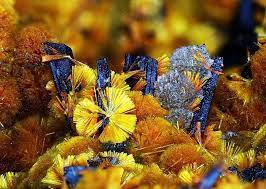
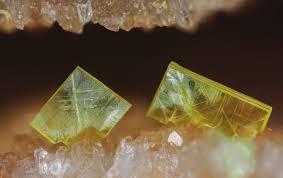
- Yellow tetragonal crystals of Wulfenite (PbMoO4) from Whim Creek, WA
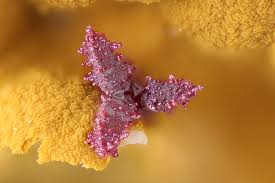
- Blood red cubic crystals of Vanadinite (Pb5(VO4)3Cl) from Red Cloud mine, Yuma Co., Arizona, USA
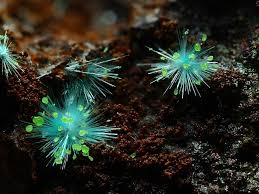
- Ruby-red monoclinic crystals of Erythrite (Co3(AsO4)2.8H2O) from Mount Cobolt, Queensland
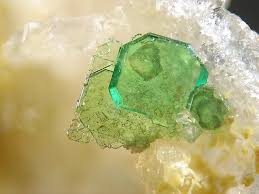
- Crystal inside a crystal – Anatase (TiO2) in quartz from Norway.
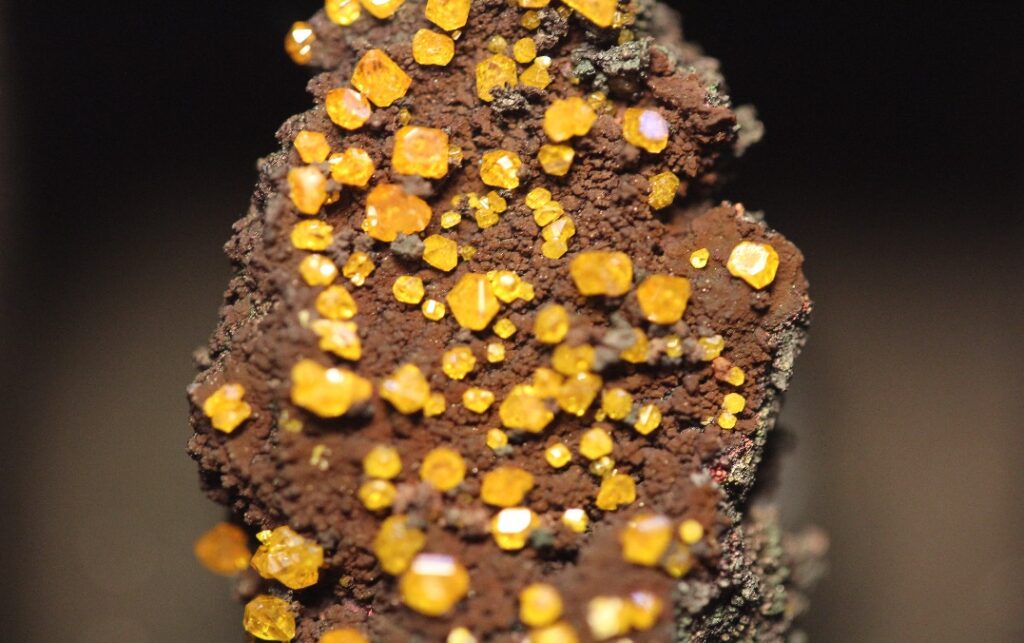
Wulfenite from Whim Creek, WA 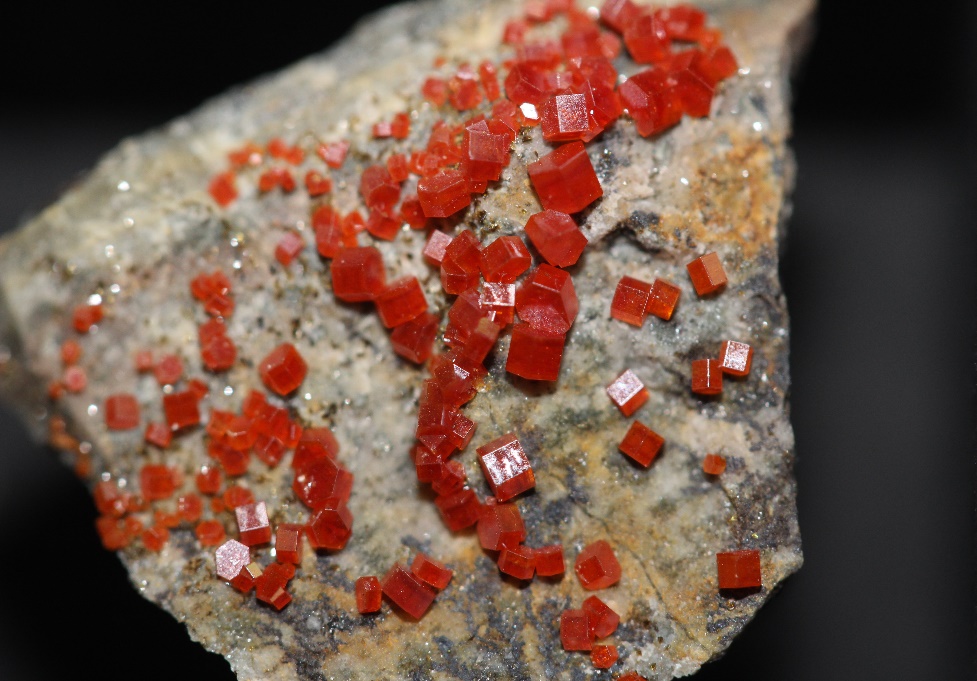
Vanadinite, Red Cloud Mine, Arizona, USA 
Erythrite, from Mount Cobolt, Queensland

A crystal inside a crystal – Anatase in Quartz from Norway
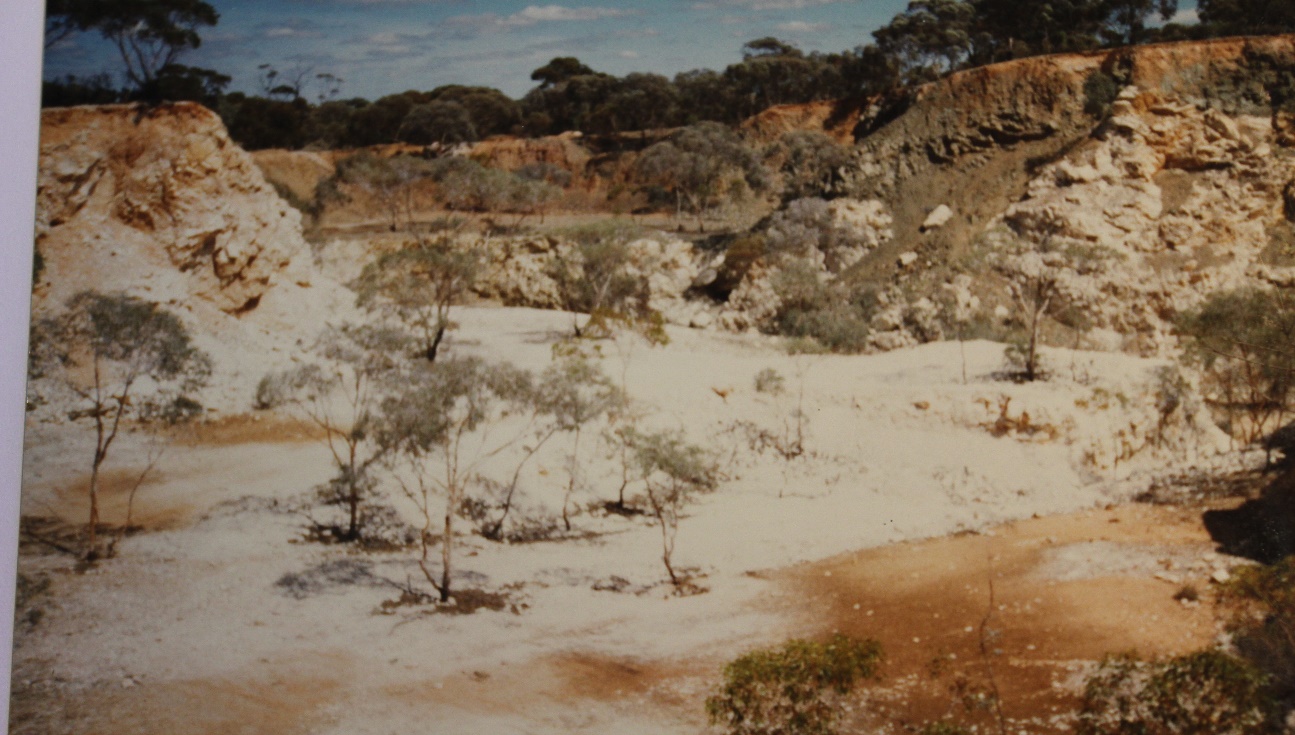
John finished his presentation by discussing his interest in pegmatitic minerals. Because pegmatites form during the final stage of a magma’s crystallization they often contain exceptionally large crystals and complex minerals, some of which are rarely found in other types of rocks. Many of Western Australia’s pegmatites have been mined for precious metals, making their spoil heaps ideal fossicking sites. John showed photos of some of his favourites including the excavated Londonderry pegmatite near Coolgardie.
After his talk we viewed some of John’s spectacular micromounts and other mineral specimens he had brought along.
A very interesting and informative conclusion to our mini-series.
Don Poynton
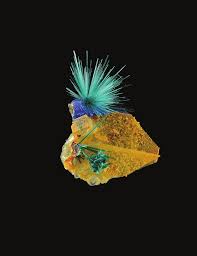
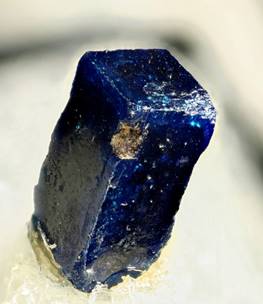
Boleite