

Surprise, surprise – the stormy weather held off with quite a bit of sunshine on Sunday July 20th and the few people who were expected (weather wise) turned out to be 30 enthusiasts, including some visitors to the Reserve who were welcomed to join our group! The planned 45 minute walk from the sandy heath area around to the Jarrah/Marri laterite area was forgotten, for the scheduled time slot took the diligent searchers no further than just one quarter of the route; such was the wealth of material that was unearthed. And unearthed literally, for two large Cortinarius archeri fungi (their beautiful purple colouring very faded) were soon excavated from the sandy soil, examined closely and returned to the soil. Amanita Xanthocephalas were more common and a rich, rusty brown Tubaria protruded from a Marri gumnut! A Phylloporus, related to the Boletes yet gilled was also discovered emerging from the litter. In all 11 true fungi were recorded. The Davisons presented us with some pustule-like slime moulds on a slither of bark. Nice to have these two experts with us.
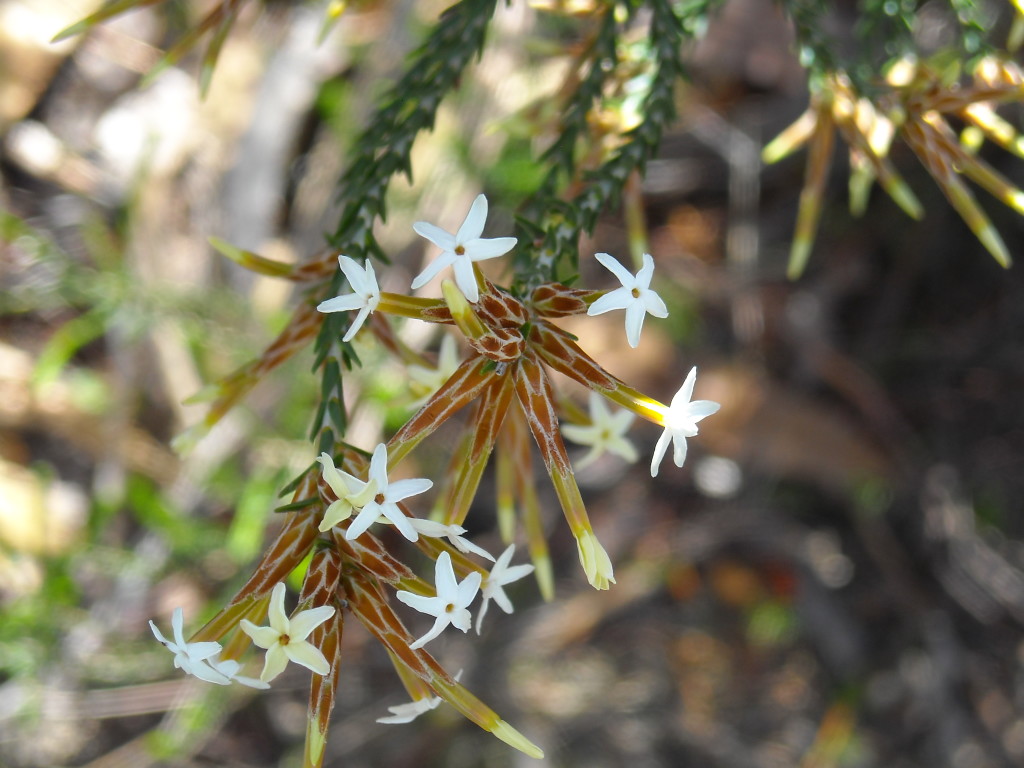
And so to the vegetation. Six trees including an immature Nutsia floribunda, the Christmas Tree and not yet in flower, were recorded . Six out of the eight shrubby plants were flowering well including Hakea trifurcate, the hakea with two distinct types of leaves (a survival trick?). There were around 12 flowering plants at ground level including one greenhood orchid (rufa) and an interesting little boronia – Boronia ramosa – a diminutive thing with pale blue, tinyflowers.

Our feathered friends numbered 14 out of the 24 recorded for the Reserve by Nats members. Not bad for a late, cloudy morning’s wander, several being identified by their calls.
A handful of the assembly accepted the invite to the warmer Griffiths domain for their lunches and hot beverages and scones, both Peg’s and Hirono’s. A well worthwhile excursion.
CALM’s plan in 1999 recommends that Talbot Rd Nature reserve be managed to conserve its very high nature conservation values and to protect the significant Aboriginal values. Many of the plants that come together to create these habitats are unique to the Swan Coastal Plain and the Darling Range. The area surrounding Talbot Reserve contains many archaeological sites as well as burial sites. Blackadder Creek, which runs through the Reserve, is an important spiritual dreaming place for the Noongar people.
Kevn Griffiths