

To emphasise a shift in focus from nudibranchs to the myriad other members of the phylum Mollusca, our November guest speaker, Lisa Kirkendale, Curator of Molluscs at the WA Museum (WAM), rearranged her talk to be Other WA molluscs and nudibranchs.
By doing so, Lisa was able to cover subtopics ranging from the geographical distribution of WA’s molluscs (endemic fresh water mussels to offshore reef nudibranchs) to their size distribution (micromolluscs to giant clams).
Lisa introduced us to molluscs by using her own unique classification which includes “Pretty” (Gastropoda- snails and allies), “Tasty” (Bivalvia-clams and allies), “Brainy” (Cephalopoda- squids and allies) and “That is a mollusc?” (Scaphopoda- tusk shells), along with “Unknowns” such as some deep-sea limpet-like molluscs and worm-like micromolluscs.
The position at the WA Museum attracted Lisa because it gave her the opportunity to utilize her experience in both temperate and tropical systems gained in the Indo-west Pacific region during her graduate studies at the University of Florida.
In her own words, “I am both excited and frightened by the scale of the Western Australian ‘molluscape’.”
As an example of this vastness, Lisa presented material from the five-year Kimberley Collection Project sponsored by Woodside Energy. This project was undertaken to collect and document the biodiversity and abundance of multi marine taxa over a project area that covered 475,000 km2. Between 2009 and 2014, over 2700 hours were spent surveying 181 stations.
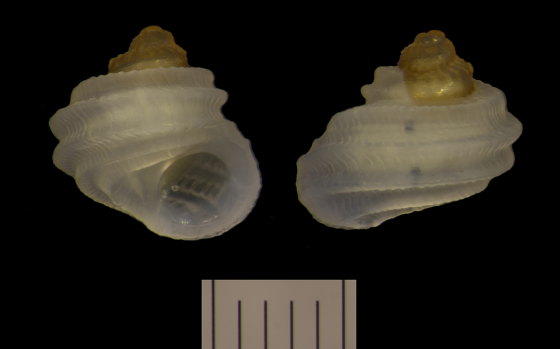
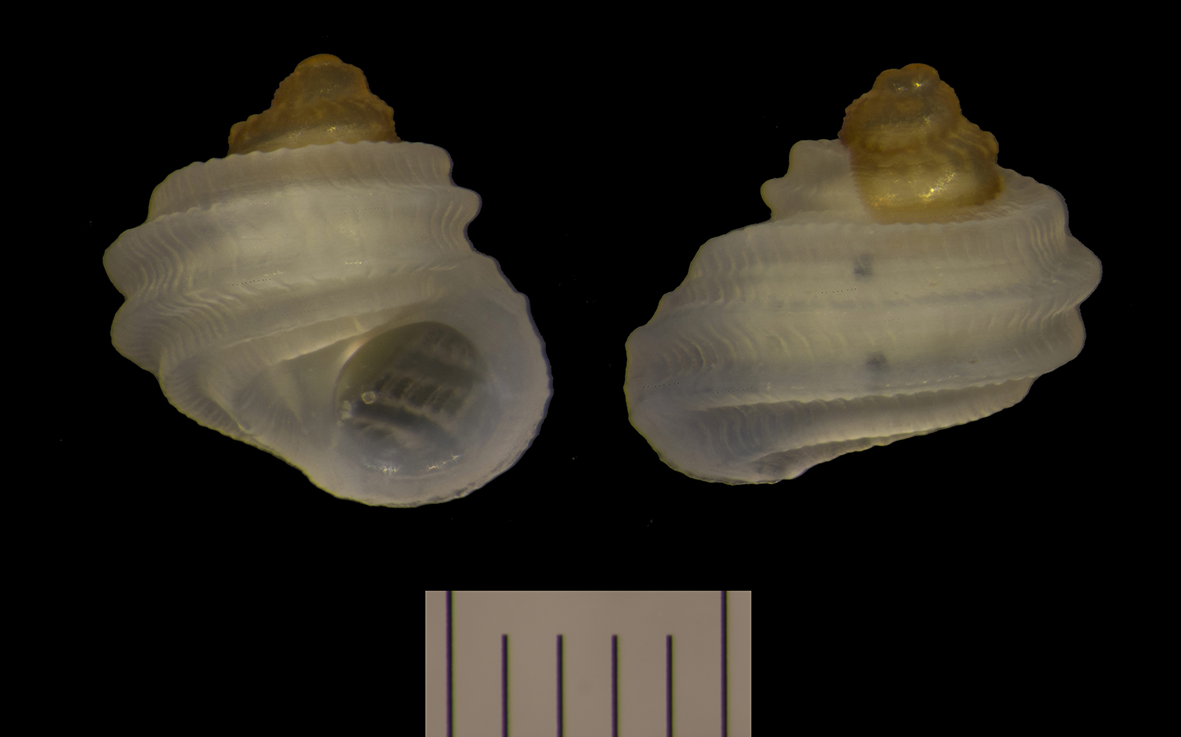
Micromollusc Tornidae sp, approx. 8 millimetres width. Photo Peter Middelfart
We learnt:
- The project resulted in 15,000 WAM vouchers (records) across aquatic zoology.
- By the end of the analytical process the total number of mollusc species recorded in the Kimberley is expected to be over 1900, up from 1784 collected prior to the project.
- So far more than 40 new species of molluscs have been identified.
- The surveys recorded approximately equal numbers of species from inshore as for offshore.
- There is distinct inshore and offshore endemism.
- Lisa then singled out the Cardiidae or cockle as being of special interest, particularly as the family now includes the giant clams.
- We learnt that:
- The survey will almost double the previous 31 known species
- Several new species will be described
- All endemic WA cardiids are restricted to coastal WA, none are found offshore
- There is a higher similarity between the species from offshore reefs and Indonesia than between inshore and offshore WA.
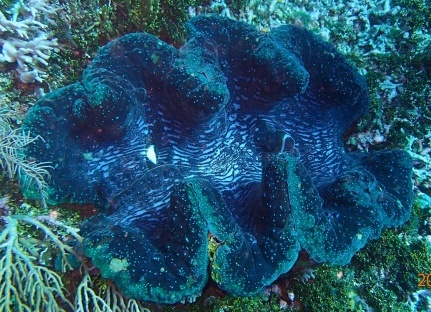
giant clam (approx. >1 m width. Photo Lisa Kirkendale (Hibernia Reef)
One of Lisa’s co-researchers, Jingchun Li, previously of Harvard University, is currently running DNA sequencing on over 30 species of Tridacnines and Fragines to ascertain the relationship between them using phlyogenomic reconstruction. Because both taxa are known to harbor photosymbiotic zooxanthellae, a crucial step in the process is the removal of the signature of the symbionts.
The importance of the Kimberley project was not only in revealing the biodiversity of the newly created Kimberley marine parks, but in providing baseline data for comparison following expected bleaching events, especially with unprecedented high Sea Surface Temperatures (SSTs) predicted this coming year.
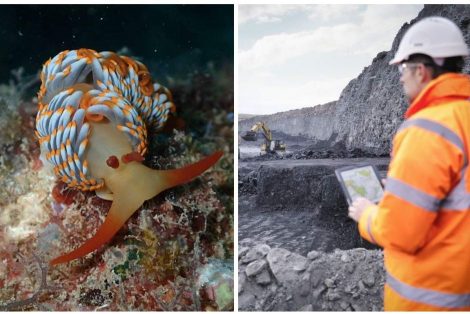
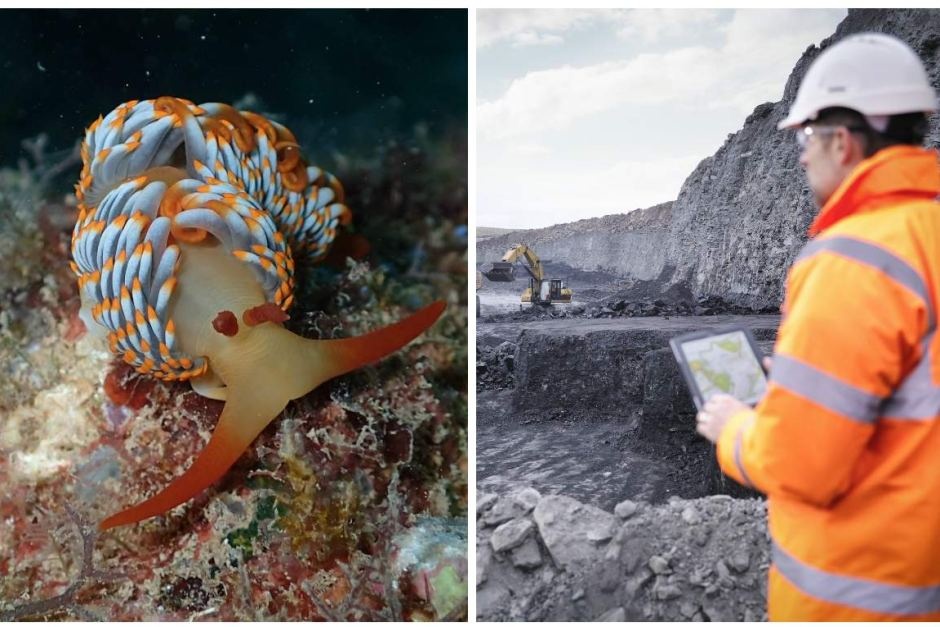
*Photo credits Clay Bryce/Getty Images from http://www.abc.net.au/news/2016-08-20/moridilla-fifo/7765598
Lisa ended her presentation with photos of some very colourful nudibranchs including Moridilla fifo (currently under description) whose colouring is similar to “hi-vis” clothing worn by many of the “fly-in, fly-out” people engaged in the Northwest’s resources industries (aka FIFO workers.)
Don Poynton