

Speaker David Knowles from ‘Spineless Wonders’ grabbed our attention immediately by questioning whether, as naturalists, we needed to recalibrate how we think about our local fauna. We spend a disproportionately large amount of time looking at mammals and birds, which only make up just over one percent of Western Australia’s land fauna. In contrast, the insects which make up almost eighty percent are often overlooked.
David then led us through the ten methods he uses to trap invertebrate fauna. These include funnel traps and buckets (blue seems to be the most productive), pitfall traps (the most successful for terrestrial macrofauna), targeted netting (very productive around eucalypts in flower) and blind netting and light traps for flying insects.
Surveying doesn’t have to be expensive. As our Young Nats learn, a beam from a good torch can generate reflections from the eyes of mammals, some birds, reptiles, frogs, spiders and insects. If it’s scorpions you are after, a UV torch is the way to go.
New technology in the form of LED lighting has increased the portability of light traps and also allows for the easier use of different parts of the light spectrum (various types of insects are attracted to different parts of the spectrum.)
David then moved on to the many threats our invertebrate fauna are facing. These include:
- increased salinity: leading to loss of our riparian, swamp, lake and estuarine habitats
- introduced insects: the Argentine ant is on the increase in Albany, Bunbury and parts of Perth
- feral birds and mammals: foxes and cats prey on more invertebrate species than vertebrate species
- pathogens: killing off such important drainage line specialists as the Flooded Gum ( rudis), Banksia and the Bloodwood or Marri (C. calophylla)
- inappropriate external lighting: many insectivorous mammals, birds and spiders “learn” that outdoor lighting is good source of food both at night and the morning after. Low pressure sodium lighting is the most conservation friendly outdoor lighting.
- Homo sapiens: we are destroying vast areas of invertebrate habitat by clearing and burning, and road kill of invertebrates far exceeds that of vertebrates.
The third part of David‘s presentation consisted of outstanding photos of some of the macrofauna collected at Bush Forever site #325 along the coast at Iluka, most of which he had not collected before. Included were spiders, slaters, beetles, millipedes, hoppers, ants, moths, stick insects, thrips, and skinks.
David concluded by bringing us back to his starting point by appealing to us to imagine a world where all remnant bushland areas had inventory reports that demonstrated evidence for more than three percent of macrofaunal biodiversity and a world where all flowering plant species had pollinator lists associated with them!
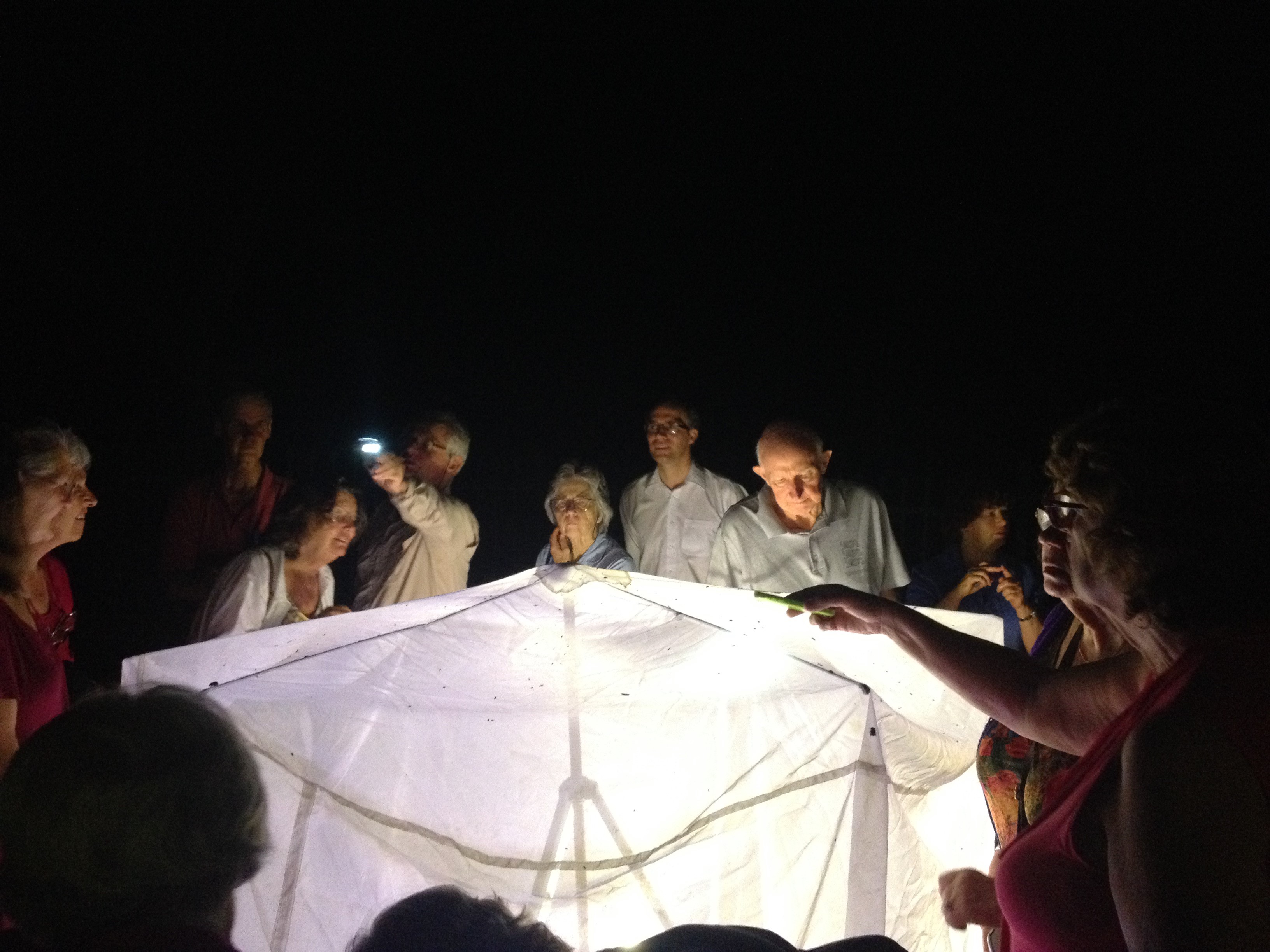
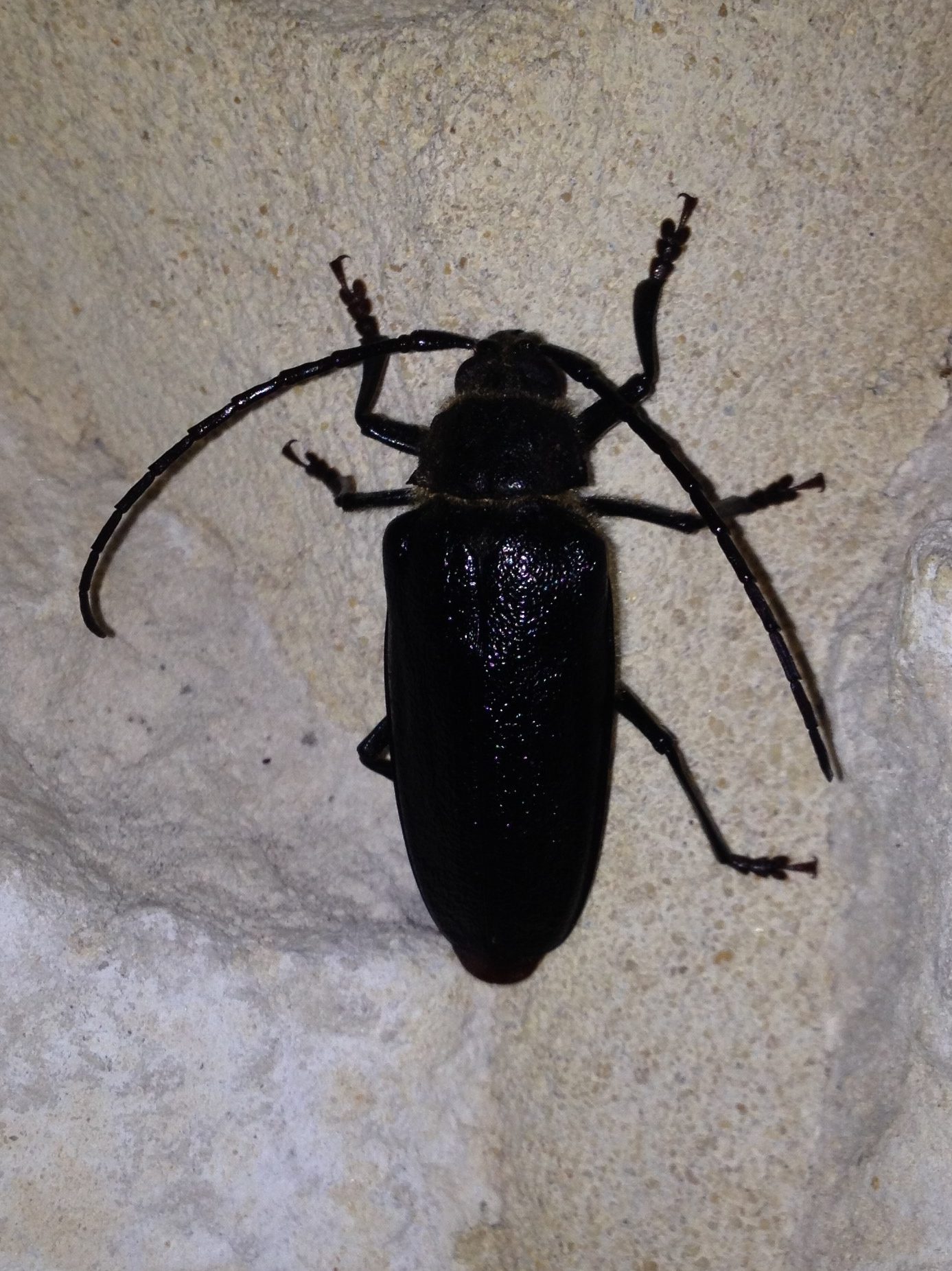
After the meeting members had the opportunity to view the insects that had been attracted to a light trap which David had set up before the meeting. However, few people got to see the best ‘catch’ for the night: a large longhorn beetle (probably Dioclides prionoides), which settled on a wall just after the crowd dispersed.
(below left, D Poynton).
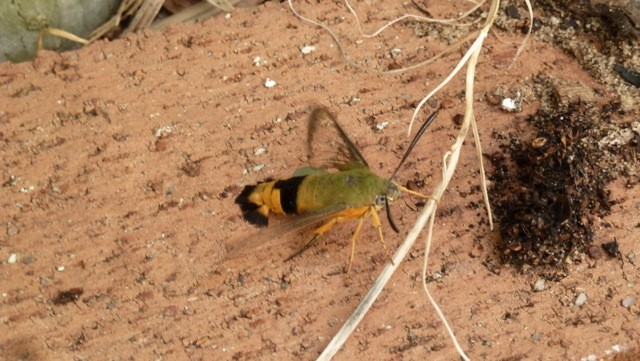
For David, the highlight was probably the photo produced by member Vicky Gouteff of a moth she found in her back yard (above right, V Gouteff). David’s first guess was a Hummingbird moth, a tropical species from Asia, Africa and Australia. Subsequent investigation revealed that it was the Gardenia Bee Hawk Moth, Cephonodes kingii See more at Butterfly House.
A number of tropical species of flying insects have been able to penetrate south after good rains and favourable winds. Vicky’s record may represent a south western range extension.
Don Poynton