

Kwinana Rockingham Mandurah Branch, 22 February 2026
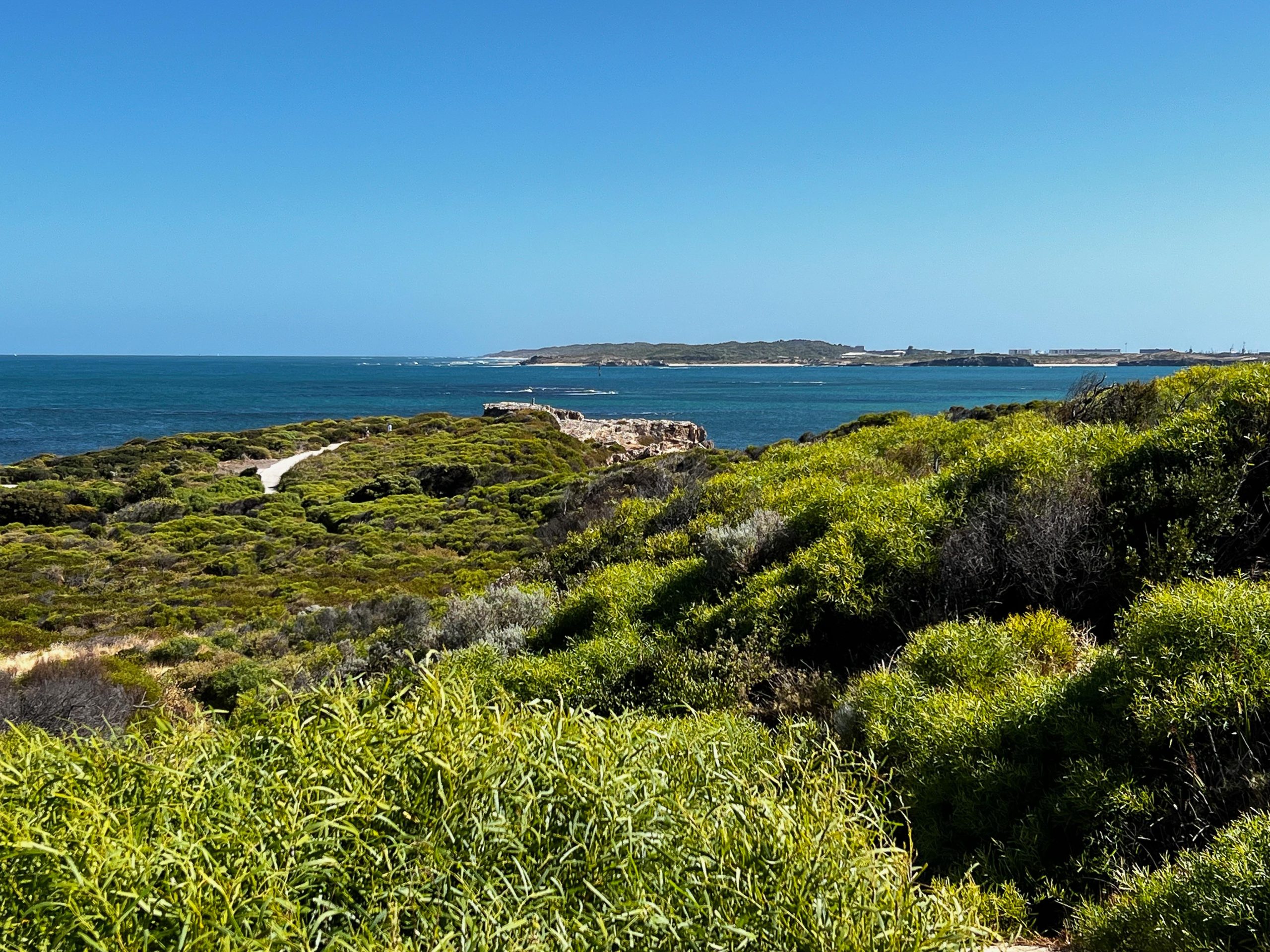
The February Excursion was to Point Peron in Rockingham. Nine members attended on a beautiful morning with perfect temperature for our walk.
We started from the car park closest to the school camp and made our way along the seaside footpath, with views across to Garden Island. At the first beach with stairway access, we walked onto the beach and saw freshly deposited seaweed and seagrass washed up on the beach. Daniel separated some of the species for photographs and explained what he had found. There were no shorebirds on the beach, possibly due to the large number of visitors at the reserve that morning.
Along the path, Rottnest Island Tea Tree (Melaleuca lanceolata) was in flower, and a golden coloured Lichen was spotted on the trunks of older Acacia sp. Rhagodia baccata (Berry Saltbush) was widespread and in flower, and together with Acacia rostellifera was in surprisingly good condition despite the hot and dry summer.
The number of bird species sighted was very low compared to previous years, with only 9 confirmed species (a few small birds were active in the shrubbery, but no definitive identifications were achieved). Singing Honeyeaters were the most common sightings, with other species including Spotted Dove, Silver Gull, Willie Wagtail, Great Pied Cormorant, Caspian Tern, Welcome Swallow, Rock Dove, and Whistling Kite. It was surprising that only one Cormorant species was present; typically, we would see two or three others.
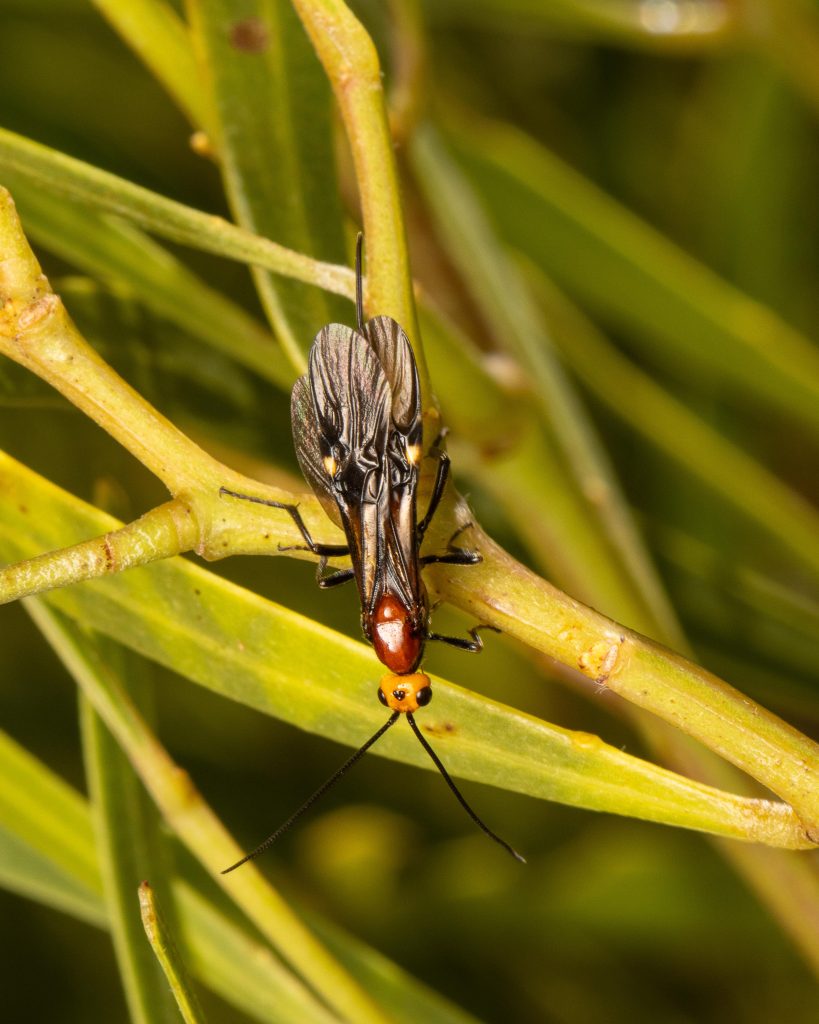
We spotted at least 5 species of wasps, including one of the Thread-waisted Wasps, Family Sphecidae (identified as Prionyx globosus on iNaturalist, but Daniel was unsure if that was correct); lots of Scoliid Wasps (Family Scoliidae) were buzzing around patches of Rhagodia baccata and a wasp from the Genus Callibracon was spotted in an Acacia rostellifera.
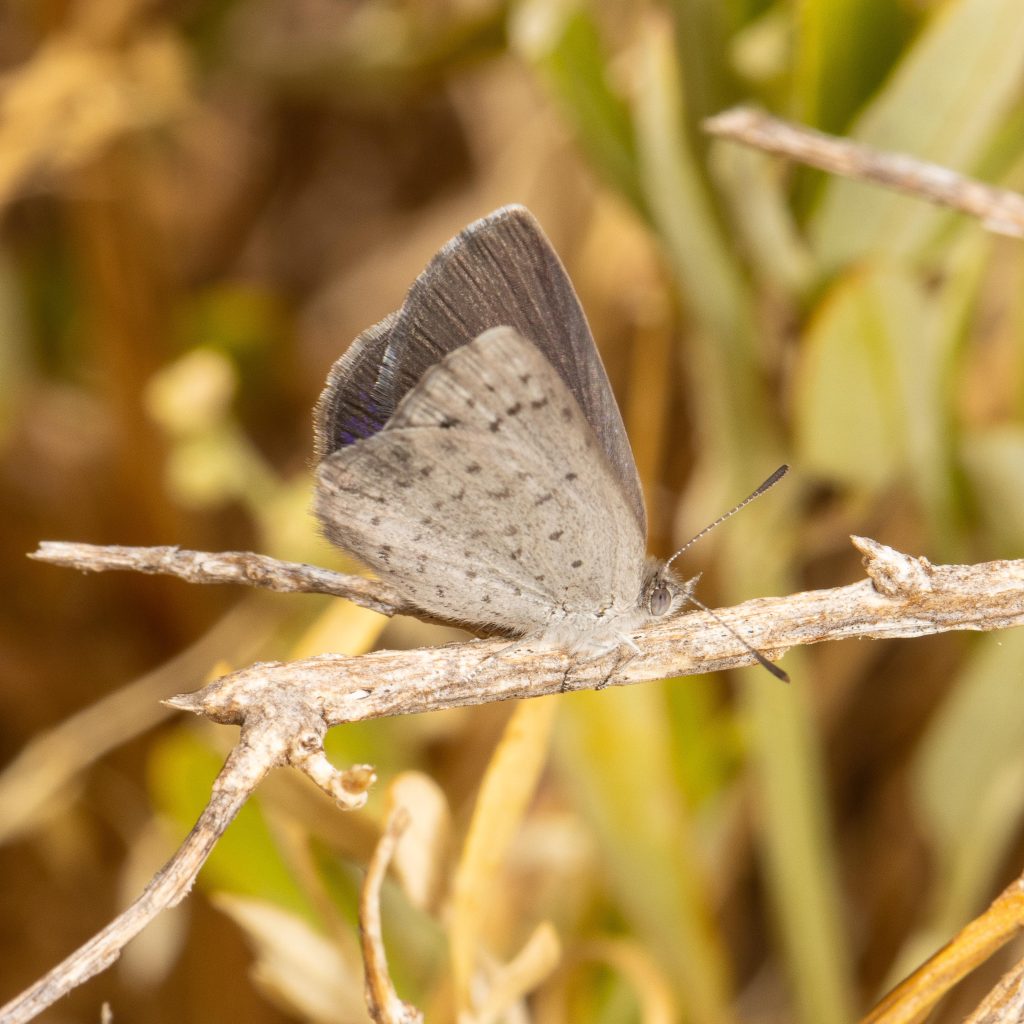
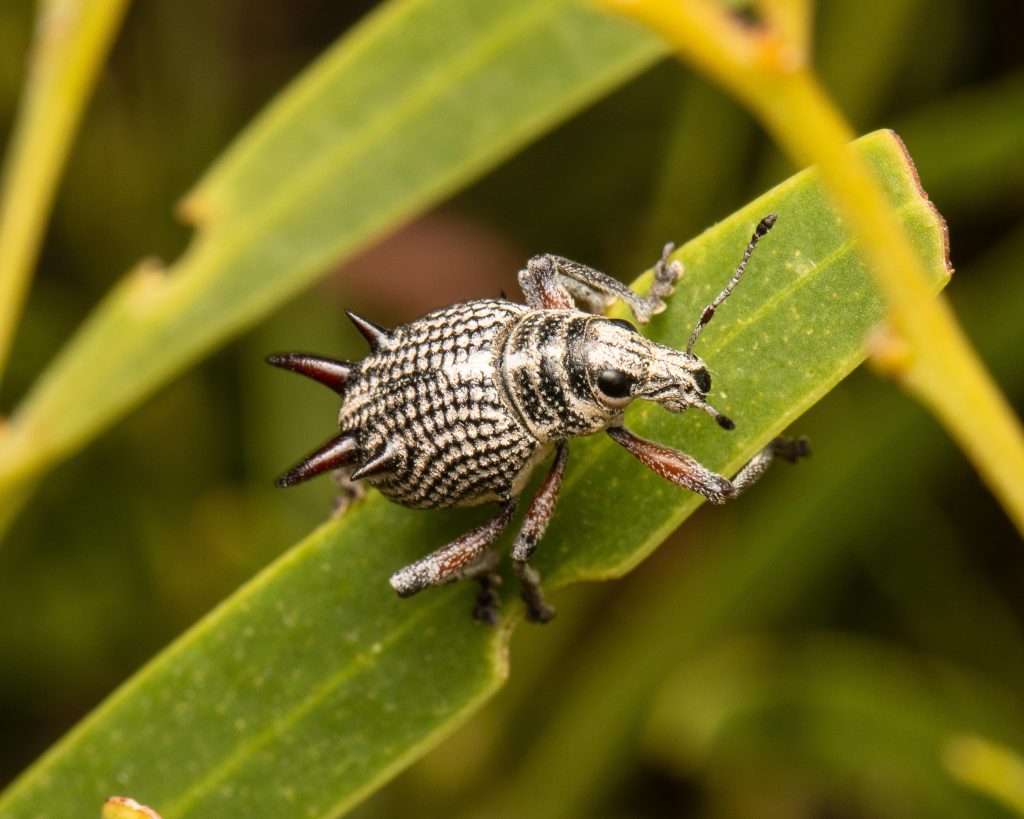
A Blotched Dusky-Blue (Erina acasta) butterfly was a nice sighting amongst the shrubbery. On a nearby Acacia rostellifera, a Catasarcus spinipennis Weevil was spotted amongst the foliage.
We climbed the walkway to the Gun Placement on our way back to the car park, which presents excellent views of Shoalwater Bay and the offshore islands. An Australian Golden Orb Weaving Spider (Trichonephila edulis), with males plus Dew Drop Spiders in attendance on the web, was found near the track leading down from the gun placement towards the carpark. A small dragon was also spotted on the edge of this track.
Daniel reported that close inspection of a Coastal Moort (Eucalyptus utilis) revealed Tube Spittlebugs, a Trachymela Leaf Beetle, probably responsible for the ragged edges of the leaves, and Acrobat Ants (Crematogaster) collecting honeydew from larval psyllids hiding under their spun-sugar lerps.
Splitting up, some of the attendees went down onto the beach to examine the impressive variety of seaweeds that had washed up, including the Netted Sea-net Hydroclathrus clathratus, and the Warty Sea Twig Scaberia agardhii, and an unfortunate Smooth Boxfish (Anaplocapros sp.) whose armour left it too clumsy to avoid being washed ashore.
The fossils in the limestone beach rock were also of interest, although none were older than the Holocene, and are all species still found in the area today.
Back at the car park, we gathered for a well-earned morning tea. It had been an enjoyable morning.
The following link shows Daniel’s iNaturalist posts from the walk: https://www.inaturalist.org/observations?on=2026-02-22&user_id=daniel_heald&verifiable=any
Colin Prickett