

Nine members of KRMB plus Lou Scampoli from the Main Club attended the excursion on February 26 to the Coodanup foreshore and Creery Wetlands within the Peel-Harvey Estuary. These locations are part of the extensive Peel-Yalgorup Ramsar Site and are an important feeding area for migratory shorebirds that depart their breeding grounds in the Arctic to avoid the northern winter and fly huge distances along the East-Asia—Australia Flyway. They also provide important feeding and breeding habitat for Australian resident shorebirds such as Egrets, Herons, Stilts and Plovers. Our visit was timed to see some of the migratory shorebirds before they embark on the journey back to their breeding grounds.
Our outing started at the bird hide at the end of John Street on the Coodanup foreshore. At this time of the year, early morning usually coincides with a low tide that exposes mudflats on which the birds feed. However, for our visit the tide was a lot higher than usual, with only a small area of mudflats exposed. This did not have too much of an impact, as we found a group containing 40 Bar-tailed Godwits, seven Great Knots plus a Grey Plover on the edge of the shoreline. Further along there was a large group of Caspian and Crested Terns. There were also Pelicans and ducks (Pacific Black Ducks and Australian Shelducks) in large numbers. We also spotted an Osprey perched in a tree towards the mouth of the Serpentine River.
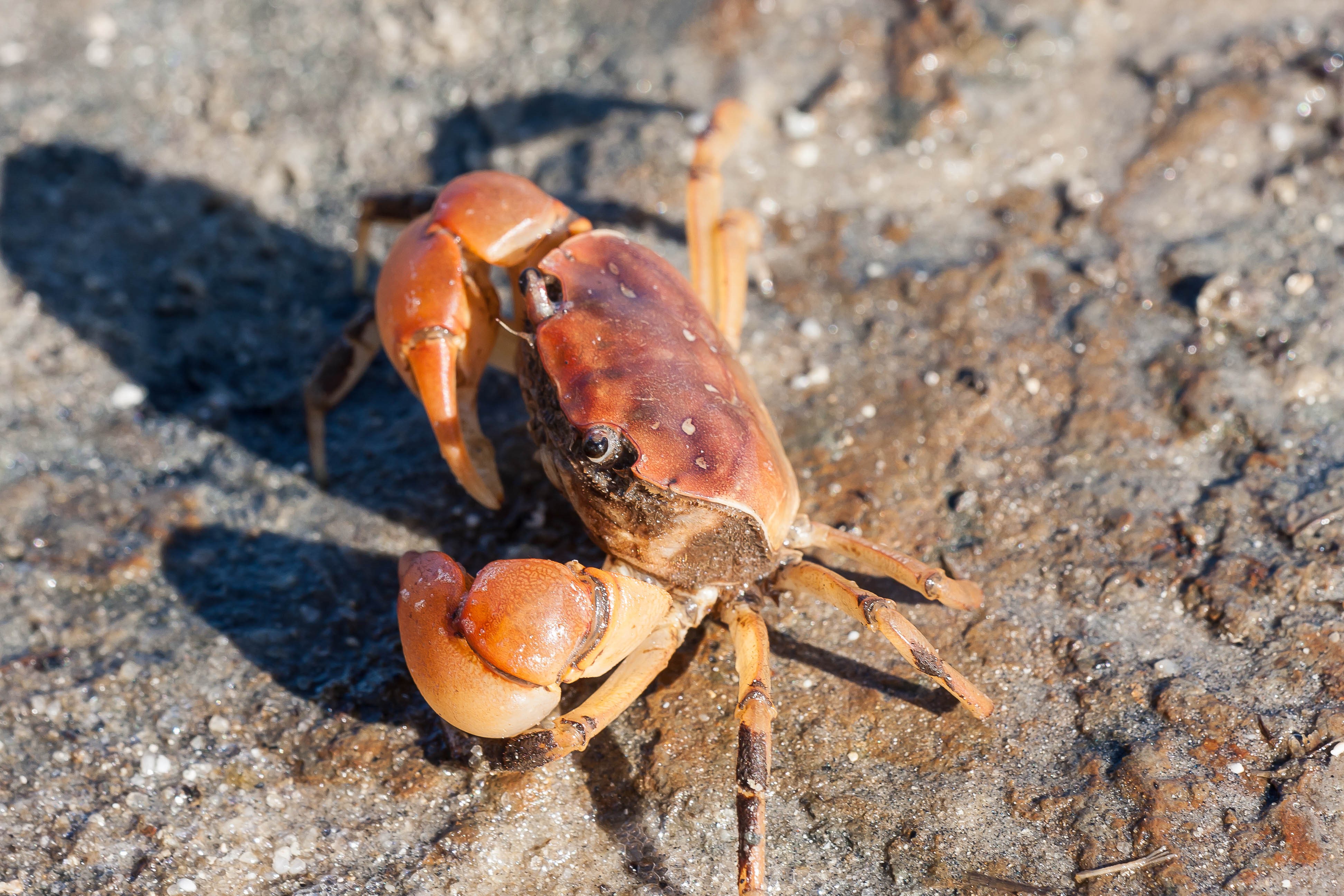
On small shallow pools near the high-water mark we saw Brine Flies (Brachydeutera sydneyensis (Family: Ephydridae)) swarming at the edge of the water. Interestingly, these were from the same species found on the gnamma holes on Dingo Rock during our spring trip to Wongan Hills. The Peel-Harvey Estuary is usually associated with Blue Swimmer Crabs, so a surprising sighting was a bright orange Varunid shore crab. Daniel Heald has tried to identify it and states that he is ‘…confused by this one—it’s probably because I don’t have a proper guide to WA shore crabs, but this orange charmer on the muddy shore at the Peel Estuary seems closest to Helograpsus haswellianus, which we shouldn’t have in WA. Habitat was spot-on for Haswell’s Shore Crab though: estuarine salt flats, above the high tide mark, with lots of debris to hide beneath.’
A group of photographers had taken up position close to the previously mentioned group of terns, so rather than disturb their subjects we decided not to walk on to the river mouth. We headed back to the cars and drove to the entrance to Creery Wetlands at Mariners Cove. Our walk through these took us through two types of habitat. We commenced with a walk out to the end of a boardwalk that provided a viewing point over the body of water at the centre of the wetlands. The boardwalk passes through an area of marshland where the predominant vegetation is Samphire species. At the start of the boardwalk, where the Samphire meets the heath, a family of Splendid Fairy Wrens was foraging. Daniel commented that there was a lot of insect noise coming from the Samphire, though he could not find out what was making the sounds. Overhead, Welcome Swallows and Tree Martins were busy catching flying insects. At one point Tree Martins glided slowly past us at eye level, giving us a rare close up view of them in flight. In shallow ponds within the Samphire we spotted Common Greenshank and White-faced Herons foraging. Out on the water, Eastern Great Egrets and Little Egrets were feeding. At our general meeting on the previous Monday I had presented a slideshow showing the different feeding styles of these egrets—the Eastern Great Egret using slow stealthy movements to take prey by surprise, while the Little Egrets dash about in erratic pursuit and lift their wings and jump in the air to startle their prey. It was good to be able to point out these behaviours in the field as well. Black Swans and Australian Shelducks were also sighted out on the open water.
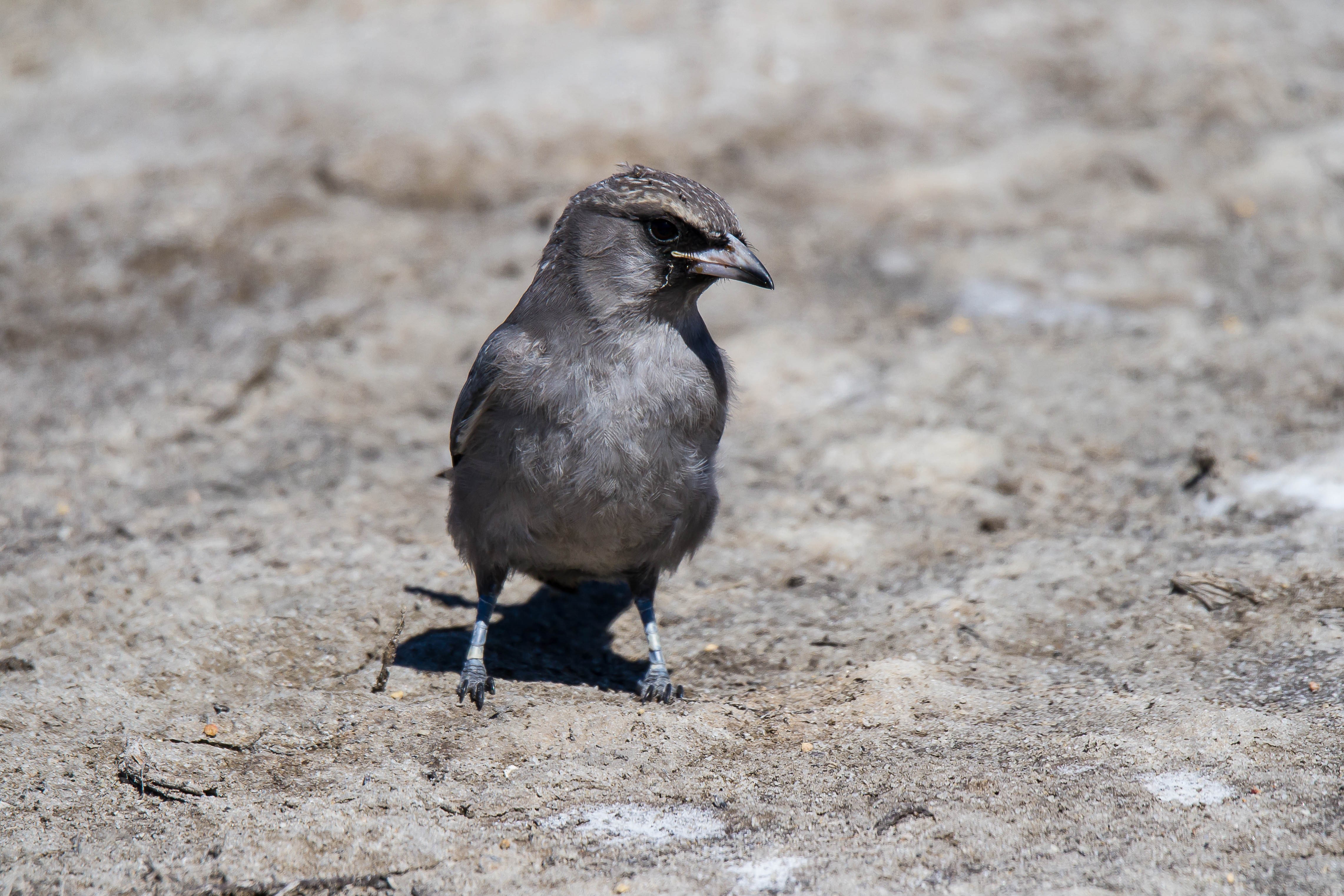
After returning along the boardwalk we took a walk trail through an avenue of Casuarinas towards another bird hide. We regularly passed through swarms of midges—probably what the Welcome Swallows and Tree Martins were feeding on. The recent heavy downpour had also resulted in plenty of mosquitoes eager to bite and the repellent was quickly passed around to provide some protection. Woodland bird numbers were low, so apart from the Splendid Fairy Wrens we spotted only Inland Thornbills, Grey Fantail, Willie Wagtail, Singing Honeyeater, Crested Pigeon and a family of Black-faced Woodswallows that were feeding in amongst the Samphire and on open ground. Daniel spotted female wingless wasp Ephutomorpha sp. of the Mutillid family, also known as Velvet Ants. These were hunting around the she-oaks and out on the salt marsh, looking for the nests of solitary wasps and bees to parasitise. What they expected to find out on the marsh, with the water table so high, is a mystery. Along the trail, Basket Bush (Spiridium globulosum) was in flower.
After a brief stop at the bird hide we returned along the trail back to the car park for a well-earned morning tea. Schools of small fish were swimming in the canal near the entrance and were identified as Weeping Toadfish (Torquigener pleurogramma) and Tommy Ruffs (Arripis georgianus) which are also known as Australian Herring. We enjoyed a cuppa and snack in the shade near the car park and reflected on an enjoyable morning in which we’d seen a total of 32 bird species. We had expected to see a larger number of migratory shorebirds (both in terms of actual numbers and of species) than we recorded. The absence was quite possibly due to the wet end to summer that resulted in lakes getting a top up and the greater selection of feeding habitat that remained available to the shorebirds. A full list of birds is available on the website. Thanks to Lou Scampoli for joining us for the walk and thanks also to Daniel Heald for the information on the crab and invertebrates.
Colin Prickett