
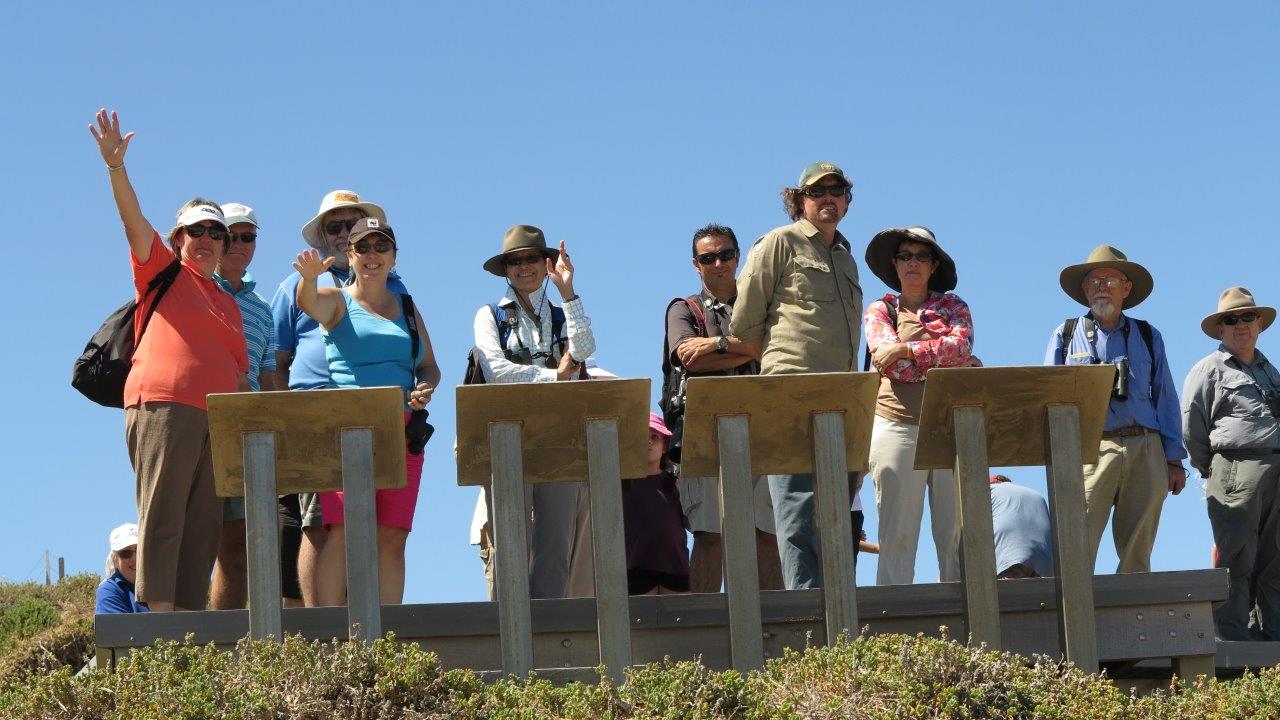
To paraphrase the hackneyed term, ‘one good tern led deservedly to another’ at Penguin Island, during DRB’s March outing. Twenty two members and friends braved an exquisite day and crossed the water to the largest of the islands in the Shoalwater Marine Park.
Various terns – Caspian, Fairy, Bridled, Crested – were visible as we waited to board the small ferry that takes visitors across a narrow sandy passage (people are now sternly deterred from wading across). Some birds were resting on the white pristine sand, others flapping wings to strengthen them in the mild breeze, while yet others simply floated around in the water.
Beneath them, seagrasses covering much of the ocean floor hinted at relative good health in the marine environment of Penguin Island.
But we were keen to see the island’s namesake, Little Penguins (Eudyptula minor), which are the smallest of all penguins. Boat traffic and competition for food are factors in their survival, and Penguin Island has proven to support a good steady cohort of penguins over the decades. In fact it is WA’s largest population of penguins.
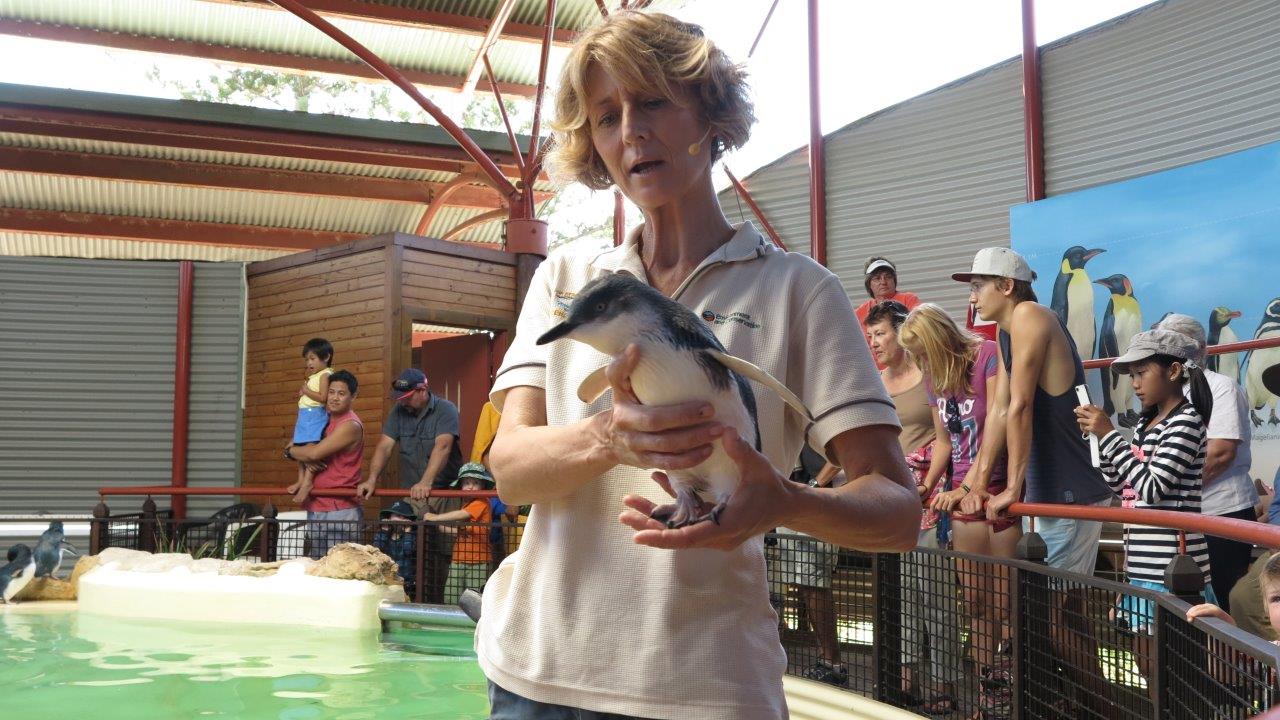
Ten captive animals inside the island’s Discovery Centre performed beautifully at the bidding of the informative female guide, the swimming, diving and patiently standing penguins all downing fish titbits at a fast rate. These were all animals that had been injured or rescued, but had not been able to be returned to the wild.
She noted that ‘Splash’, a baby penguin, had been rescued after gulls dragged it along the beach. It had now bonded with her and allowed only her to handle it with ease. We shortly learned why it was called ‘Splash’ and why she held the bird in a particular away-from-body manner.
Later DEC Ranger, Murray Banks, noted that, while a noise coming from a bush was that of a Little Penguin, most of them spent most of their time out at sea feeding at this time of year (March). Little Penguins are remarkable ocean performers, he says – they can make a 200 kilometre round trip to sea and back, and are able to dive down as far as 60 metres to catch fish. (Eudyptula means ‘good little diver’.)
Vegetation types suitable for penguins are Rhagodia baccata, Tetragonia implexiconia (Bower spinach), the introduced Sea Spinach Tetragonia decumbens and Berry Saltbush Atriplex semibaccata.
King Skinks are common on Penguin Island, and one was even spotted taking up residence in a rat poison bait bin. Other highly visible species around the picnic area were a Willy Wagtail and a pair of gorgeous Buff-banded Rail (Gallirallus philippensis), which darted in and out of low vegetation to take crumbs of bread. There are no snakes on the island, possibly because humans had removed or killed them all in the past.
As he led us on a tour of the small island, Murray pointed out the difficulties in rehabilitating vegetation after too much human traffic, or the ravages of wave power. Replanting areas with Rhagodia had enjoyed limited success, and huge earthworks and shore stabilisation carried out over years had similarly been eroded and destroyed within six months.
He said the island had a problem with high seagull numbers, which put pressure on other breeding sea birds, although Pelicans were new breeders on the island, forming a colony on a denuded patch of promontory down one remote end of the island.
Crows have been also problematic on Penguin Island, harassing visitors at picnic tables. Drastic action was required and the crows were removed – only to be promptly replaced by an incoming horde within the afternoon!
(The consensus was that they found out about the vacancy via Twitter, said Rob Anderson, visiting Nats Club wag.)
Diana Papenfus and Vicki Laurie