 The presenter for the September general meeting was Dr. Norm Pinsky. About two years ago Norm showed us some photographs of his home in Nova Scotia, Canada. Unfortunately the projector settings went awry on that occasion and did not show the photographs in their true colour and such was the interest that he was invited back to show them, plus some photographs from his most recent trip to PNG.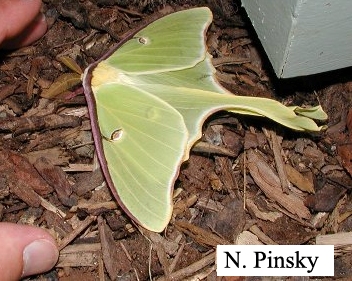
The presentation started with a very picturesque snow scene taken from Norm’s family home. Others showing a snowstorm, extensive snow built up around the home, snow on the verandah and Norm’s children enjoying themselves in the snow followed this. Norm then showed us patterns and colours in patches of ice, one that really looked like a duck. This sequence finished with a summertime photo of the opening scene. The next sequence showed Pitcher Plants, fungi and lichens. Humming birds are present in the area and Norm has a feeding station, which they visit providing excellent opportunities for photographs; of which we were shown several.
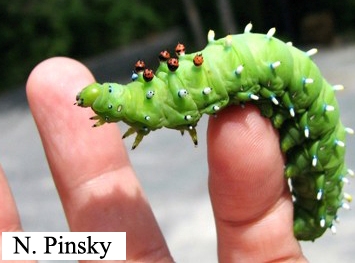 Other wildlife photographed near the home included woodpeckers and Canadian Geese, a porcupine and two raccoons. Insects were next, with several photos of caterpillars showing camouflage and body markings that deter predators. A spider was shown that is active even in the freezing winter conditions.
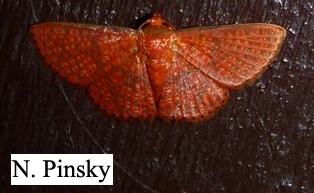
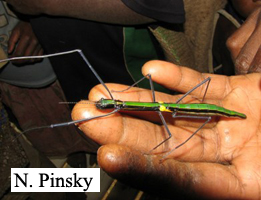
Many photos showing a large variety of moths followed, these focused on the patterns that help them to remain undetected. Early this year Norm showed slides taken on a trip he made to PNG to provide medical assistance to some remote villages. He went back to PNG on a follow up visit a few months later, accompanied by his son. Once again the rainforest environment provided numerous subjects for Norm to photograph, these included moths, bugs, caterpillars, grasshoppers, stick insects – some of which were quite large.
There were also many large spiders. There were many different types of moths with many different colours and patterns. Many have evolved to take on the shape of a leaf, others with translucent wings. Two different moths were shown that had the same asymmetric patterns but one wa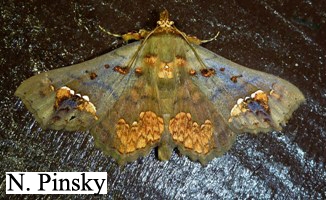 s the mirror image of the other.
Norm’s presentation ended with some photographs of the villagers that he was visiting. These live in a very remote location several days walk away from roads. Their diets lack protein and often Norm’s insect specimens would be eaten after they had been photographed. The members thanked Norm for a very interesting and informative presentation.
Colin Prickett