

Northern Suburbs Branch 26 October 2022 GOLLY walk
Fourteen members and visitors joined us on a bright sunny morning for our Kulbardi Walk through a lesser-visited part of Bold Park behind the Bold Park Aquatic Centre. The Kulbardi Walk is part of the Whadjuk Trail Network that links remnant bushland on the north side of the Swan River (Derbal Yarigan).
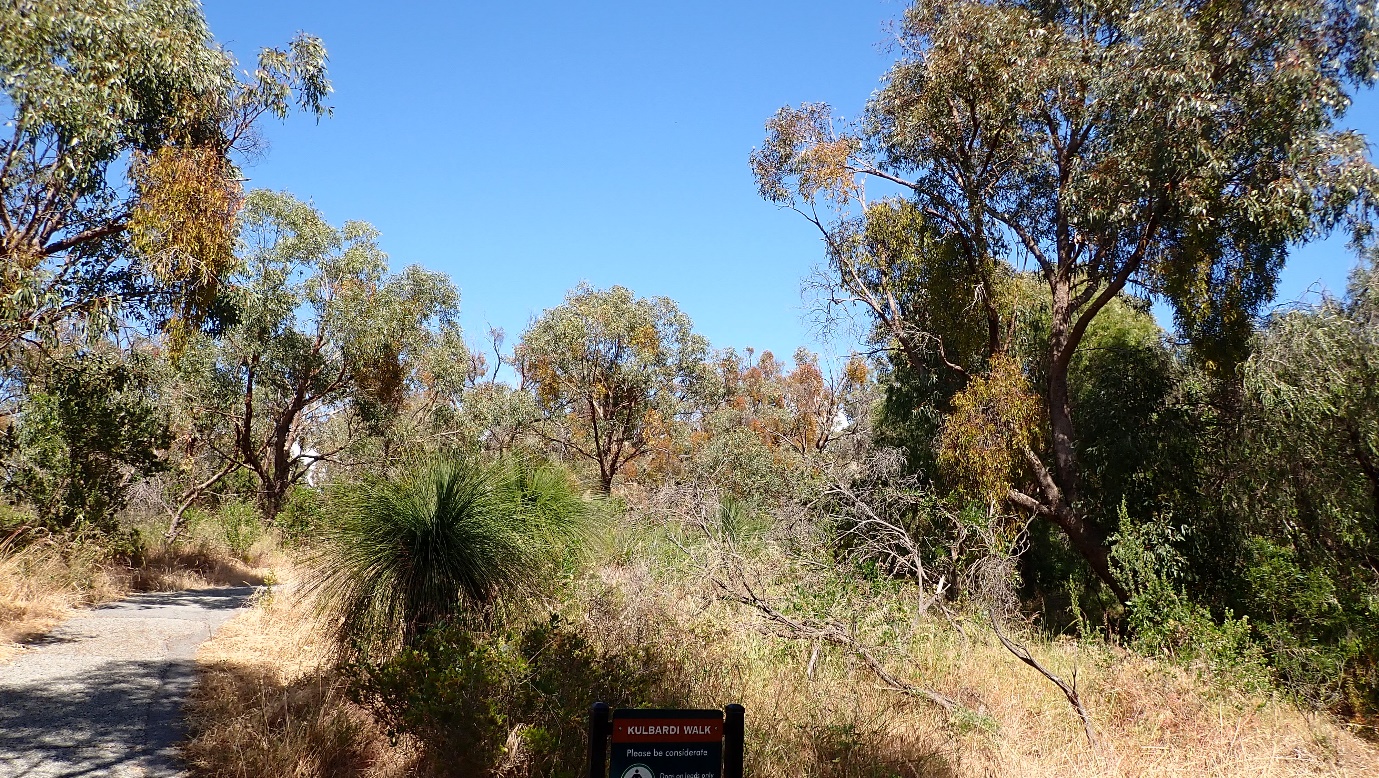
Soon after leaving the car park, we saw some impressive mistletoes (Amyema miquelii) growing on large mature Tuarts (Eucalyptus gomphocephala). Although the mistletoes were not yet in flower, we did spot two male Mistletoebirds with their bright red throats during the walk. We recorded 27 bird species, including Horsfield Bronze Cuckoo, Fan-tailed Cuckoo, Spotted Pardalote, Weebill, Purple-backed Fairy-wren, Grey Fantail, Rufous Whistler, Australian Ringneck, and Common Bronzewing.
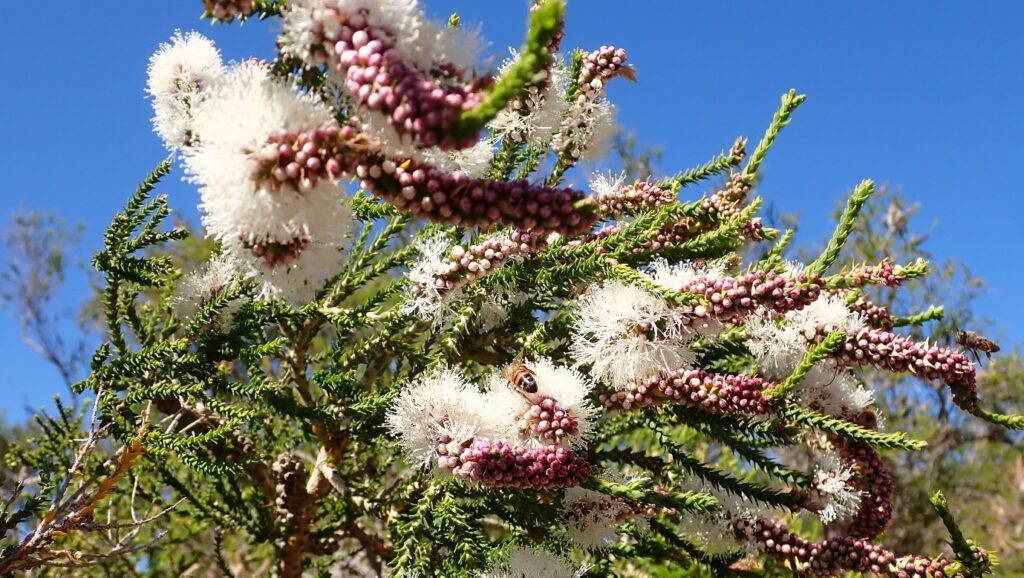
Further along the track, the One-sided Bottlebrush (Calothamnus quadrifidus) was in full flower while the pink buds of the Chenille Honey Myrtle (Melaleuca huegelii) were beginning to open to reveal their white snowballs. A few quandongs (Santalum acuminatum) were sighted, but none were bearing fruit despite this being the fruiting season.
Further along the track, the One-sided Bottlebrush (Calothamnus quadrifidus) was in full flower while the pink buds of the Chenille Honey Myrtle (Melaleuca huegelii) were beginning to open to reveal their white snowballs.
A few quandongs (Santalum acuminatum) were sighted, but none were bearing fruit despite this being the fruiting season.
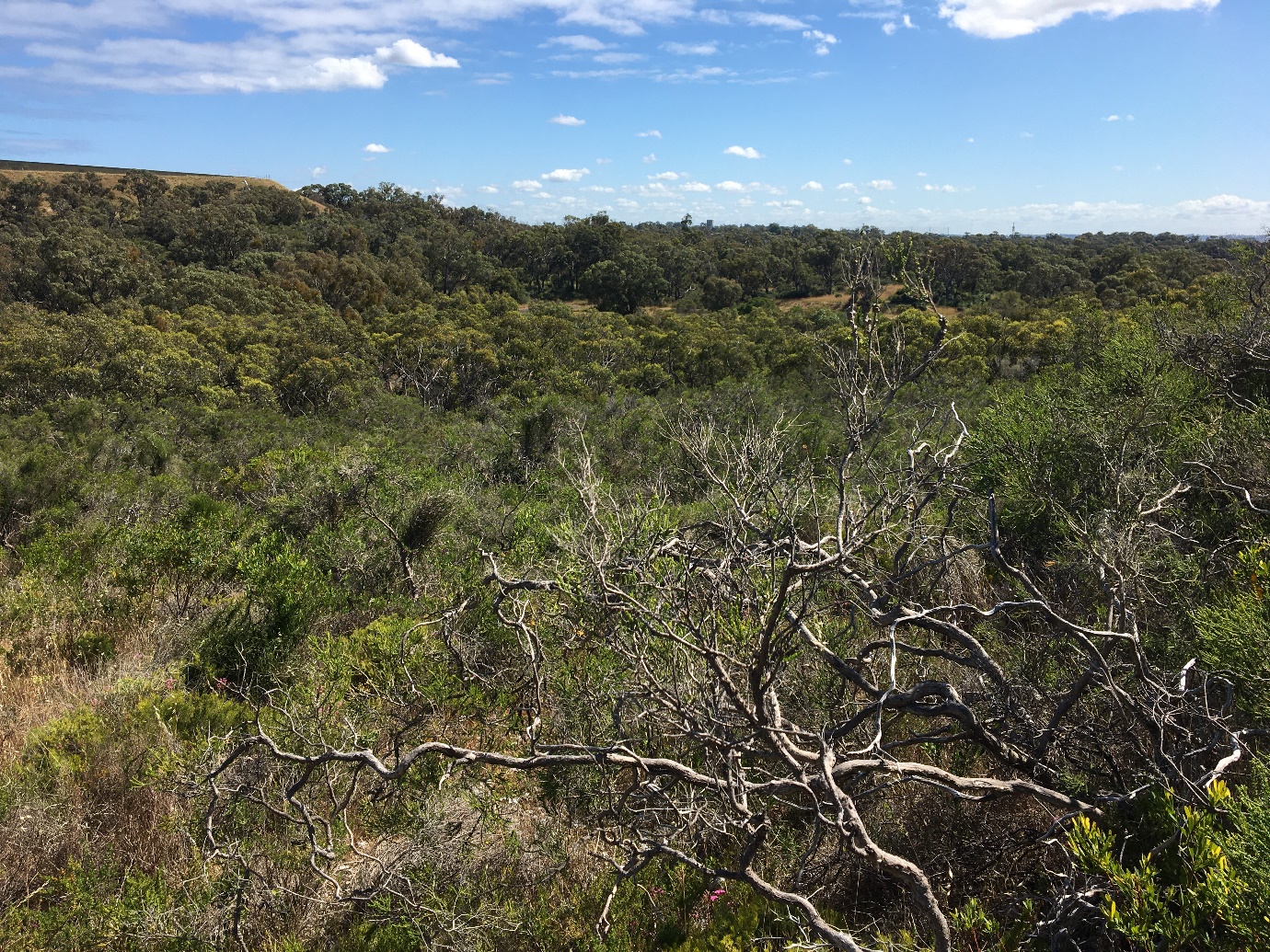
Although it was advertised as the Kulbardi Walk, it was only a short time before we left the made path. Our leader for the morning, Ian Abbott, took us down a steep limestone side path to a swale containing what he believes is the largest stand of Limestone Marlock or Redwood (E. decipiens) remaining in the metro area.
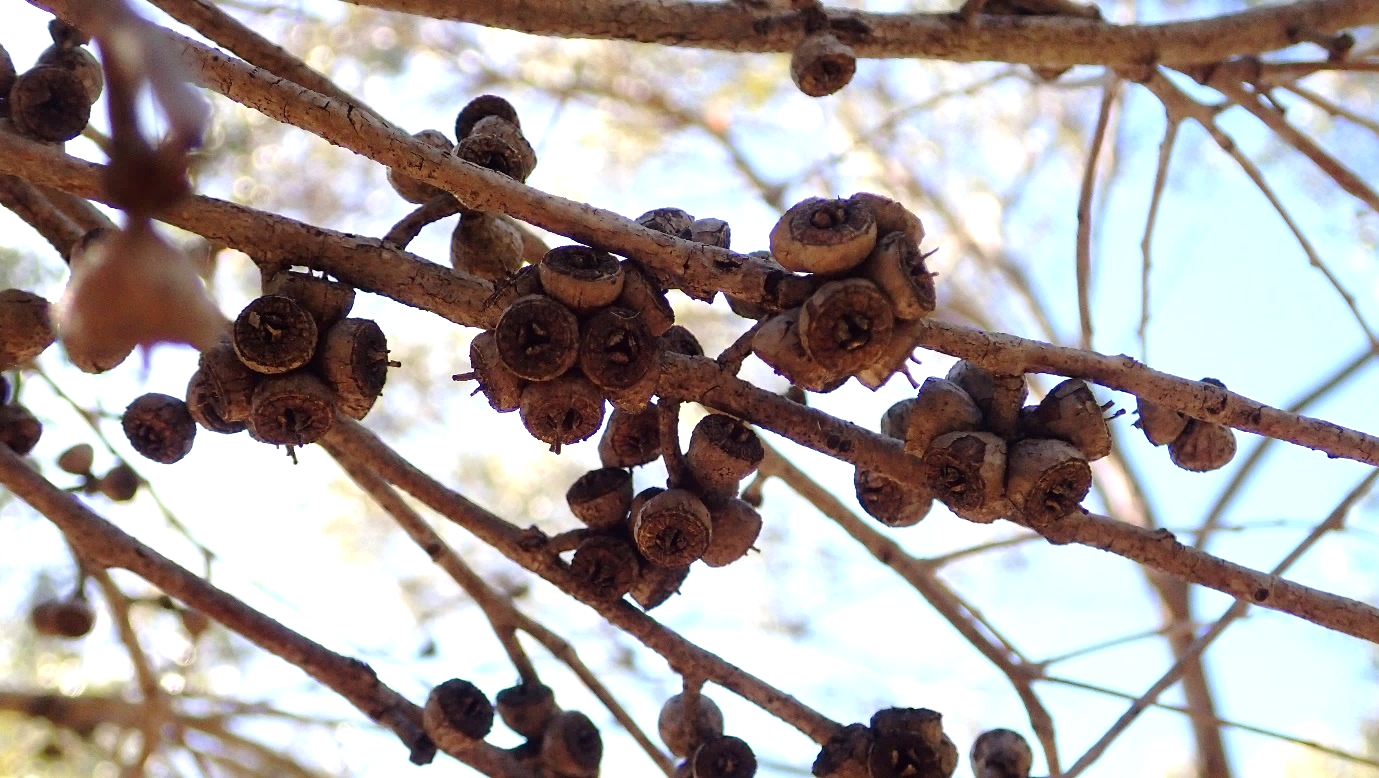
Amongst the Marlock, Ian pointed out the much rarer Rock Mallee (E. petrensis), distinguished by the spiky protruding valves on the fruit.

As we climbed up the other side of the valley, we encountered limestone and another change in vegetation. This time with Coastal Honey Myrtle (M. systena), an upright variety of Snakebush (Hemiandra pungens), Prickly Moses (Acacia pulchella), delicate pink (Diplopeltis huegelii), the Priority 3 Hibbertia leptotheca, and bushes of a Scaevola thought to possibly be Scaevola globulifera.
While some were busy photographing a small female Banded Orb-weaving Spider, those on the hill had a closer view of a Brown Goshawk as it flew overhead.

The return journey took us further along the ridge before we descended into the valley and re-joined the asphalt path of the Kulbardi Walk. Along the way, we found a recently renovated Rainbow Bee-eaters nest and watched two bee-eaters, probably the owners, watching us from a high fence. Golly, what a colourful ending to our walk!
Don Poynton
All Images by Don Poynton