

Field Trip 9th March 2014
The March field trip was to Lake Clifton and a few spots on the Peel Harvey Estuary. The early cloud had cleared by the time the ten of us arrived at the car park near the Lake Clifton boardwalk resulting in beautiful sunny conditions.
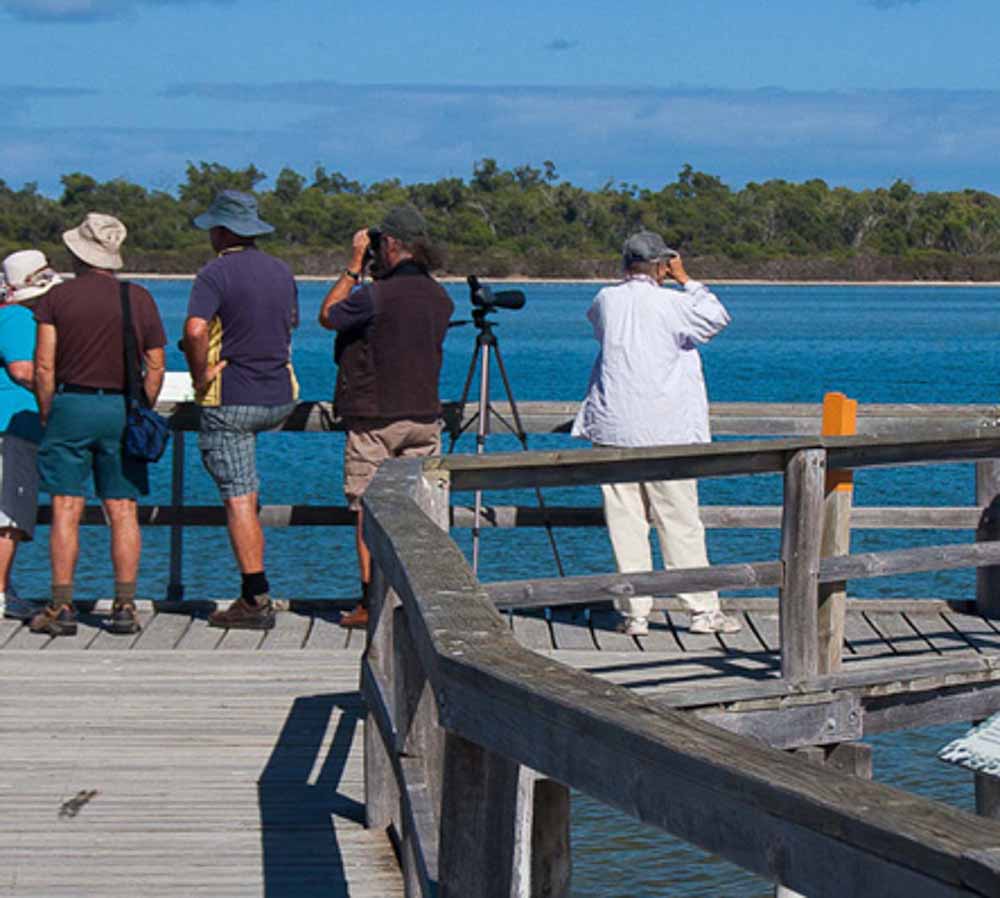
There was a bit of excitement as we got our gear out of the cars as a Brush-tailed Possum ran through the car park and shot up a tree. It turned out that a person had caught it in his garden, where it had been enjoying his tomatoes and strawberries, and had just released it. We then made our way out to the boardwalk which extends out over the lake, allowing visitors to view the Thrombolytes without causing them any harm. The water level was low such that many were now high and dry. Out on the lake, especially on its southern end there were a large number of Black Swans. Little Black Cormorants were also abundant, with a large number up on the beach at the south eastern side. In the middle of the lake we saw lots of hoary headed grebes. Shelduck were seen on the western side of the lake and we frequently saw groups of two or three flying overhead. Musk Duck were plentiful, mainly towards the western edge, though a couple were towards the middle. White-faced Herons were foraging at the water’s edge in amongst the Thrombolytes, no doubt feeding on the small fish that could be seen in the shallows. A Red-kneed Dotterel was up on the beach near the boardwalk and a small flock of small waders were seen flying along the lake. Other bird sightings included Welcome Swallows, Inland Thornbills and Rufous Whistler. The only raptor present was a Whistling Kite. In total we saw 21 species of birds during our stay. The number of birds present on the lake suggests there is plenty of food, which is a sign that it is in reasonable condition. Threats are believed to be the sub-divisions encroaching on the area, with the potential impact on groundwater levels due to garden bores and possibly the lake itself. It is important that this be managed to ensure the conservation of the Thrombolytes and the lake ecosystem, which is important habitat for many birds.
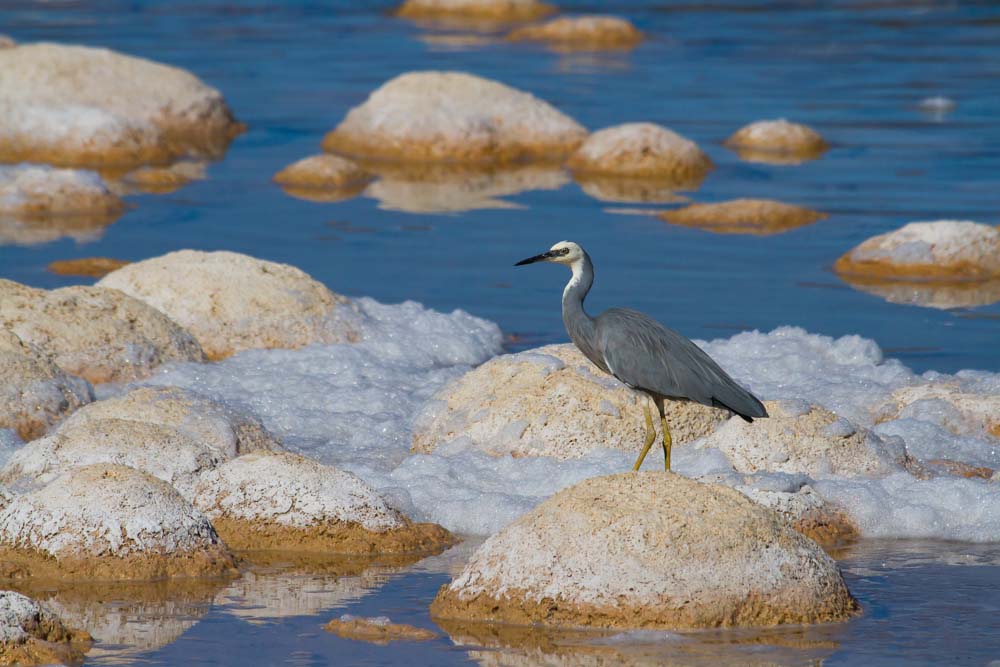
We then headed over to the Island Point Nature Reserve on the western edge of the Peel-Harvey Estuary. The area was quite popular, with many people trying to catch a feed of crabs – though apparently with little reward as far as we could tell. This meant that the birds kept their distance, though a large group of Great Egrets did fly in and start to feed about 200 metres away. A White-faced Heron was less concerned by the people and hunted in the shallows near the beach. Crested Terns were active, gliding overhead and periodically diving into the water to catch a small fish. Signs at Island Point tell of its history, it was once the spot at which the Herron family used to walk their cattle across the estuary to their other paddocks at Herron Point. After a light lunch we also made our way over to Herron Point, though we had to travel the long way around the south of the estuary. From Herron Point we got a closer look at some sandbars several hundred metres from shore on which Pelicans, Little Pied Cormorants, Pied Oyster Catchers and Crested Terns were present. Great Egrets were also active in the shallows near the sandbars. After what had been a great day exploring these important wetlands some of us made our way home while many members accepted Bob and Lynette’s invitation to visit Goodale Sanctuary for the night. Colin Prickett