

Field Trip 6th April 2014
The April field trip was to Anstey Swamp Reserve in Karnup. The reserve is Bush Forever Site 379 and has an area of 270 ha. It is managed as part of Rockingham Lakes Regional Park. It is one of the Stakehill suite of wetlands. In terms of landform and soils it sits in the category of Spearwood Dunes – Sands derived from Tamala Limestone over Tamala Limestone, with the wetland portion being a Holocene swamp deposit within Spearwood Dunes. The Vegetation Complex comprises Seasonal Wetlands (Melaleuca rhaphiophylla – Gahnia trifida seasonal wetlands) and Uplands centred on Spearwood and Quindalup Dunes (Eucalyptus gomphocephala – Agonis flexuosa woodlands).
Ten members met at the central entry point on a beautiful autumn morning for the walk through the reserve. Anstey was subject to a very intense fire in December 2010 and we were interested to see how the vegetation had recovered. Our walk commenced in Tuart (Eucalyptus gomphocephala) woodlands, which sit on a ridge with some limestone outcrops visible. Both the Tuart trees and understory have recovered fairly well. Prior to the 2010 fire the reserve was heavily vegetated, which resulted in the intensity of the fire and proved difficult for the firefighters. The vegetation appears to have recovered to the extent that this is once again the case.
The track through the Tuart woodland was lined with dense thickets of Prickly Moses (Acacia pulchella) and at one point there was a patch of Tangled Daisy (Calotis erinacea). Up in the canopy Western Gerygone were heard calling but proved difficult to spot. A pair of Galahs was spotted checking out a nesting hollow in one Tuart along the track. Red Capped Parrots, Australian Ringnecks and Regent Parrots were also sighted.
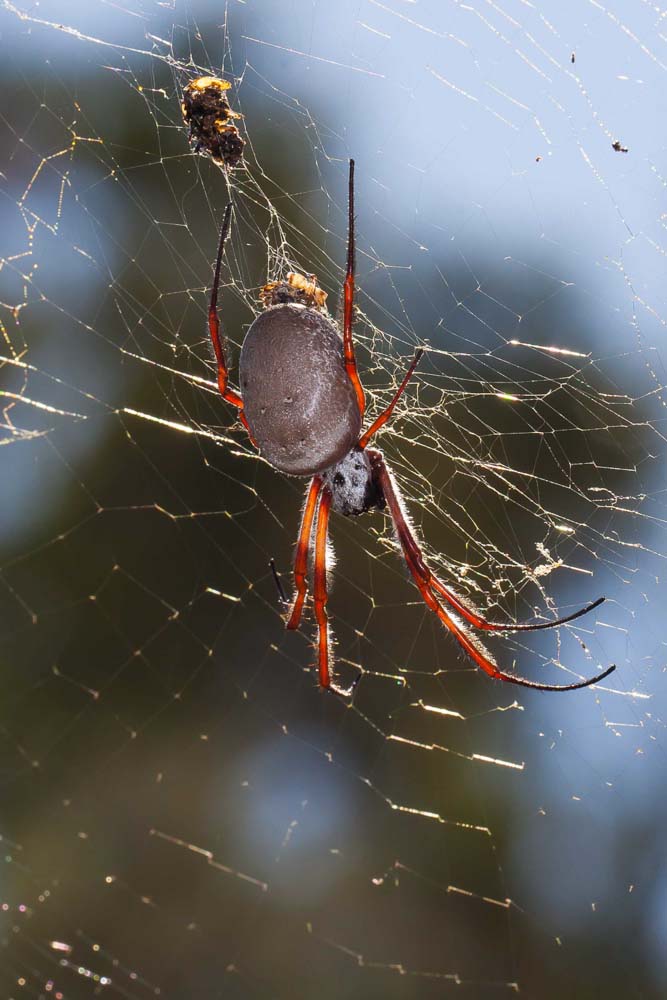
From the woodlands the track then moved through the wetland and the vegetation changed accordingly. A few Golden Orb Weaver spiders (Nephila edulis) were seen in this area, the early morning sun showing up the golden colouring of the web from which their common name originated. As is typical for this late in the season most were very large.
Towards the railway, at the western boundary, Swamp Paperbarks (Melaleuca rhaphiophylla) had also recovered well from the fire.
The following plants were found to be in flower: Angled Lobelia (Lobelia alata), Tuart (Eucalyptus gomphocephala), Dodder (Cassytha sp.), Coast Saw Sedge (Gahnia trifida),Acanthocarpus preissii and Slender Myoporum (Myoporum caprarioides). Other plants noted included: Southern Diplolaena (Diplolaena dampieri), Logania sp., Lignum (Muehlenbeckia sp.), Melaleuca teretifolia, Ozothamnus cordatus , Prickly Moses( Acacia pulchella) and Swamp Paperbark (Melaeuca rhaphiophylla).
Unfortunately, weed species were also prevalent with Cotton Bush, Thistles, Pampas Grass and several other species noted.
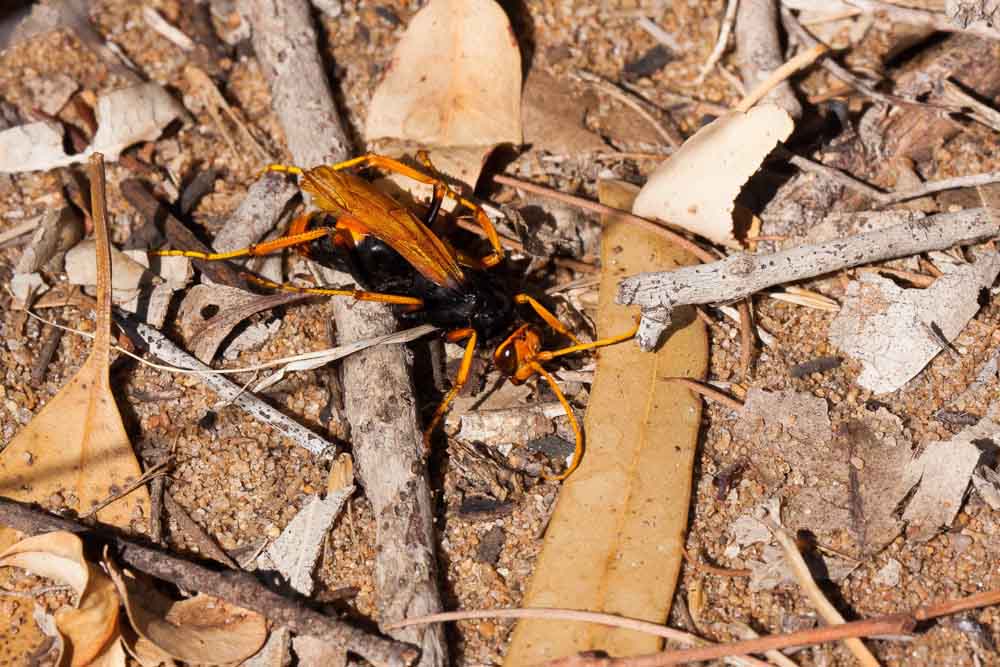
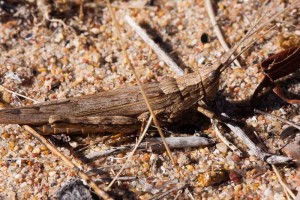
Other bird sightings included Splendid Fairy Wrens, White Cheeked Honeyeater, Long Billed Corella, Western Corella, Grey Butcherbird, Little Wattlebird, Red Wattlebird, Silvereye, Common Bronzewing and Magpie. Small skinks were active in the leaf litter and several interesting insect species were also sighted, including Bark-mimicking Grasshoppers (Coryphistes ruricola) and some Australian Hornets (Abispa ephippium).
Photo above
…
Spider-hunting wasp or ‘spider hawk’ (Cryptocheilus or Heterodontonyx; family Pompilidae) NOT West Australian Potter Wasp aka Australian ‘Hornet’ See comment from Dr. Terry Houston
We then made our way back to our starting point. We were all impressed with how well the reserve had recovered after the fire but were a little dismayed with the number of weeds that have also established.
Colin Prickett