

Field Trip 4th May 2014
The May field trip was to Wellard Wetlands with a good turnout of 14 on an overcast morning. The area that is now the wetlands used to be treeless farmland until Alcoa commenced the extraction of clay in the 1980s for the purpose of lining
C Prickett
the bauxite residue storage areas at the Kwinana Alumina Refinery. The rehabilitation of mined out areas provided the opportunity to create an artificial wetland – the Wellard Wetlands. In addition to allowing the pits to fill with water to create the system of lakes, Alcoa also implemented a revegetation program that has resulted in well-established eucalypts and other trees surrounding each lake and providing excellent habitat for numerous bird species.
The project won an inaugural WA Government Golden Gecko Award in 1991. Facilities at the wetlands include information boards, walkways and bird hides. The lakes provide important habitat for water birds during late summer and autumn when ephemeral lake systems in the area have usually dried up.
C Prickett
The water level in the lakes was getting low, as is to be expected after a long dry summer, with some sandbanks being exposed and providing good foraging areas for Black-winged Stilts, the only species of small wader spotted during our walk. From the first bird hide looking out onto Black Swan Lake we spotted Musk Duck, Blue Billed Duck, Hardhead, Little Pied Cormorants, Eurasian Coots and Black Swans.
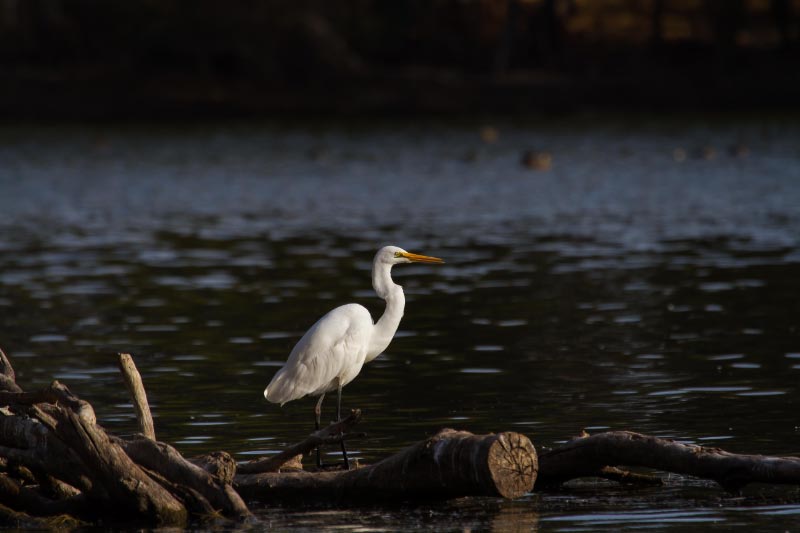
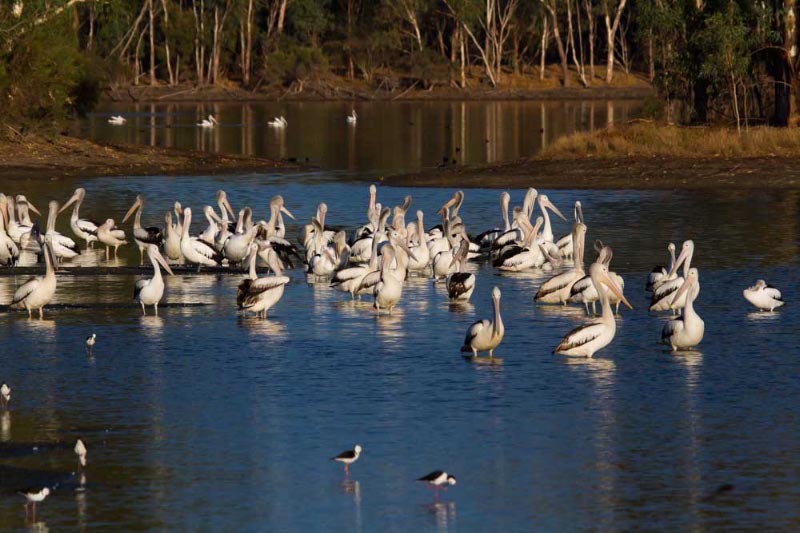
We then made our way up the pathway to take in the other lakes. On Egret Lake we saw large numbers of Pelicans, Grey Teal, Pacific Black Ducks, Hoary-headed grebes, nine Yellow-billed Spoonbills, a Great Egret, White-faced Heron, Little Black Cormorants and White Ibis. Whistling Kites regularly patrolled the skies above, often causing the smaller waterbirds to take to the air to find somewhere safer. A lone Wedge-tailed Eagle also soared by overhead. In the trees lining the lakes we spotted Inland Thornbills, a Yellow-rumped Thornbill, Striated Pardalote, Willy wagtails, Grey Fantails, Red-capped Parrot, Australian Ringneck (28s), Black-faced Cuckoo Shrike, Grey Butcherbird and Red Wattlebird.
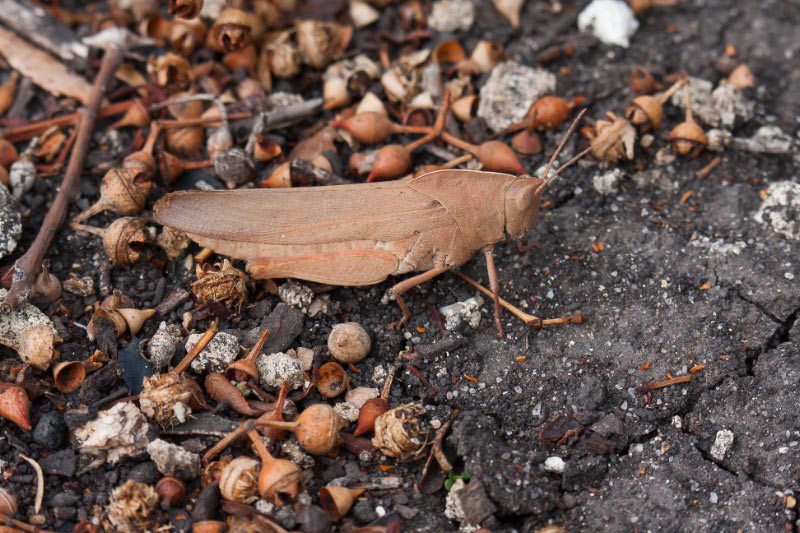
In total 37 species were recorded during our visit. Other sightings included three species of ants plus a Gumleaf Grasshopper (Goniaea sp) found by Margaret Telford amongst the leaf litter near the Spoonbill Hide. This species spends the day amongst leaf litter beneath eucalypts, hence the disguise, and goes up into the canopy at night to feed on the leaves.
One sighting that was not so good was of a fox that I spotted crossing the main pathway towards Black Swan Lake. A sign at the gate warns that baiting is in progress, it is hoped that this program will be ongoing to protect the birds from these predators. Having spent a pleasant morning walking through the Wetlands we headed back to the picnic area near the front gate for a well-earned cuppa and an early lunch. This area was planted with several species of trees native to the east coast; one of these, the Lemon Scented Gum (Corymbia citriodora) was in flower. Colin Prickett