

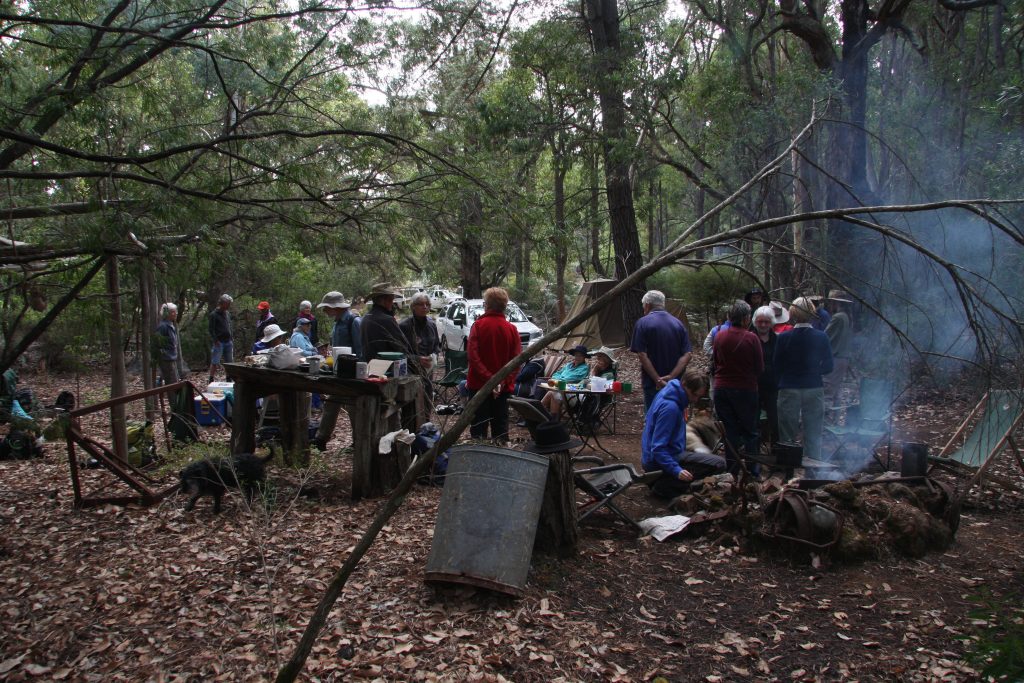
On Monday, May 8, those of us who arrived at Collie early enough drove to Honeymoon Pool in the afternoon. It lived up to its romantic name with large round stones and floating ducks in the still water, framed by trailing WA Peppermints. There were many Currawongs, busy on the ground and in the trees—which included some impressive, tall Yarri. We also noted some interesting bracket fungi and a Scarlet Robin before returning to the caravan park for our first, sociable get-together. Peter Coyle showed us some fresh Woody Pears, well chewed—presumably by cockatoos. The trees, growing in remnant bush that formed part of a nearby community garden, were heavy with the tan, velvety nuts.
On the Tuesday we went to the Bamfords’ property, Teschen, which had not been burnt for at least forty years. On arrival, we had morning tea and viewed the old loggers’ homestead and old sawmill. We then went for a walk, either with Mandy or their son Josh, or tried to see if we could catch any birds for banding with Mike. On the walks we encountered some fungi and lots of lichens but few flowering plants. In the afternoon we had a talk by Judy Fisher from the Leschenault Catchment Council and saw the ‘Rosewood’ Jarrah—potentially a new Jarrah species. We got back to Collie in time for nibbles and drinks prior to retiring for dinner.
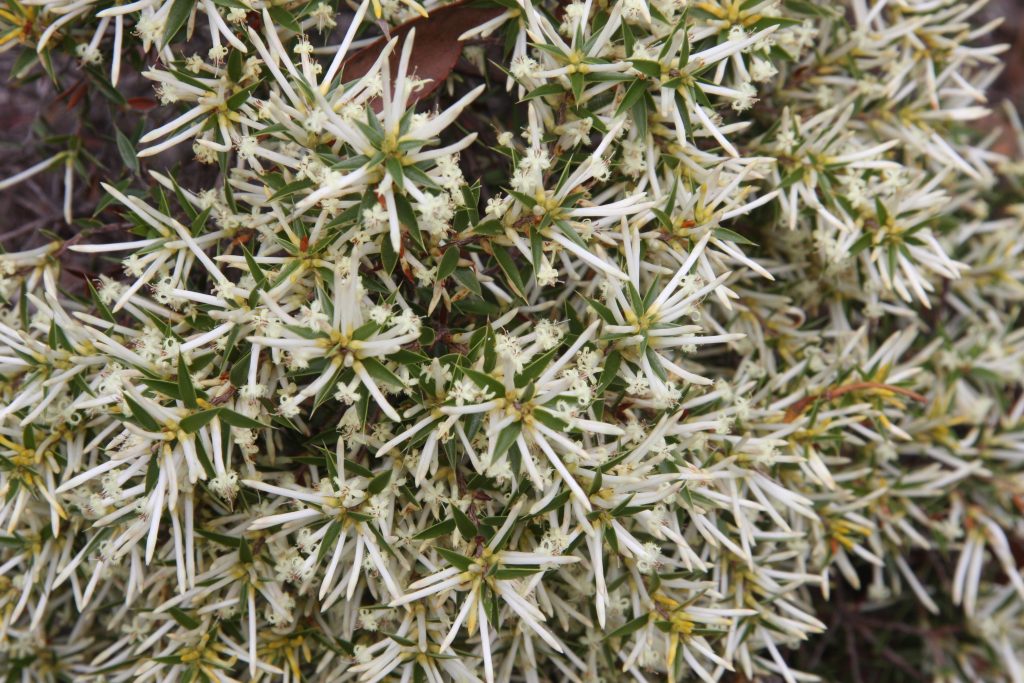
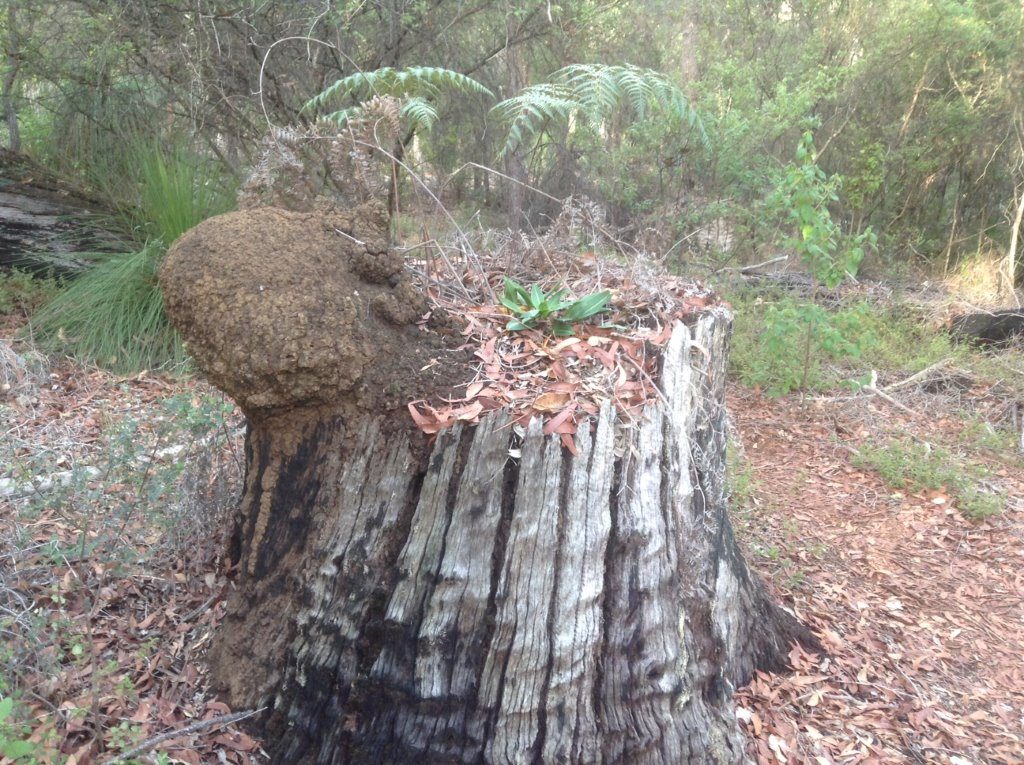
On the third day of the camp, we were offered a choice of short or long walks on the Bibbulmun Track. One was from the Harris Dam picnic area to the Harris overnight hut, a distance of about 6 kilometres. A few of us considered this would be enough by the time we returned to the cars. The weather was perfect! From a cool misty morning, the day played out into a sunny 21-degree day. The sight of the sunlight through what was quite open Jarrah forest was spectacular. Our group managed to travel on a kilometre-long unintended diversion when we had to retrace our steps to the track. Fortunately, we crossed a firebreak gravel road where a local was able to redirect us. We could see the area had been cut as there were many large stumps and fallen timber. I imagine the value of timber had dropped and the foresters had left it where it fell. There was a lot of new growth (quite fine trunks) and also Banksia grandis in places. There was very little undergrowth or evidence of recent fires. We spent a pleasant lunchtime at the Harris Hut which was very well appointed with two water tanks, a number of shelves for beds, a BBQ and a drop toilet. It was extremely peaceful enjoying our lunch while two mice played around us. Plants in flower included the Common Bunny Orchid, Banksia seminuda and Styphelia tenuiflora (or Common Pinheath).
Jan enjoyed seeing the Baudin’s Cockatoos on her first bush camp and that night we had a brief talk from new member Nick on dams in the Collie area.
Thursday brought another cold and misty morning. Most of the group walked a section of the Bibbulmun track south of Collie, starting at Griffin Bridge on the Mungalup road. On a short track through sandy kwongan shrub heath we saw Hakea prostrata demonstrating its usually non-prostrate habit, Xanthorrhoea gracilis, Jacksonia furcellata and Mesomelaena pseudostygia in flower. On higher ground the Jarrah/Marri habitat resumed with evidence of burning an estimated five years previously. Showy patches of Banksia sphaerocarpa with flowers from bud stage through to mature cones were most striking. Other Proteaceous plants included Hakea amplexicaulis, Banksia grandis, Banksia nivea subsp. nivea (Honeypot Dryandra) and Banksia littoralis. Eriochilus dilatatus ssp. multiflora (Bunny Orchid), were again spotted—one with a spider in it that was camouflaged by being the exact hue of the white flower. The birds were fairly quiet, but Peter and Lana, who explored the track south of Harris Dam, saw a Fantail Cuckoo amongst others. During the evening we enjoyed a generous and tasty long table dinner at the Golden Eagle Chinese restaurant.
On the last morning some of us, who had time before heading home, walked along the Collie River where we were able to add some waterbirds to our bird list and, at the very end, some Sitellas. Glenda compiled a full bird list, which is available on the website and at the office. Although it was early in the season, Collie—and the Jarrah forest in particular—provided the setting for an interesting and enjoyable camp.
Barbara Baxendale, Val Goff, Jacquie Gregson,
Jolanda Keeble and Joan Sharpe