

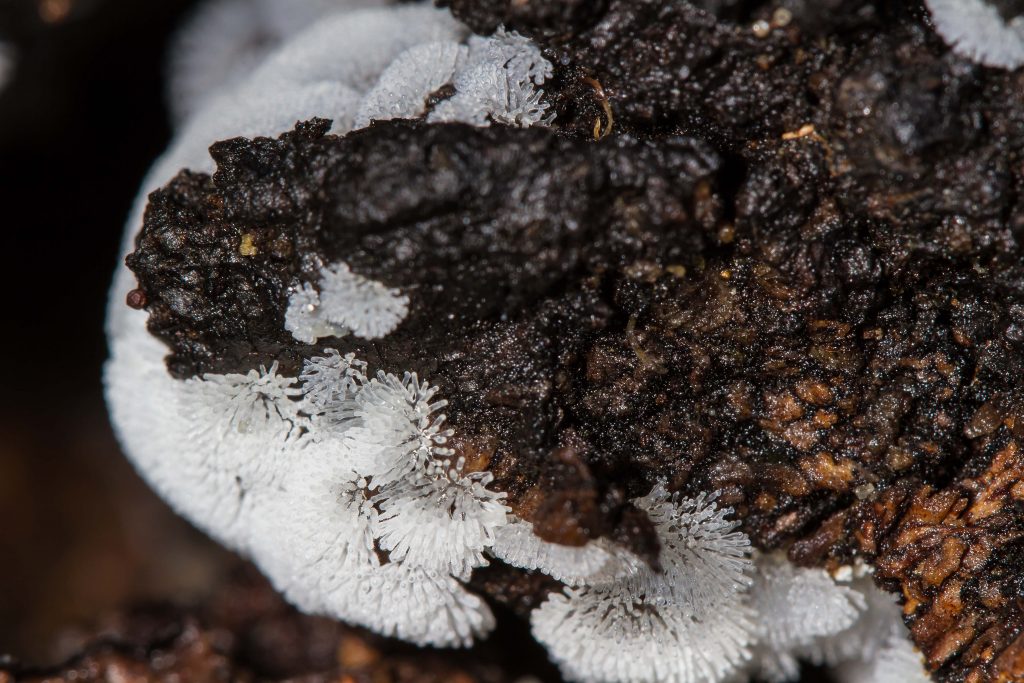
On a very pleasant morning on June 24 a good turnout of nine members plus three visitors attended a Fungi Walk in Paganoni Reserve, the southern-most reserve in the chain that make up the Rockingham Lakes Regional Park. Good rains throughout June, including heavy falls during the preceding week, meant that conditions were expected to be favourable for us to experience the wide diversity of fungi present in Paganoni—and we were not disappointed. Our walk targeted the swampy area immediately to the west of the north-south track that follows the power lines. The vegetation in this area starts off with some Banksia species and Tuarts (Eucalyptus gomphcephala) on the fringe and soon changes to mainly Swamp Paperbarks (Melaleuca rhaphiophylla) with an understorey of Gahnia triffida as we moved into the wetland. The walk was not designed to be a fungi survey, rather a chance for participants to enjoy searching for and viewing the various types of fungi. This relaxed approach saw us break into groups of three or four at various times, coming back together when a call indicated there was a particularly interesting find. Fungi sightings started almost immediately after we entered the reserve. As we walked along the firebreak near the fence two beautiful specimens of Egg Yolk Fungus (Bolbitius titubans) were easily spotted in the firebreak itself. The trunks of several Tuarts had Eucalypt Crepidotus (Crepidotus eucalyptorum), and occasionally Shy Funnel-cap (Clitocybe semiocculta), growing out of the bark. On fallen trunks we spotted Golden Wood Fungus (Gymnopilus allantopus) while out of the soil and leaf litter there were many large mushrooms (Amanita sp.?) and also Clitocybe kenkulunea. Fallen trunks also were the favoured habitat for species such as Scotsman’s Beard (Calcera) and the beautiful, dainty Icicle Fairy Fans (Ceratiomyxa fruticulosa) (Below C. Prickett) while on a moss-covered trunk we spotted the Orange Mosscap (Rickenella fibula).
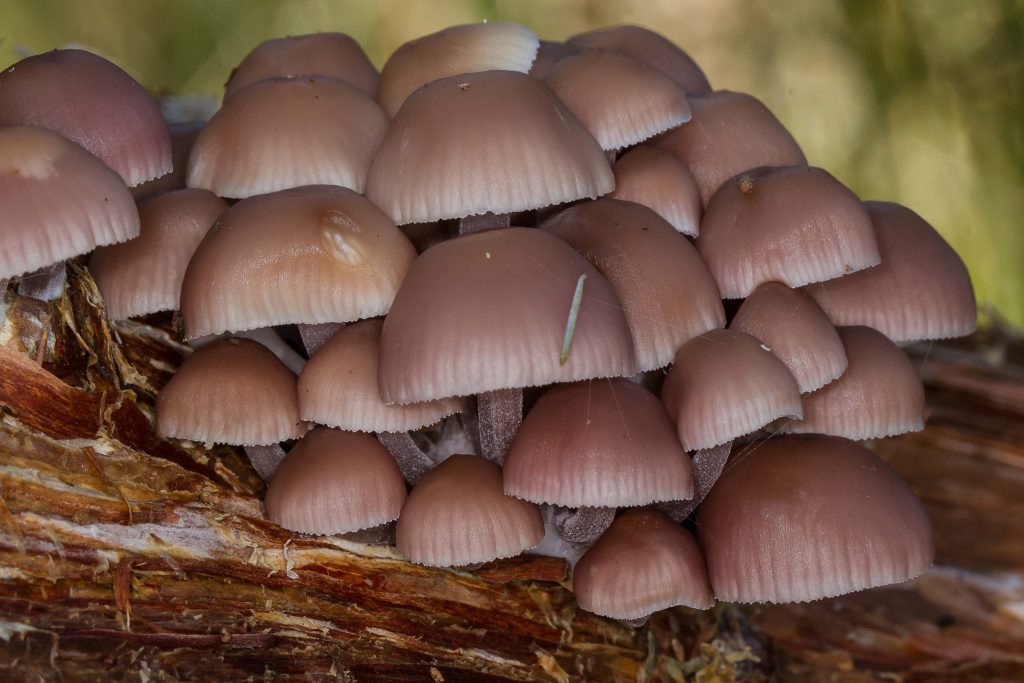
A large number of the Swamp Paperbarks (Melaleuca rhaphiophylla) here have fallen down over the last decade (though it was good to see that there is a lot of natural regrowth occurring) and the fallen trunks provide good fungi habitat. On these we spotted fungi believed to be from another Gymnopilus sp. in good numbers, together with large colonies of Clarke’s Pixie Caps (Mycena clarkeana) (above, C. Prickett) and other Mycena species. Of concern was the sighting of a couple of large clumps of the Australian Honey Fungus (Armillaria luteobubalina), which is a pathogen. Daniel Heald examined some of the skin and slime moulds more closely and found Bysso Skin Fungus (Byssomerulius corium), Cute Bauble Slime Mould (Trichia decipiens) and a Yellow Brain Fungus (Tremella sp.). Daniel also found the Tough Cinnamon Fungus (Coltricia cinnamomea) and Resupinatus cinerascens. (For more images and further details of fungi found by Daniel please refer to KRMB’s project area on BowerBird at the following link: Bowerbird).
With our eyes looking down for most of the morning there was little opportunity to compile a bird list. However, we did have a nice sighting as we were stopped for morning tea. A pair of Forest Red-tailed Black Cockatoos appeared to be checking out a nesting hollow in a large dead tree on the side of Paganoni Road. It was a most enjoyable morning with all participants thrilled to see the diversity of fungi on show. It was also amazing to see how the different species have their own particular niche in the environment. The fungi are also an important food source for other creatures, highlighted by the large numbers of Springtails spotted; millipedes were also busy feeding, though these appeared to be mainly introduced species.
Colin Prickett