

Northern Suburbs Branch, 16 July 2025
NSB member Don Poynton presented a travelogue with a difference, which he aptly subtitled Some things I learnt while travelling from Perth to Alice Springs via the Gibson Desert with Coates Wildlife Tours.
His presentation was part narrative, part quiz, part audience contribution, with a little bit of his own poetry thrown in.
Don began by discussing the various definitions of a Desert and an Arid Zone. There are five vegetation types characteristic of Australia’s arid zones:
- Arid woodland and shrubland
- Acacia shrubland
- Saltbush shrubland
- Spinifex grassland
- Tussock grassland
However, as with deserts, uniformity is the exception and different forms of vegetation intergrade and interdigitate in ways peculiar to each region.
The route of the Coates excursion passed through only two of the vegetation types- Acacia woodlands and Spinifex grasslands.
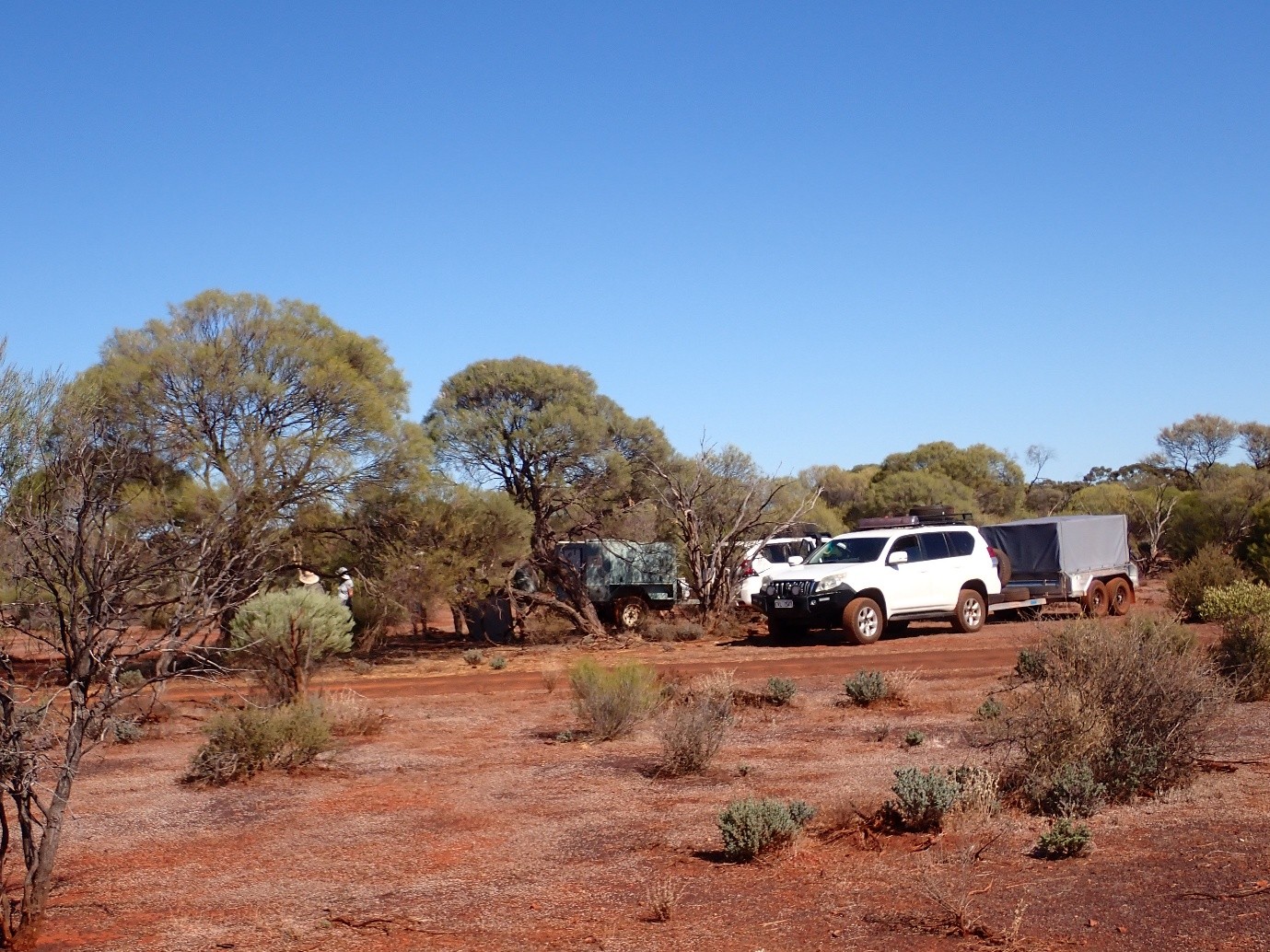

Don posed a number of questions, then used photos from the trip or other reference material to illustrate and explain the answers.
Some examples were:
Where would you find a Dunna Dunna? The plant, Lawrencia helmsii, is a succulent member of the Malvaceae found only on alkaline gypsum flats near salt lakes between Meekatharra, Wiluna, Sandstone and Kalgoorlie.

Who was Alfred Gibson? In 1874, Alfred Gibson was a 28-year-old station worker who joined Ernest Giles’ second expedition, which sought to cross the deserts of Western Australia from east to west. When Gibson’s horse died, Giles sent him back on his own horse to fetch some water, leaving Giles to walk back. Gibson is thought to have lost his way and was never seen again. Giles named the desert, Gibson’s Desert, after him.
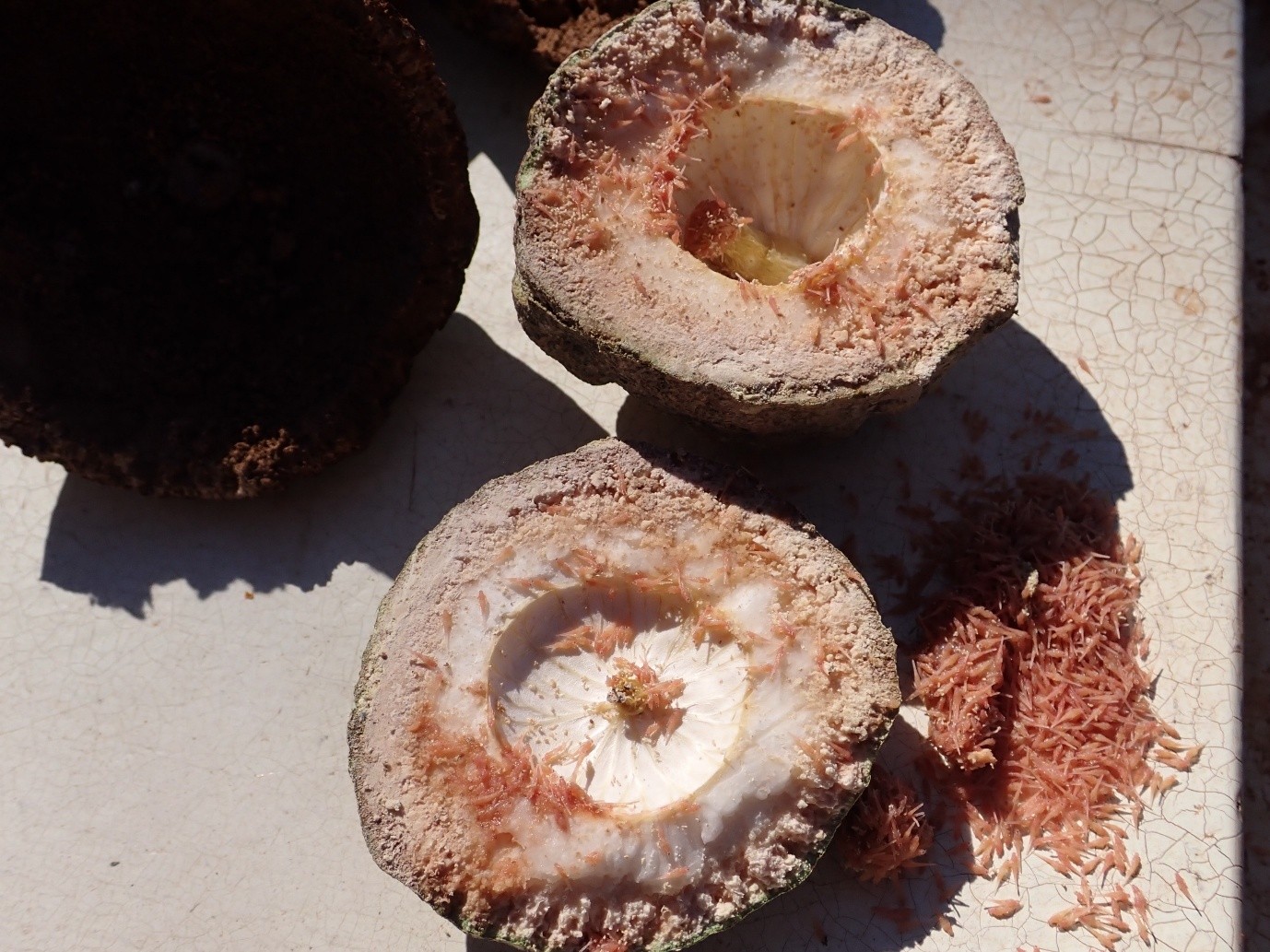
Where would you find a Bush Coconut? The bush coconut or bloodwood apple is a golf to tennis ball-sized hard and lumpy insect gall induced on a bloodwood tree (Corymbia spp). The inner layer, a white flesh similar in appearance to a coconut, contains the female scale insect Cystococcus sp. and her offspring.
How do you tell the sex of a bush fly? At rest, females have parallel wings, while the wings of males form an angle.
What happens around the world at 7.15 am WST every day? The excursion visited the Giles Weather Station and learnt that weather balloons are launched from 1500 locations all at the same time (23.15 UTC the day before)
Don said he was amazed at the number of trees that had the hemiparasitic shrub, Broom Ballart (Exocarpus sparteus) growing at their base, particularly as it is also quite common in the dunes along our metropolitan coastline. He then explained that its presence beneath the trees was an example of what this year’s Serventy Lecturer, Prof. Byron Lamont, had described as a 3-way biotic interaction. The plant bears a bright red fruit, which is eaten by a bird who then flies off and alights on the branch of another tree before defecating. The dropped seed then sprouts and eventually parasitises the roots of the overshadowing tree. As it matures, it produces fruit which restarts the cycle.
Don Poynton
All images by Don Poynton