

At the beginning of the year when planning our calendar of events, this June 24-25th weekend visit to Goodale Sanctuary was envisaged to be primarily focused around fungi. However, the dry start to Perth’s winter has resulted in conditions being far from ideal for fungi. With quite a few members away at the time, numbers were down for the Saturday. Ann and Otto Mueller visited in the morning but had left by the time I arrived just after lunchtime to join Bob and Lynette Goodale and a visitor (Di). We were joined by one of Bob’s neighbours and went for a walk around the property to see what we could find. Bob said that there had been 70 mm of rainfall during the week preceding our visit but other than the lake, which had a large area under water (albeit only a shallow covering), there was not much sign of that rain. The soil had soaked it all up and still appeared in need of more. As a consequence, we did not find many fresh fungi—though there were quite a few that had sprung up after an earlier rain event but were well past their best. Those that we did find included Golden Wood Fungus (Gymnopilus allantopus), Ghost Fungus (Omphalotus nidiformis), a yellow puffball fungus, a large Southern Oyster Fungus (Pleurotus australis) and a Woody-layered Bracket Fungus (Fomitiporia robusta).
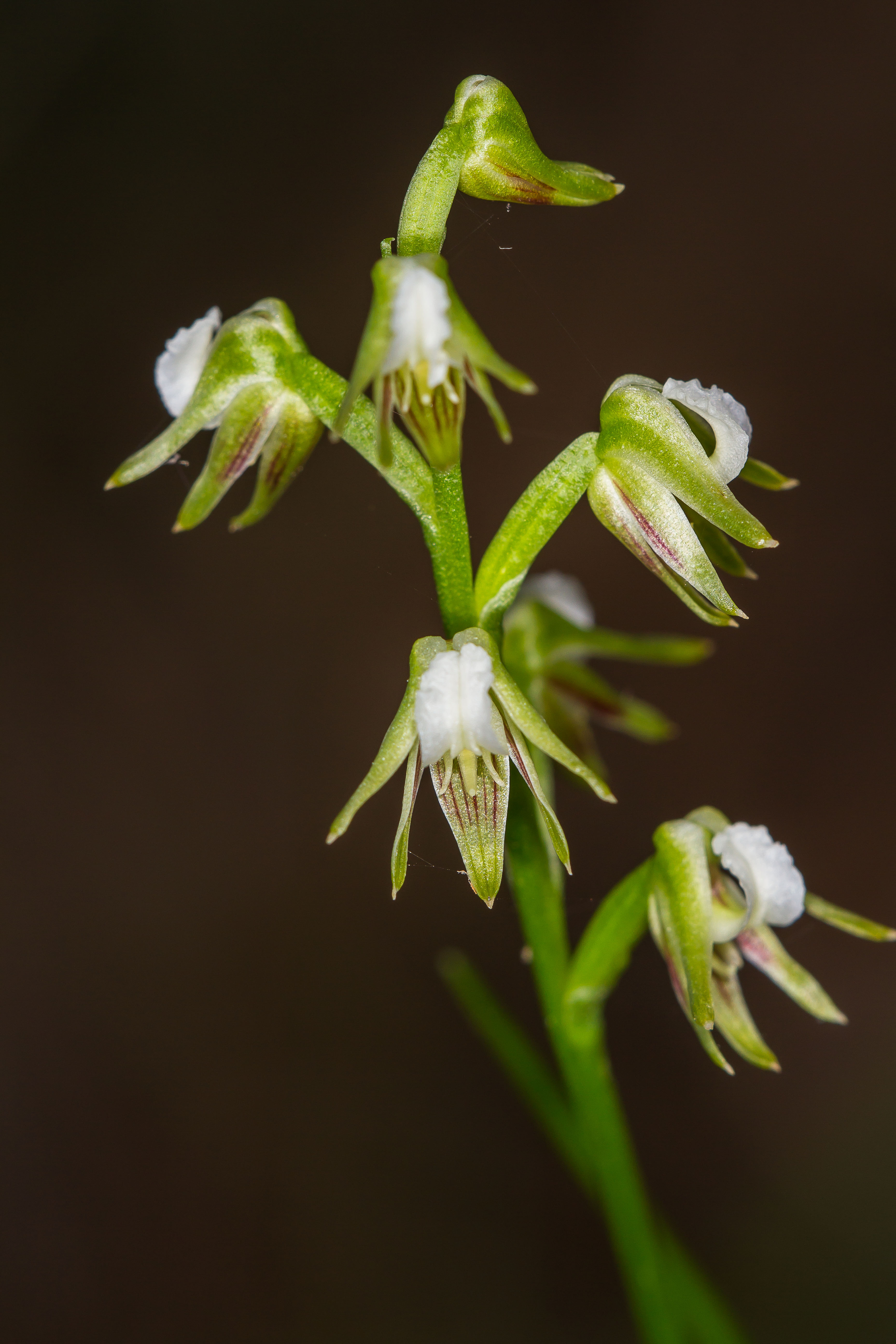
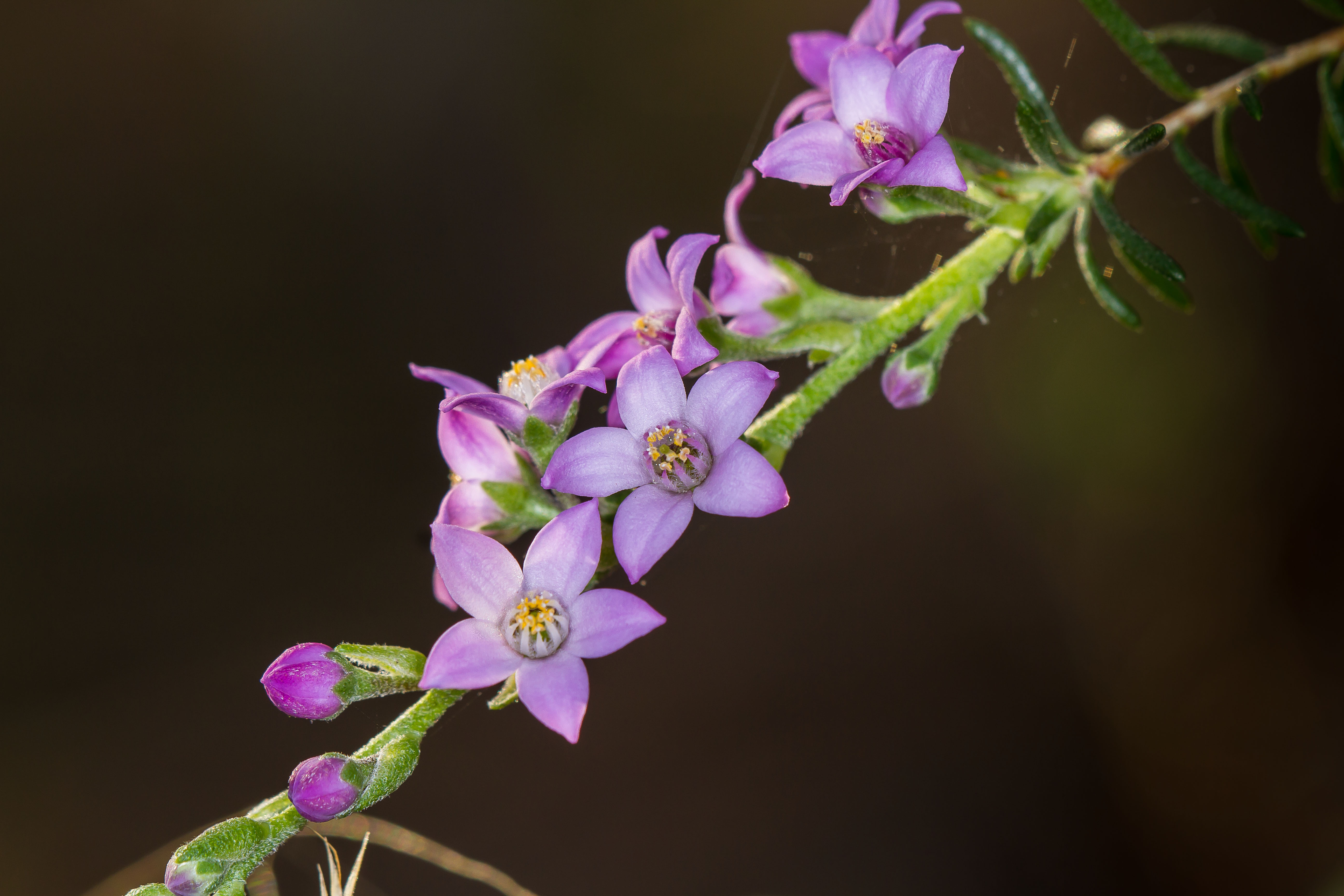
Several plant species were in flower including Firewood Banksia (Banksia menziesii), Holly-leaved Banksia (Banksia ilicifolia), a Matt Rush (Lomandra nigricans), Dark Banded Greenhood Orchids (Pterostylis sanguinea), Autumn Leek Orchids (Prasophyllum parvifolium) (left below) and Pepper and Salt (Philotheca spicata) (right below).
Photos C. Prickett
Donkey Orchids were emerging, together with lots of Red Beak Orchid and Hare Orchid leaves. One pollinated Hare Orchid flower was also found. Birds sighted during our walk included Red Wattlebird, Grey Fantail and Grey Butcherbird. As mentioned, the main lake on the property had a good covering of water but no birds were sighted on the lake during our walk.
Photos C. Prickett
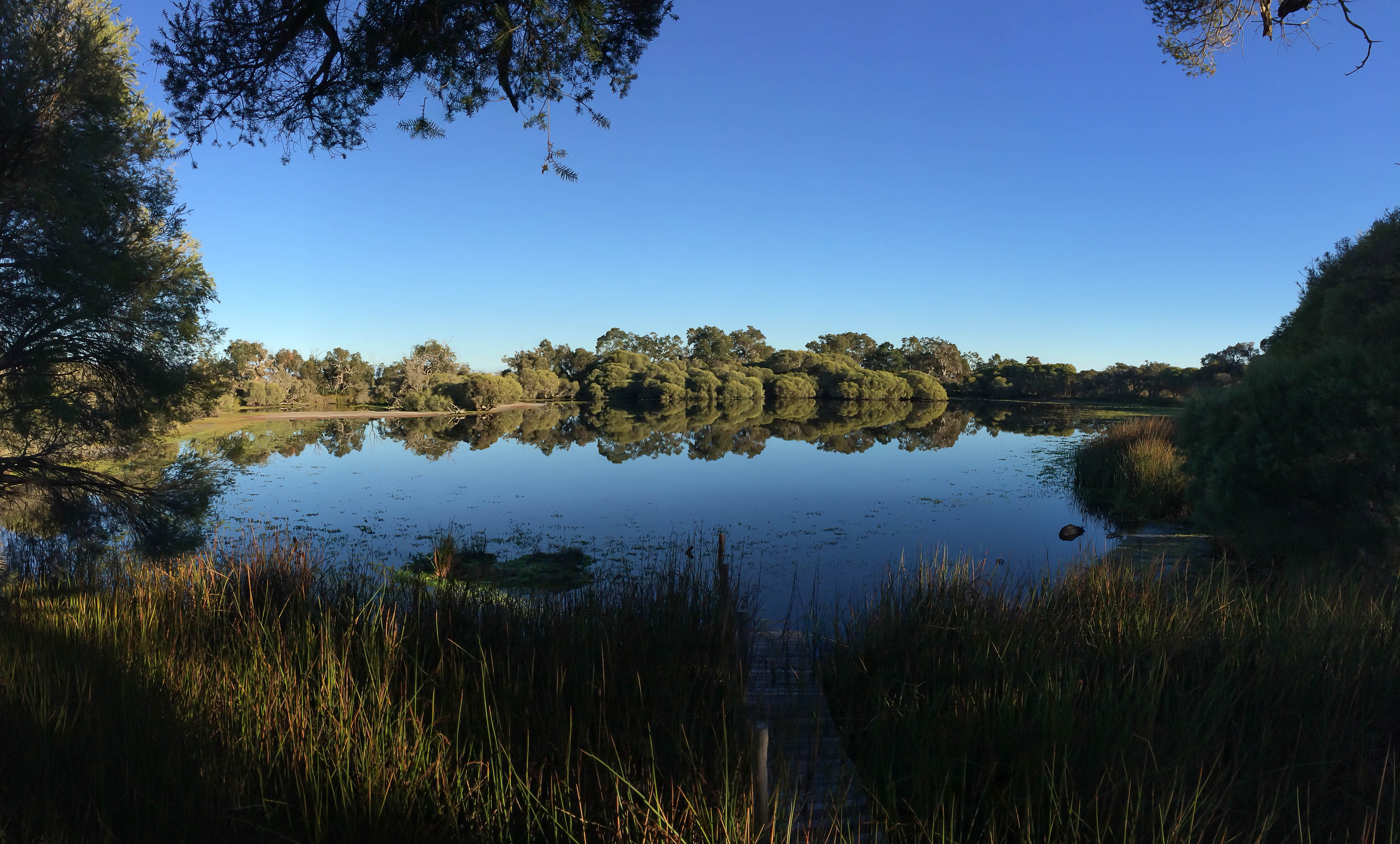
However, as sunset approached ducks were heard calling from the lake, together with a chorus of frogs. Back at the house as we enjoyed some pre-dinner crackers and cheese we were delighted to see a Quenda (Isoodon obesulus) on the back veranda, apparently a frequent visitor in search of a few snacks. Just after the sun went down several Boobooks were calling, one quite close to the house, though we could not spot it. After dinner Bob took me on a spotlighting drive around the property. Unfortunately we did not find any owls, frogmouths or small marsupials. We did see a native cockroach on the trunk of a Banksia and a couple of Huntsman Spiders on another tree trunk plus one Grey Kangaroo crossing the track. At this time of the year after a rainfall event it is common to see Moaning Frogs at night, but we did not find any; perhaps conditions were still a bit dry.
With the temperature dropping to around 60°C overnight, I was glad to take up an invitation to use one of the spare bedrooms for the night—certainly more comfortable than my tent would have been. The bonus of staying overnight is to get out at first light when the birds are active. In addition, the early morning walk provided a beautiful view over the lake as the sun rose in a clear sky. First thing in the morning proved a bit slow for birds but as the sun warmed up there was more activity.
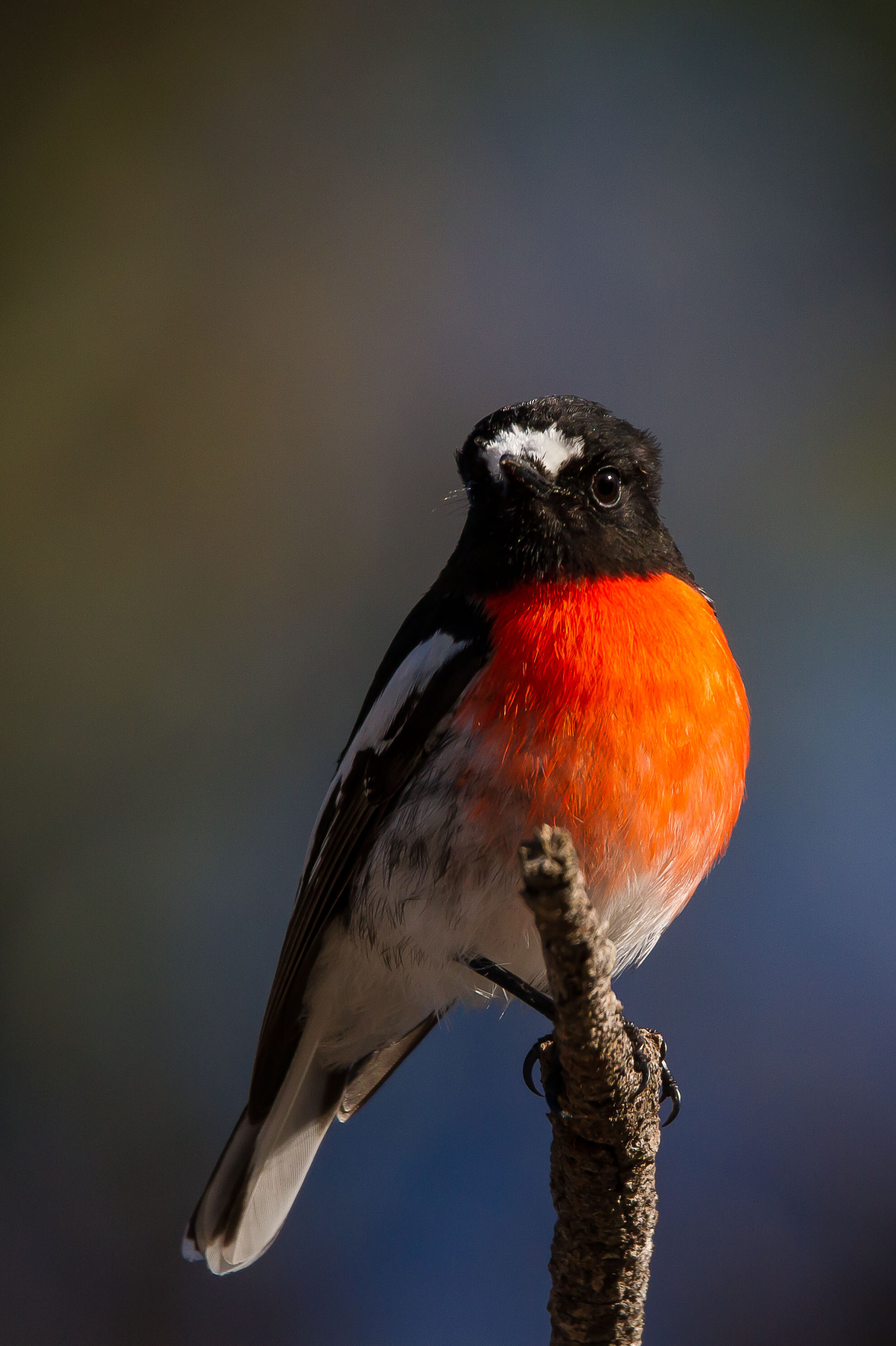
Back at the house more day visitors had arrived and Carnaby’s Black-cockatoos were heard calling over near the main lake. A flock of Regent Parrots flew into a large dead tree for a fleeting stop before taking off again. Ringneck Parrots were noisily squabbling as they fed on Holly-leaved Banksias, while the Red Wattlebirds voiced their anger. Three Forest Red-tailed Black-cockatoos flew over. A Grey Fantail visited the hanging baskets around the veranda, hunting for insects. A nice sighting was a pair of Red-capped Robins that spent some time at the front of the house, the male obligingly posing for a couple of photographs. A pair of Golden Whistlers foraged in the trees nearby.
Photos C. Prickett
As this was a first visit for many of our members since Bob and Lynette’s house was completed, time was spent in showing them around. All were greatly impressed by how sustainability had been built into the design. The house is totally self-sufficient for electricity, water, etc.
As the Main Club was visiting Professor Kingsley Dixon’s property ‘Cypress Farm’ near Waroona, it had been decided that we would drive over and join them for the planned fungi survey. However, by the time we arrived they had set out on their walk and, not knowing which track they had taken, we were unable to catch up. Consequently, we decided to explore some of the tracks around the creek. We found several species of fungi, though nowhere near the number quoted by Roz as the total found during the weekend’s survey. As there will no doubt be a detailed report prepared on this, I will not go into much detail here. Sightings of note for our group were the Fleshy Cup Fungus (Aleurina ferruginea) and some nice clumps of Slender Coral Fungus (Ramaria gracilis). Small Pixie Caps were also found on moss-covered logs as were Golden Wood Fungus (Gymnopilus allantopus). Flowering plants included Trymalium floribundum (Karri Hazel or Soapbush) in bud, Diplolaena dampieri (Southern Diplolaena), a Lasiopetalum with one flower open and lots of buds and Leucopogon verticillatus (Tassel Flower) with buds just forming.
We enjoyed our lunch back at the barn and met up with the members of the Main Club as they returned from their walk. After a further short scout around the tracks close to the pond it was time to depart for home. Many thanks to Bob and Lynette for their hospitality at Goodale Sanctuary—it is always a joy to visit. Thanks also to Kingsley Dixon for the chance to visit his unique property.
Colin Prickett