

There was a surprise on our DRB excursion on 20th October to the Alan Anderson walk-trail in Walliston. We stumbled across a cleared area which had become absolutely full of wildflowers. There were so many flowers that we failed to identify or log them all; we gasped at the abundance.
Of particular note were all the fringed lilies, (Thysanotus multiflorus) including white versions, plus stands of the Red-and-green Kangaroo Paw (Anigozanthos manglesii). In amongst all these were Common Dampiera (Dampiera linearis), Blue Leschenaultia (Lechenaultia biloba), Yellow Buttercups (Hibbertia hypericoides), Rose-tipped Mulla-mulla (Ptilotus manglesii), Handsome Wedge Pea (Gompholobium knightianum,) and so many more.
Sadly, it appeared that the site might be bulldozed for a new housing development which is swiftly encroaching on the area.
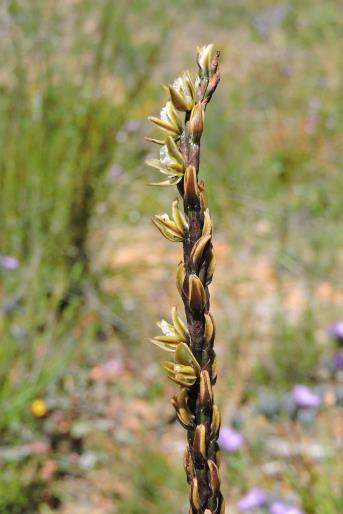
Amongst all the other flowers were two splendid specimens of the Tall Leek Orchid, (Prasophyllum elatum) (below, J Start) and along the main track were frequent displays of the Blue Lady Orchid (Thelymitra crinita). Cowslip Orchids (Caladenia flava ssp sylvestris) were also flowering.
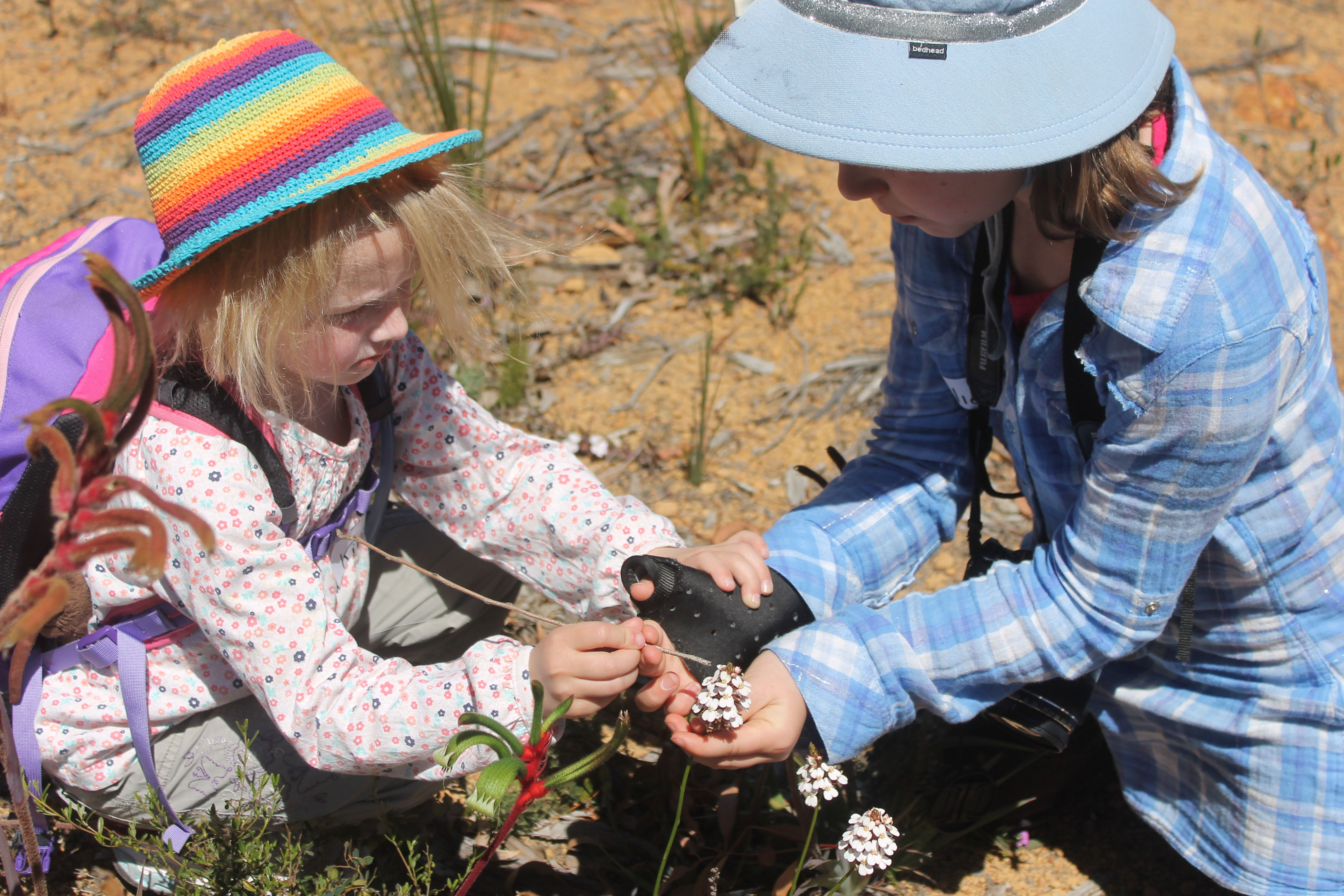
The DRB had invited members of local home-schooling groups to join them on the excursion. We were very disappointed that eleven people who indicated attendance did not turn up, as we had closed bookings because we’d reached maximum numbers. However, of the families that attended, the children learnt about trigger plants for the first time and the many Reed Trigger Plants (Stylidium junceum) captured their attention (above, R Green.)
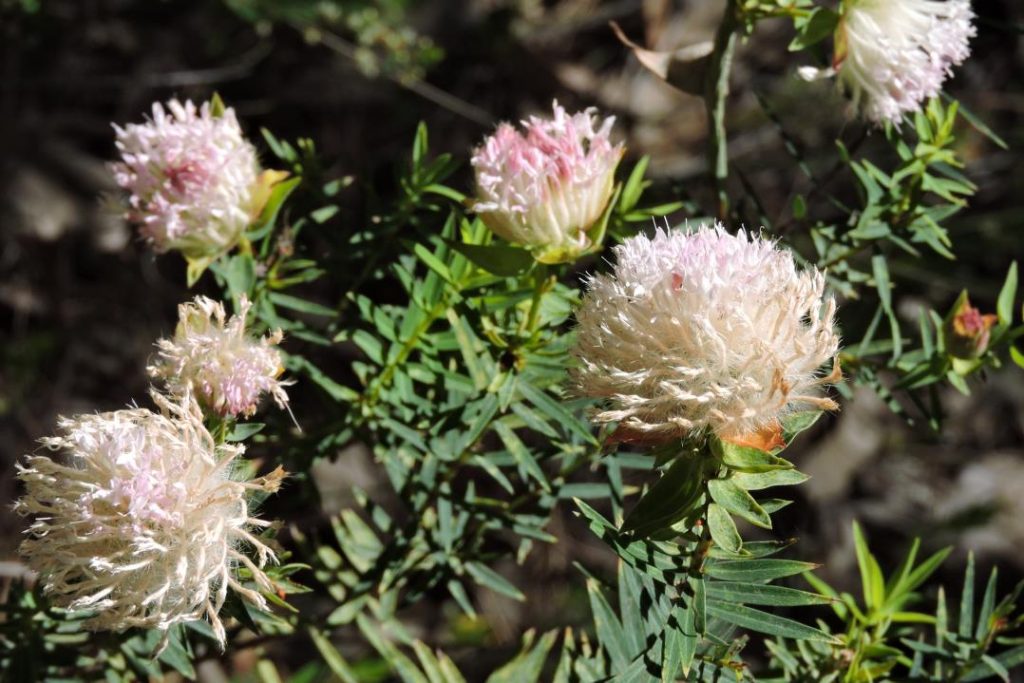
We barely had time to look up, but on the rare occasions when we did we watched a male Golden Whistler (Pachycephala rufiventris), in the trees and Rainbow Bee-eaters (Merops ornatus) circling overhead. The Red-tailed Black-cockatoos (Calyptorhynchus banksii) were there again too. When we had barely begun walking we were drawn to many tall stands of pimeleas (Pimelea spectabilis)(below, J Start) just near the car park. The bright yellow of the Yellow Flags (Patersonia umbrosa var. xanthina) were also appreciated and Lynda Tomlinson explained about the male and female forms of the False Boronia (Phyllanthus calycinus) that we saw.
It was a warm day, and we had young children with us, so we turned around and did not complete the whole walk this time. We did make a determination to return, though.
We have now set up the Alan Anderson walk trail as one of our DRB projects on the Atlas of Living Australia and have uploaded many photographs of the flowers we saw. Please visit the project here and see the progress we are making: https://biocollect.ala.org.au/ala/project/index/e1e8d799-c4e7-48b8-8f0f-14db1e0c9bff#mapVis
We have now invited our visitors to upload further photographs as part of their ongoing natural history education.
Rachel Green