

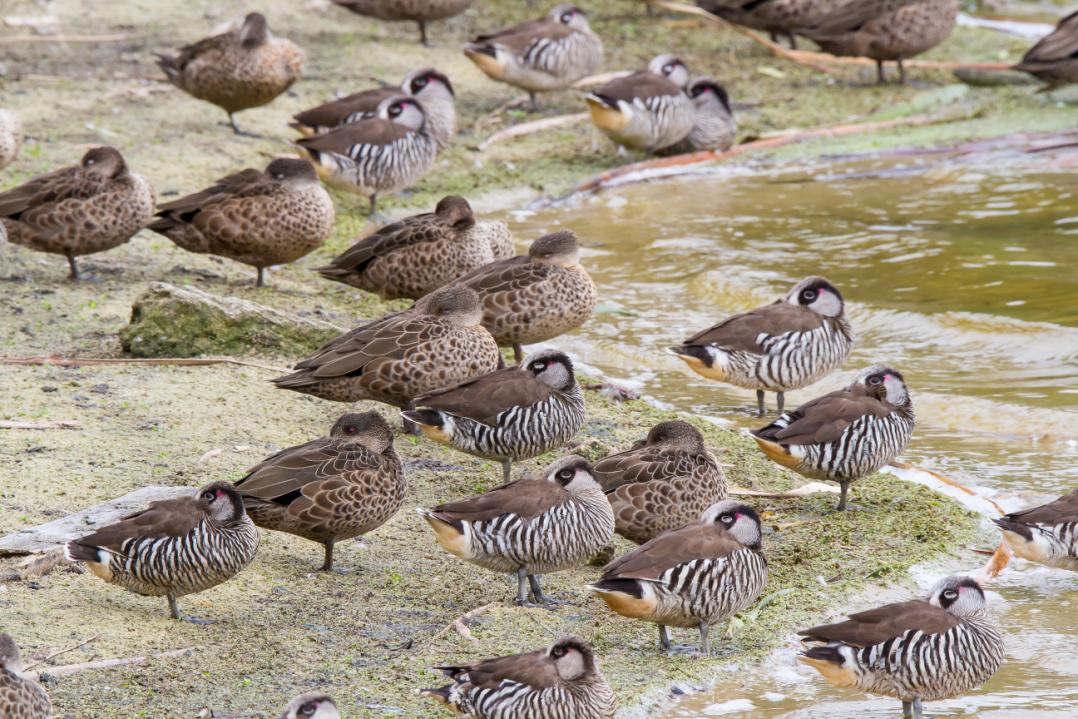
Eight members plus one visitor assembled at the main car park at the lake on March 25: a grey morning with rain about. Our leader for the day was Otto Mueller, who suggested that we should have a quick look out on the lake from the small observation platform at the southern end of the car park before driving to the Cockburn Wetlands Education Centre, from where we could easily access the floating bird hide at the north-eastern edge of the lake. Water levels in the lake were good, reflecting the effect of summer rainfall events. Birdlife was abundant at both locations, with Pink-eared Ducks (above), Pacific Black Ducks, Grey Teal, Australian Shelduck and Musk Ducks easily spotted from the observation platform together with Eurasian Coots and Black Swans. In the eucalypts along the paths there were Rainbow Lorikeets, Ravens and Magpie Larks, while Little Corellas and Red-tailed Black Cockatoos were seen flying over the lake. From the Wetlands Centre’s car park we walked down to the bird hide. Both the hide and the walkways have been built such that they can rise and fall with the water level in the lake. The walkway passes through shrubbery that is in very good condition. The bird hide looks out on to a shallower part of the lake. Consequently, from the hide we saw large numbers of Black-winged Stilts feeding, along with several Red-necked Avocets. A solitary migratory wader was spotted amongst the stilts but took off before we could identify it. Every now and then something would spook the Stilts and Grey Teal and they would all take to the air. Often there was no apparent reason but on one occasion a Swamp Harrier was seen soaring low over the reeds. On the far side of the lake there were around thirty Yellow-billed Spoonbills foraging along the edge of the reeds. Several Eastern Great Egrets and a single Glossy Ibis accompanied the Spoonbills. Australian White Ibis and Purple Swamphens were also spotted foraging in amongst the reeds. White-faced Herons were feeding in the shallows around the edge of the lake. Little Pied Cormorants and Little Black Cormorants were spotted fishing and also roosting on logs while drying their feathers. Welcome Swallows flew overhead feeding on the flying insects. The healthy vegetation bordering the lake provided excellent habitat for woodland birds. We spotted New Holland Honeyeaters, Red Wattlebirds, Singing Honeyeaters, Splendid Fairy Wrens, Willie Wagtails and Grey Fantails.
While most of us were watching the birds, Daniel Heald was busy shaking reeds and shrubbery to see what insects he could catch in an up-turned umbrella. He provided the following summary of the invertebrates sighted. On the bark of a large eucalypt at the main car park he found an unusual comb-footed spider that hunts ants on tree trunks, later identified as Euryopis splendens. At the bird hide two species of flies were seen on the muddy shoreline; one that was seen only on the mud was identified as the Shore Fly Ochthera sp. and the other, which was also noticed moving on top of the water was the Long-legged Fly Hydrophorus sp. Shaken out of the reeds was a tiny plant-hopper nymph with a comparatively huge Dryinid wasp parasite attached. Shaken out of the Leptospermum were: a minute wasp with enormous flabellate (fan-shaped) antennae; a Horned Shield Bug (Cuspicona steneulla); (Pentatomidae); Taylorilygus sp. (Miridae); multiple Assassin Bugs including the Thread-legged Spider Assassin Empicoris sp. (Reduviidae); a very beautiful Paropsine Leaf Beetle (Paropsisterna galatea) (below) that feeds on Leptospermum instead of eucalypts, and small brown Flea Beetles (Chrysomelidae); an unusual spotted Bark Louse from the Hemicsopus genus (Psocoptera: Hemipsocidae); European Paper Wasps plus Drepanacra binocula, the Variable Brown Lacewing.
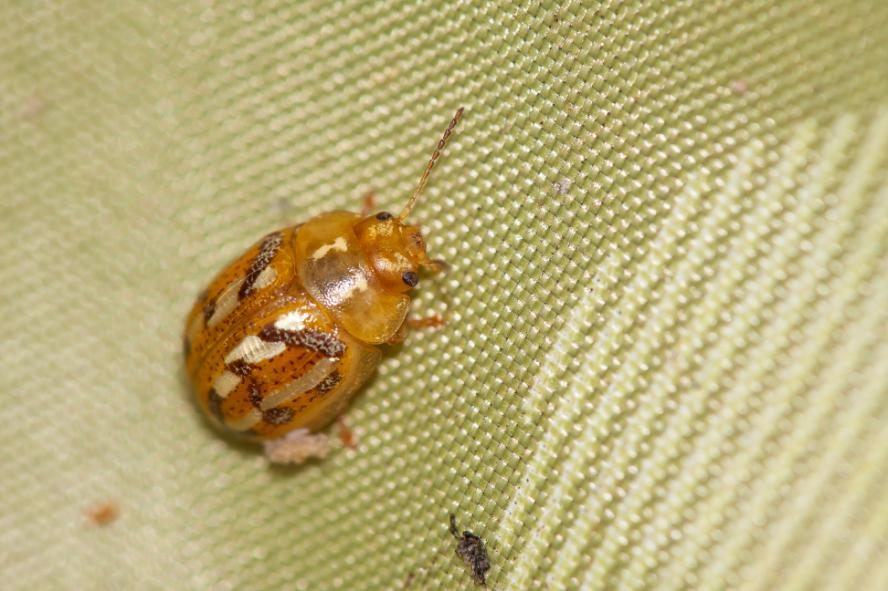
Photos of the invertebrates can be found on the Bowerbird website.
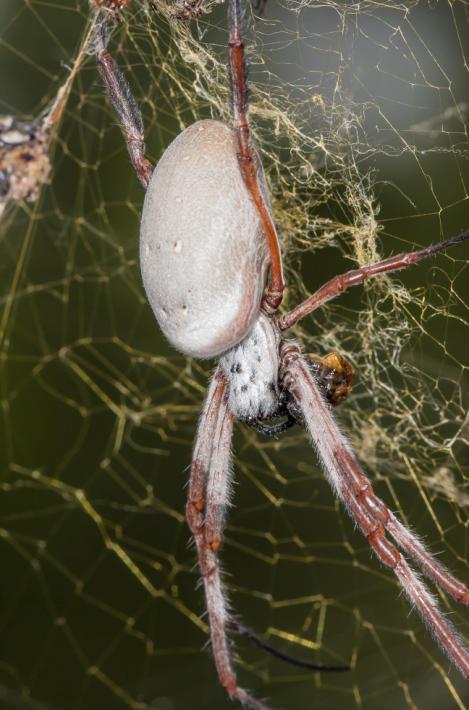
After a productive session at the hide we headed to the picnic tables at the Wetland Centre for morning tea. Here we added to our bird list with Laughing Dove, Australian Ringneck, Magpie and Black-faced Cuckoo-shrike; the Magpies keen to share our biscuits. There were also large Golden Orb Weaver spiders (Nephula edulis) (above) in this area.
After morning tea we started to head home. A last stop at the main car park area added a few more birds to our list, with Blue-billed Duck, Australasian Grebe and a solitary Great Crested Grebe (juvenile) seen near the observation platform. In all we saw a total of 39 species of birds. The bird list for the morning was entered into the Birdlife Australia Birdata database. Despite the cool, overcast conditions it had been an enjoyable morning.
Colin Prickett