

A good turnout of 11 members made the trip to Herdsman Lake for the October field outing. Herdsman Lake is part of a chain of wetlands that once extended from north of Joondalup to south of Cockburn. Herdsman Lake is one of the few remaining water bodies in the system, most having been drained and filled to make way for development. The Park contains a diversity of landscapes ranging from expansive views over open waters, to dense wetland rushes, fragments of remnant paperbark and Flooded Gum woodlands and well-maintained open grass parklands.
Herdsman Lake contains an inner seasonally dry wetland dominated by Bulrush (Typha orientalis) and a moat consisting of four deep permanent water bodies that have been formed by dredging operations. Herdsman Lake and its surrounds are important bird breeding habitats and provide a summer refuge supporting high numbers of waterfowl. Over 100 species of birds have been recorded at the Lake, some of which have come from the other side of the world. Such richness of birdlife in an urban setting is uncommon, so Herdsman Lake should be considered a very special area.
Our walk started at the Herdsman Lake Wildlife Centre, managed by the WA Gould League. Out on the area of open water in front of the Wildlife Centre we spotted three pairs of Great Crested Grebes, all were moving around the edge of the rushes and none appeared to be tending a nest as yet. Raptors, including a Brown Goshawk and Swamp Harrier were seen soaring above the inner wetland. At one stage a flock of 15 great egrets simultaneously took to the air above the central wetland, though no reason for the disturbance was apparent from our viewpoint.
Colin Prickett
We made our way out to the boardwalk that meanders through wetland beneath a canopy of Swamp Paperbarks, some of which were in flower. At one point we stopped to admire and photograph a Great Egret that was hunting in the shallows among the paperbarks, it’s white plumage in stark contrast to the shadowy background. Motorbike Frogs (Litoria moorei) were calling as we emerged into an area where the boardwalk continued through a section of the lake where the paperbarks gave way to Typha orientalis. A male Rufous Night Heron in breeding plumage was spotted flying overhead at this point.
Back amongst the paperbarks a number of invertebrates were sighted either in or above the muddy water. These included a tiny damselfly, a male Golden Dartlet or Aurora Bluetail (Ischnura aurora) and several Common Bluetail Damselflies (Ischnura heterosticta). Flies included various mosquito larvae – Culicidae – but, oddly, not many adults – possibly the stiff breeze was subduing them. And at least 5 different species of midge and midge-like flies. Also a very large Tiger Cranefly (Nephrotoma australasiae).
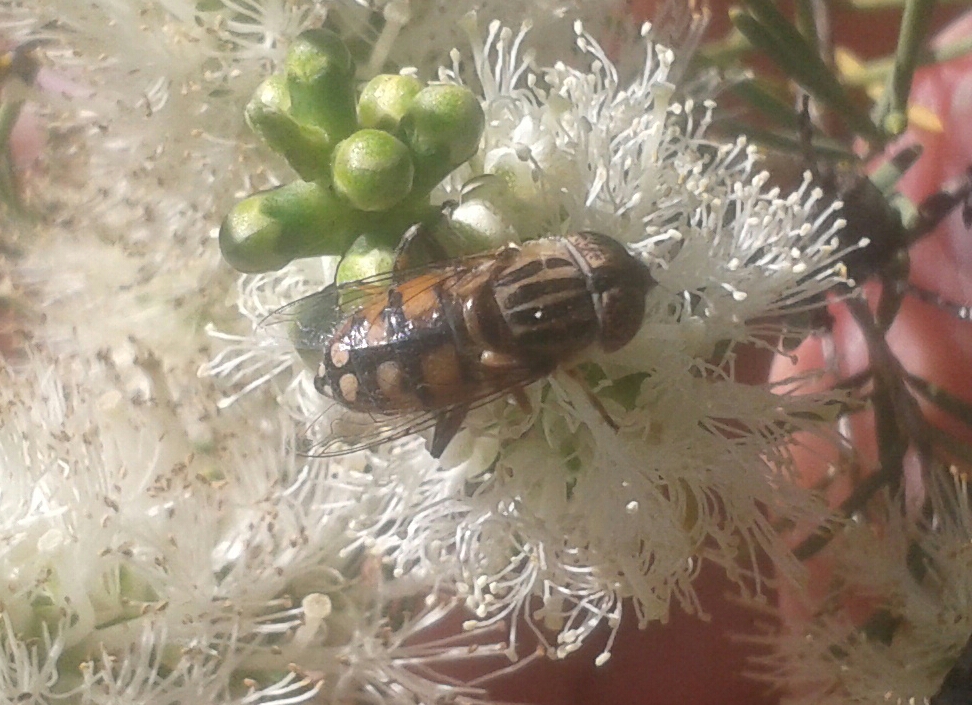
More robust flies included Long-legged Predatory Fly (Fam. Dolichopodidae); a Goldenbrowed Flesh Fly (Sarcophaga aurifrons); an orange and black Garden Maggot (Bibio imitator – Fam. Bibionidae); a blue and orange Chrysomya blowfly; and the stunning Eristalinus punctulatus – Native Drone Fly , the adult of the rat-tailed maggots that Otto Mueller had discussed at a recent KRMB meeting. The drone flies were certainly taking advantage of the Melaleuca blossom. A small Fishing Spider (Dolomedes sp.) was spotted running across the water and diving underneath when approached.
Daniel Heald
Other invertebrates included a giant hairy caterpillar the Hairy Mary (Anthela varia), and some large cocoons on the same tree that were probably Emperor Gum Moth (Opodiphthera sp. ). These had been parasitised, probably by a small wasp.
Galls and Scale Insects included the Lac Scales on Melaleuca (Fam. Keriidae); and numerous squashy yellow, globular galls, and associated white bird-seed like galls on the wattles near the Panda Hut.
Other Hemiptera included a Poecilometis sp. Stink Bug Nymph; and the Brown Sowthistle Aphid (Uroleucon sonchi)
Spiders included a small but strikingly marked orbweaver, Plebs cyphoxis, formerly Araneus and colourfully marked Theridiids on the Gould building.
Fungi noted – only the pathogen Hollyhock Rust (Puccinia malvacearum) on Small-flowered Mallow (Malva parviflora).
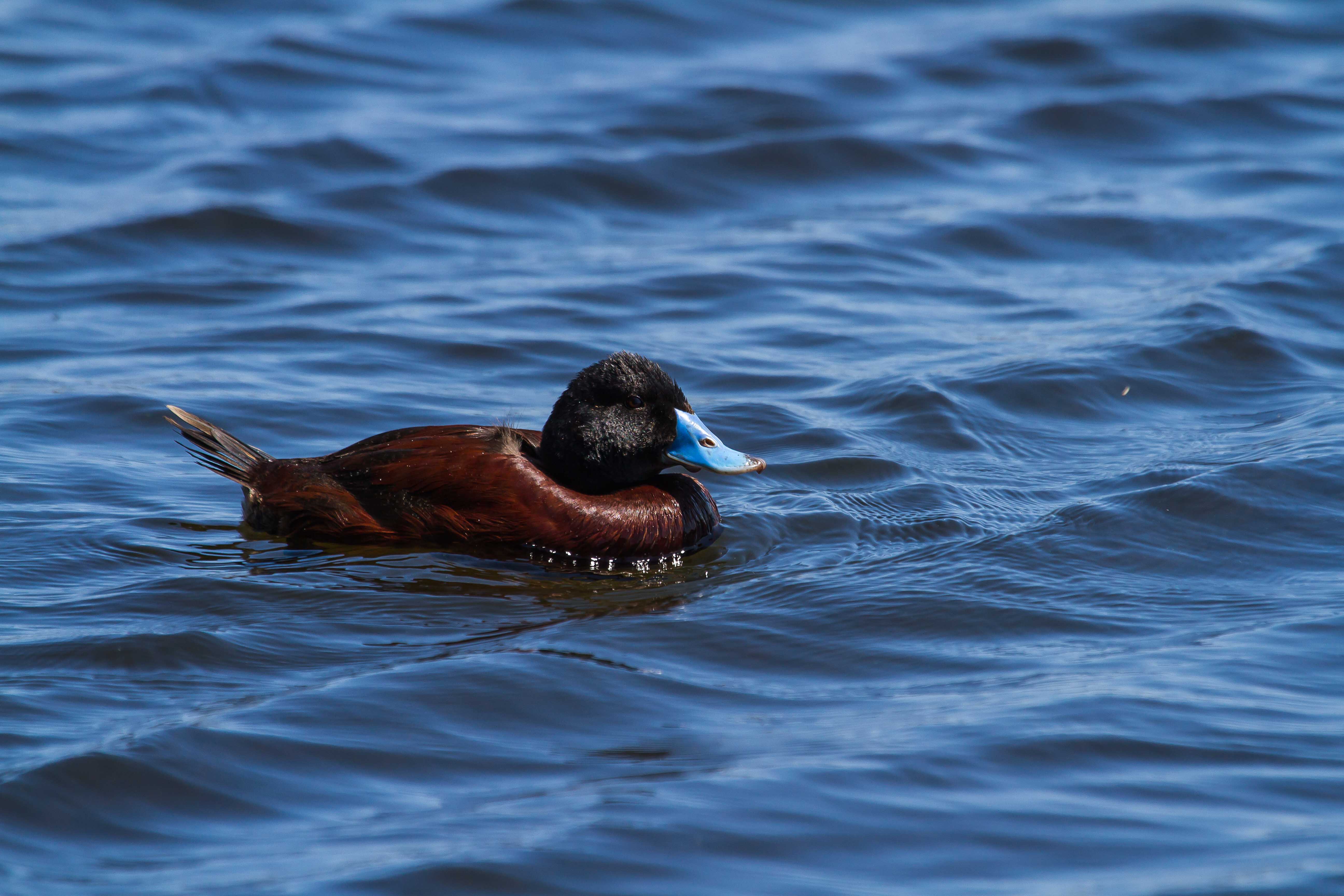
A total of 30 species of birds were spotted as detailed below. It was nice to be able to get close to a group of Blue-billed Ducks, female Musk Ducks (but oddly no males were spotted or heard) and the Great Crested Grebes.
Bird Sightings
| Great Crested Grebe | Australian Wood Duck | Nankeen Night-Heron |
| Hoary-headed Grebe | Eastern Great Egret | Western Gerygone |
| Pacific Black Duck | Dusky Moorhen | Little Grassbird |
| Hardhead | Little Pied Cormorant | Little Black Cormorant |
| Eurasian Coot | Silvereye | Australian White Ibis |
| Purple Swamphen | Red Wattlebird | Australian Raven |
| Blue-billed Duck | Black-winged Stilt | Willie Wagtail |
| Australian Shelduck | Brown Goshawk | Australian Magpie |
| Musk Duck | Swamp Harrier | Welcome Swallow |
| Grey Teal | Brown Honeyeater | Rainbow Lorikeet |
After our walk we enjoyed morning tea before making our way home. It had been a very enjoyable morning. Thanks to Daniel Heald for the invertebrate details.
Colin Prickett
Footnote to the Wongan Hills Field Trip Report (Last newsletter)
The unidentified beetle that was found at Reynoldson Flora Reserve has been identified as a Scarab Beetle belonging to the Prochelyna species. It is suspected that it may be an undescribed species and Dr Terry Houston of the WA Museum and Paul Hutchinson from the Department of Agriculture are planning to investigate further.