

Twenty students from Year Six and two teachers, from Good Shepherd Primary school in Kelmscott, were taken on a nature walk around their property by an expert group of DRB members. Joff Start and Mike Green took half of the group bird watching and the other half were led by Joy McGilvray and John Abbott on a wildflower expedition, with Kevn Griffiths adding in his expertise on fungi.
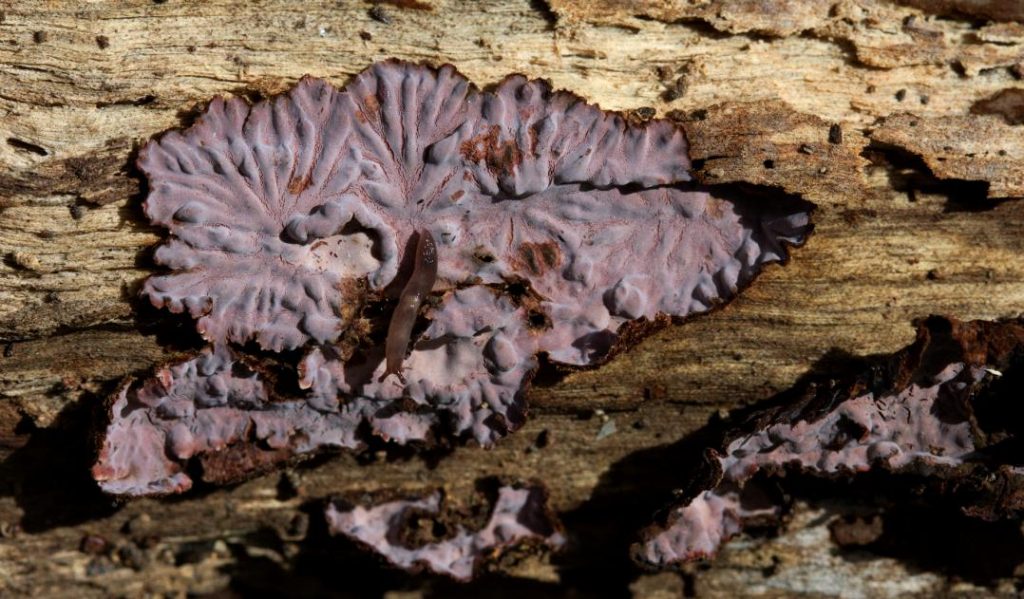
Purple Skin Fungus (Lopharia crassa) Photo: M. Honeybun
Whereas on our survey of the property in October we saw Cream Bracket fungus (Laetiporus portentosus) and Purple Skin Fungus (Lopharia crassa) (NB spot the slug!), this time the children delighted in finding some Scarlet Bracket Fungus (Pycnoporus coccineus).
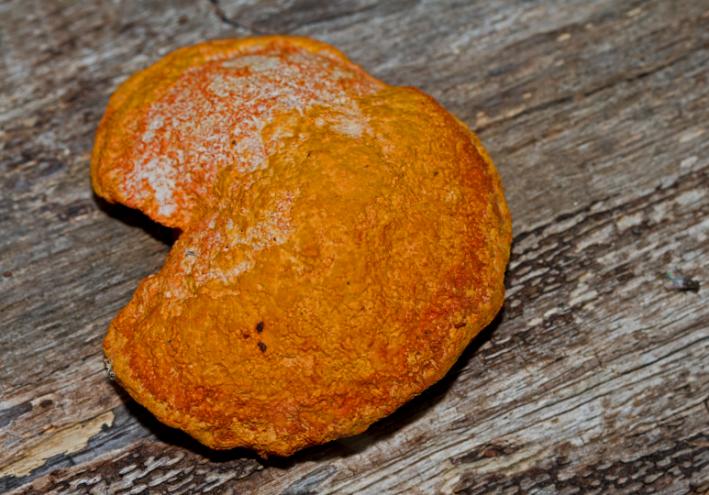
Scarlet Bracket Fungus (Pycnoporus coccineus) Photo: M. Honeybun
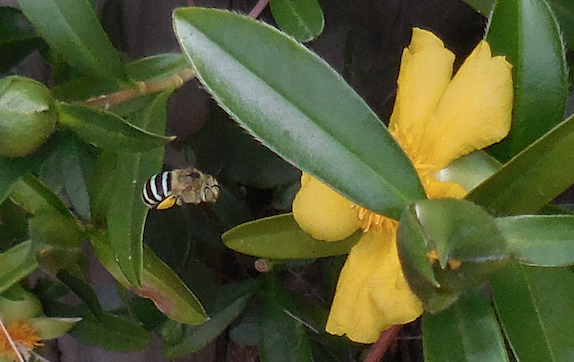
The highlight, though, was seeing a Blue-banded Bee (Amegilla cingulata) not only with the first group, but finding it was still there when we took the second group! No one, neither children nor teachers, knew of native bees and had never been aware of seeing one. We couldn’t photograph it, so John photographed one later and we have sent the photograph to the school along with suggestions for building a native bee ‘hotel’.
Sadly, many of the wildflowers we had seen on our September survey were no longer flowering. It was a stark reminder of how quickly the seasons change. However, Hakea prostrata and Hakea undulata still had a few flowers as did the Honeypot Dryandra (Banksia nivea). The property has Zamias (Macrozamia riedlei) and Joy took the opportunity to explain how old they were. We were also able to educate the school on the dangers of having the castor oil plant (Ricinus communis) growing.
The bird group added three extra birds to our survey list: Rainbow Lorikeets (Trichoglossus haematodus), Black-faced Cuckoo Shrike (Coracina novaehollandiae) and the Grey Butcher Bird (Cracticus torquatus). The latter posed for a long time, allowing Mike to teach the children how to use binoculars and their bird books. Birds seen again included the Red-tailed Black Cockatoo (Calyptorhynchus banksii), a Straw-necked Ibis (Threskiornis spinicollis) flying overhead, and a Common Bronzewing (Phaps chalcoptera). This now brings our bird list to 21. With five more surveys to come in 2018 we hope to double that number.
There was no shortage of insects and we’re still identifying several of them and are yet to put them on the Atlas (of Living Australia.) The children enjoyed seeing a Christmas Spider (Austracantha minax), a Crusader Bug (Mictis profana), an adult Antlion (Myrmeleontidae), a Hover Fly (Syrphidae), and a Gumleaf Grasshopper (Goniaea australasiae), amongst many. We need more experts with us to keep up with what we are seeing! And more photographers to help capture everything for the Atlas and the school.
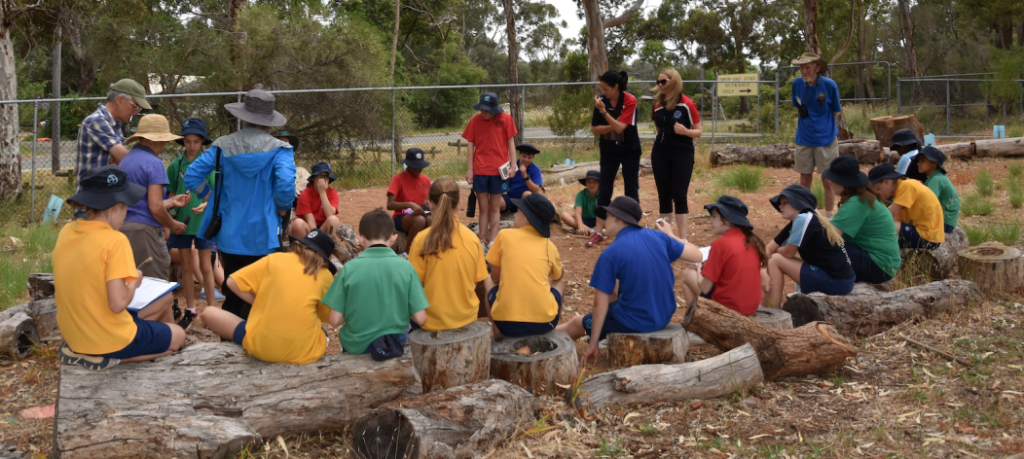
Talking to the students after the walk. Photo: J Start
The children also saw three small reptiles but these ran off before they could be identified.
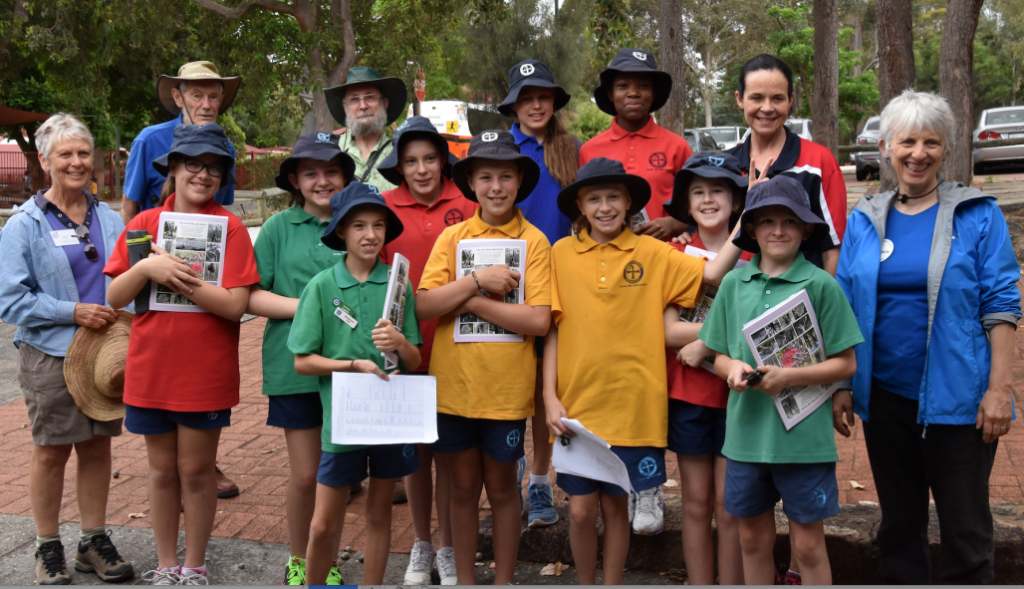
Students with their wildflower books. Photo: J Start
At the time of writing we have 69 records on the Atlas of Living Australia via Biocollect and all bar one has identifying photographs. Please take a look:
BioCollect project, Arbuthnot St, Kelmscott Western Australia
We hope you will join us at our next survey—we need you!
Rachel Green
The bird list is on next page.