

The weather looked threatening but a group of six naturalists (including a new member) braved the forecast on July 15 and met at the Mount Observation picnic area. This is in the Wandoo National Park, some 80km east of Perth.
After a cuppa (and a sprinkle of rain) we set off walking around the loop road admiring the flowers that were out and included a stop to look at the bird hide that was constructed in cooperation with DRB. The birds were not numerous, though a cuckoo was calling. The Banksias (B sessilis, ex-Dryandras) were in full flower. Other flowering species included Allocasaurina sp., Hovea trisperma, various Grevilleas and Hakeas.
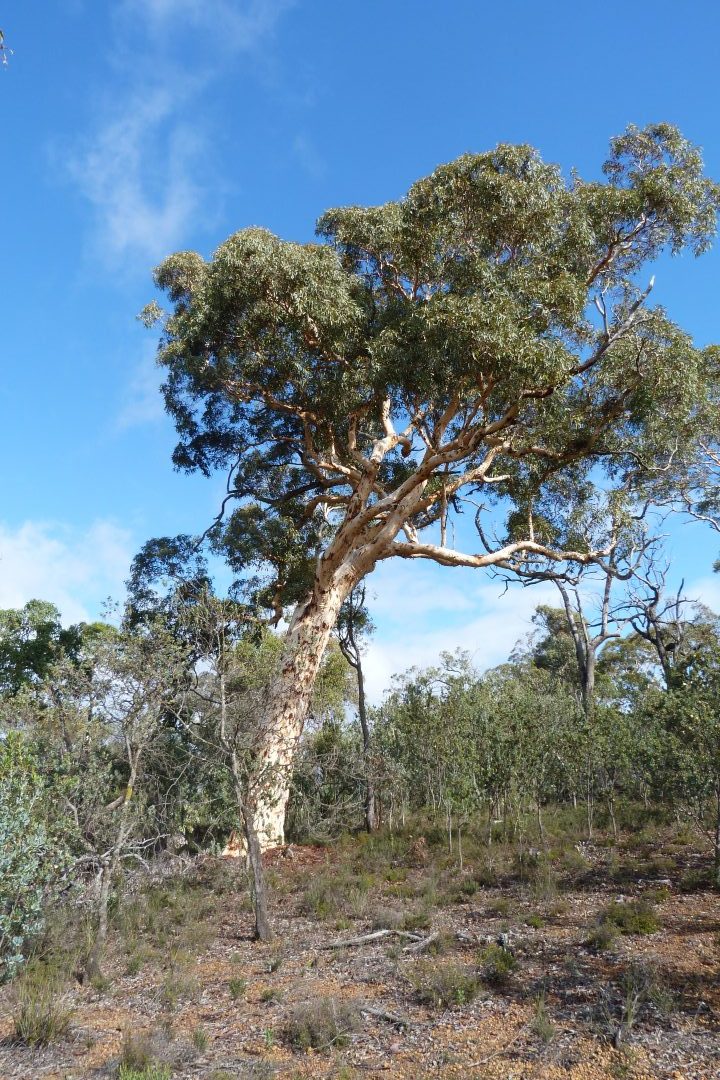
The white gum (Eucalyptus wandoo) and the Powderbark Wandoo (Eucalyptus accedens) were the dominant trees. They were quite spectacular—we don’t appreciate these trees enough, although many of us would have trodden wandoo floorboards in our lifetimes. Although they occur together, they are not closely related—the E. accedens is usually higher in the landscape, the new bark is pinkish-yellow rather than yellow-cream and the buds and fruit are ovoid.
We then proceeded to York and went to the Mt Brown Lookout, which has views across the town and the Avon Valley.
After lunch (and a visit by some to the lolly shop) we went to the Grey Street bush garden. This was a quarry filled with building debris after the 1968 earthquake. After 2000, the York Wildflower Society (under Joanna Seabrook’s leadership) started this bush garden displaying the wildflowers of the Wheatbelt NRM area. Most of them are labelled and the collection is growing. It is certainly a must when you visit York.
After this we dispersed home, though some of us went to the Sock Shop to buy woollen socks for the winter weather.
Margaret Larke