

KRM Branch 26 March 2023
The March field outing was to Lake Mealup, part of the Peel-Yalgorup Ramsar Site 482, just east of the Peel-Harvey Estuary and north of Lake McLarty. A group of 10 members plus two visitors turned up on a fine morning.
Peter Wilmott of the Lake Mealup Preservation Society met us at the parking area and, at the meeting area, he provided a brief rundown of the reserve and the work that the Society has put in for the benefit of those that were first-time visitors. We then headed down to the bird hide on the main lake.
Looking out, we could see that water levels were dropping, and there were a number of exposed mudflats. The low water levels were ideal for foraging waders such as Yellow-billed Spoonbills and Red-necked Avocets, with both species present in large numbers. Australian Shovelers, a duck species favoring shallow water, were also among many wetlands’ birds present.
Now and then, a flock of small waders would take to the air on the far side of the lake from our viewpoint. Looking into the sun made it difficult to identify them. But when they landed on the mud flats, a spotting scope found that they were primarily Red-capped Plovers with a Curlew Sandpiper and Sharp-tailed Sandpiper also present. Closer to the bird hide, numerous Pied Stilts were also enjoying the shallows and mud flats. A White-bellied Sea Eagle was spotted in a tree at the far side and would later be seen soaring over the lake – always a great sight.
We spotted many small woodland birds in the shrubbery around the hide, such as Splendid Fairy Wrens, Grey Fantail, Silvereyes and Willie Wagtails. A search of the Melaleuca shrubbery around the shoreline turned up many small insects; these were identified as Thaumastocorids and were of interest to the Department of Agriculture scientists who asked Daniel if he could return and collect some specimens (which he later did). Thaumastocorids are a small family with 20 known species, but Daniel believes this number could increase once the scientists study the large number of specimens that he collected for them.
From the bird hide, we made our way to the smaller lake, which we found almost dry. Almost every one of the Swamp Paperbarks (Melaleuca raphiophylla) surrounding this lake had the dried exuviae of dragonfly larvae, showing the aquatic life that such ephemeral lakes support. On the lake itself was a group of 20 Common Greenshanks, a nice addition to the day’s bird list.
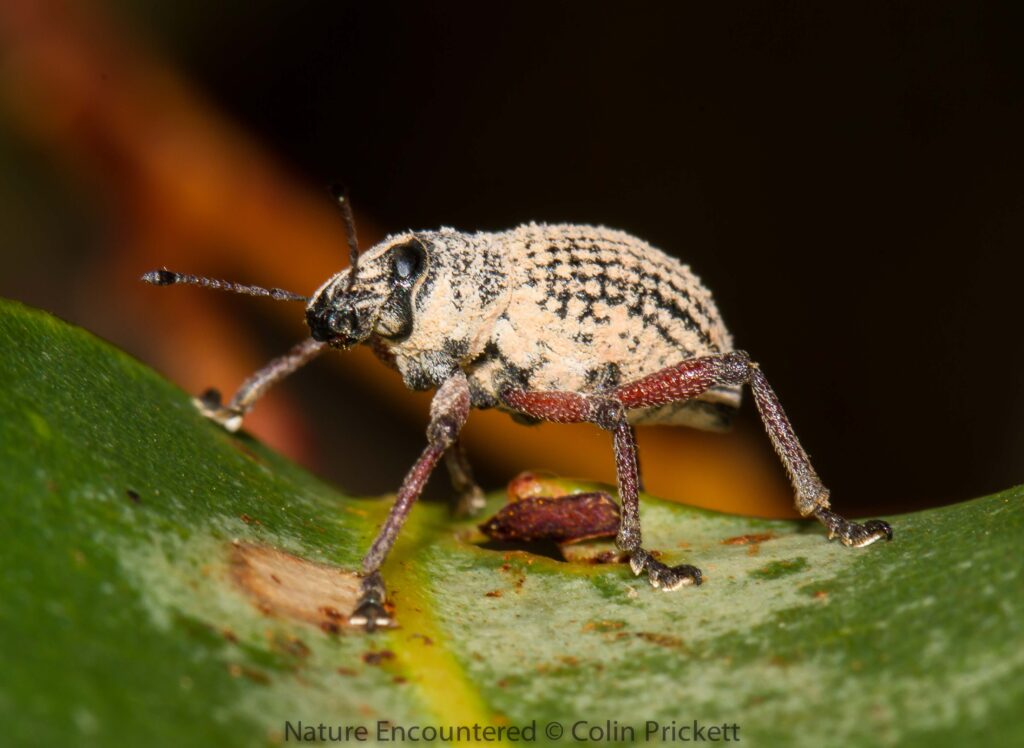
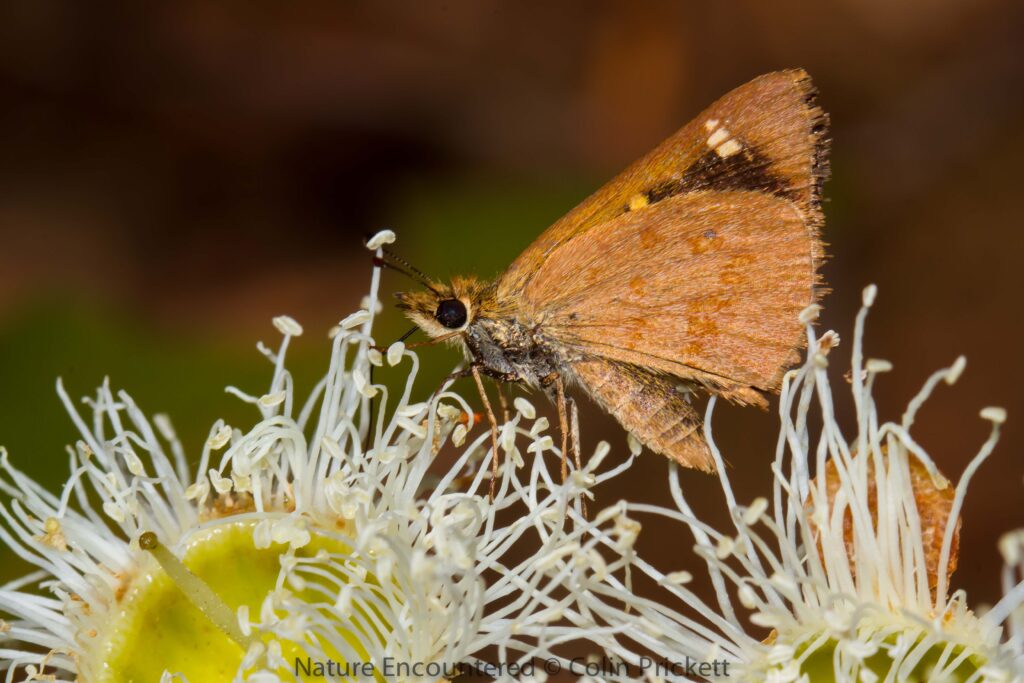
On our way back to the meeting area, a small Marri (Corymbia calophylla) was in flower and had attracted a number of insects, including a Wedge Skipper Butterfly, a Colletes Bee Hylaeus (Euprosopoides) ruficeps kalamundae, a Catasarcus sp. Weevil and a tiny Sphecid Wasp.

We finished our visit with a cuppa at the meeting area and thanked our host Peter Wilmott for allowing us to visit. It had been a great morning.
Colin Prickett