
Northern Suburbs Branch, 26 April 2023
Our walk around Perry Lakes was planned as a follow-up to the very informative presentation given by Paul Brown, the Works-Coordinator for the Friends of Perry Lakes (FOPL), the week before. This time we had the good fortune to be guided by the group’s long-time local resident and Chairman, Greg Harrison.
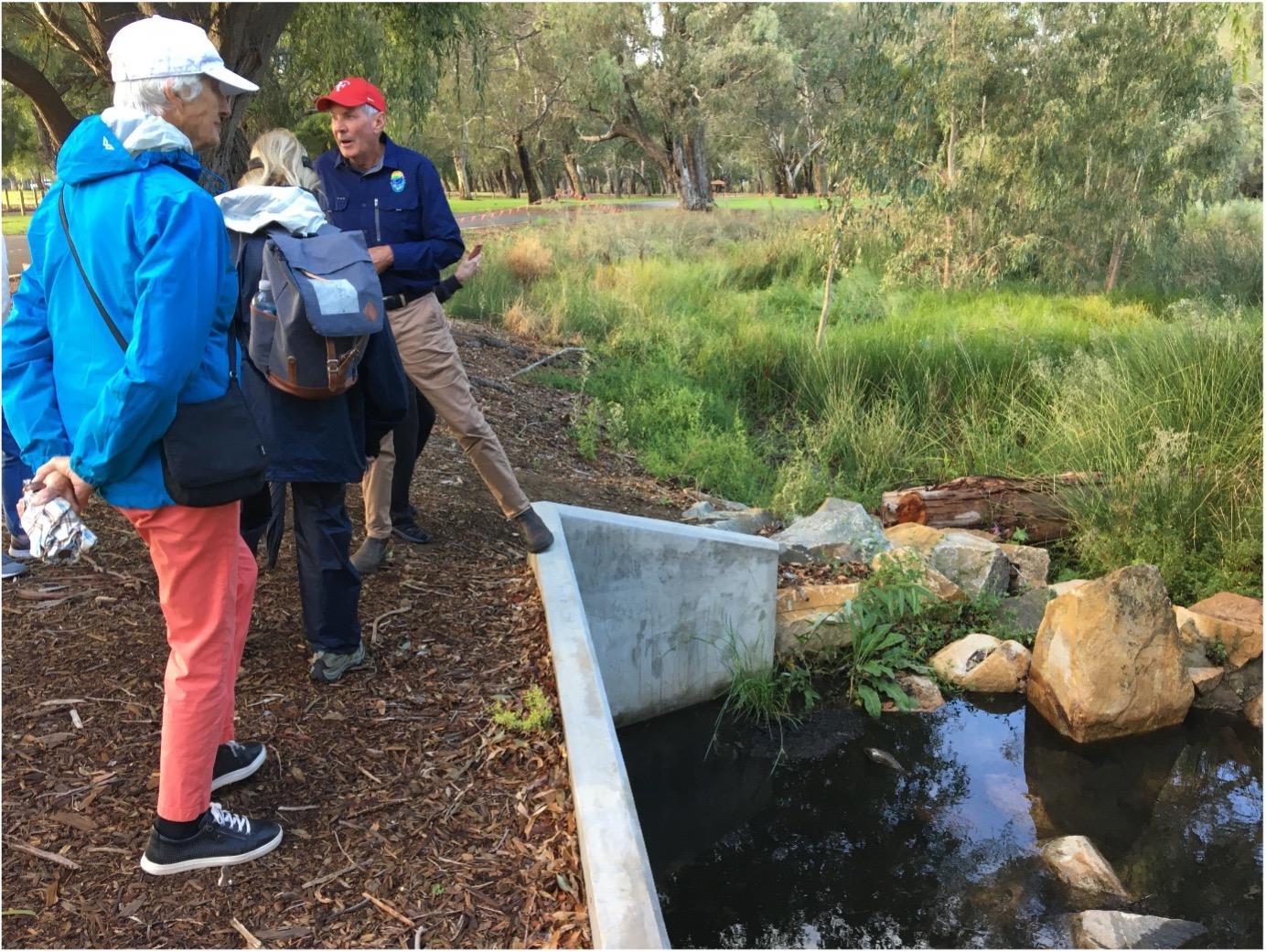
Our one and a half hour walk around West and East Lakes started with a visit to the outlet of the Herdsman Lake diversion drain, now supplying the equivalent of two Olympic swimming pools of water to West Lake each day but will increase as winter proceeds. Here Greg also pointed out the sedges the City of Cambridge had planted to help filter the water and the dry land plants planted by FOPL volunteers, which are being used as a buffer between the lake and the pedestrian area around the lake. As we continued our anti-clockwise circuit of West Lake, Greg explained that they also hoped to construct a green corridor linking Bold Park, the two lakes and Alderbury Reserve.
We were surprised to learn that except for the Flooded Gum (Eucalyptus rudis), all other vegetation was considered a weed. Things like the Weeping Willows and American Swamp Cypress were obviously weeds, but many of us would have mistaken the Weeping Peppermints, Paperbarks and Sheoaks for native species. Of the smaller weeds, Argentinian Fleabane was the most prevalent species and the most targeted by the volunteers.
While the lake bed is now thickly vegetated with rushes and Flooded Gums, there are patches of open water. As we walked past these, we saw numerous Pacific Black Duck, a few Moorhens, a solitary Black Swan and a Yellow-billed Spoonbill. Greg said there was evidence that the Snake-necked tortoise had survived, but surveys still needed to be undertaken to see if they were breeding.
The current water level in West Lake is 3.1m AHD. Once it reaches 3.7m, water will start flowing into East Lake via a connecting pipe.

Our walk along the eastern side of East Lake was along a boardwalk made from the slats of recycled seats from the now-demolished Perry Lakes Stadium. Six plaques along the boardwalk explain the cultural and spiritual significance of the lakes to the Noongar people who visited the area to catch tortoises until the 1950s.

After leaving the boardwalk, we walked past what is probably the largest area of open water in the two lakes. Here we were rewarded with the site of numerous ducks and ibis, a family of grebes, several egrets and herons, a pair of Black Ducks and two more Yellow-billed Spoonbills.
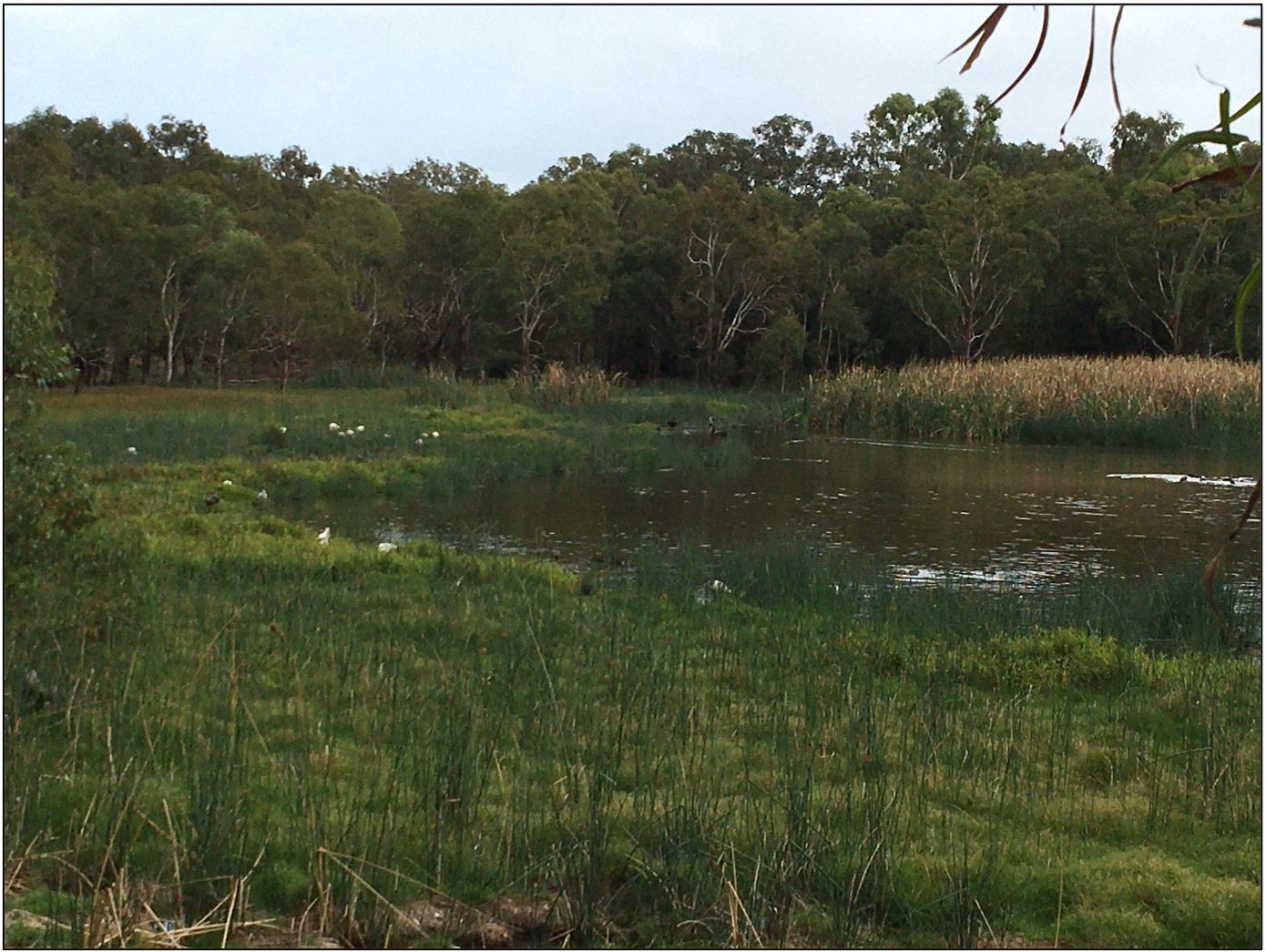
No wonder FOPL want to utilise the disused pumping station on the lake’s edge as a bird hide and the beginning of a jetty out into the water.
In addition to the waterfowl, our bird list included Willy Wagtail, Australian Raven, Kookaburra, Singing Honeyeater, New Holland Honeyeater, Magpie and Pied Butcherbird. A Moaning Frog was heard but not seen.
Don Poynton
All Images by Don Poynton