

Main Club
The long-awaited departure of Whale Watch Western Australia’s (WWWA) Blue Whale tour was heralded on Saturday morning by a brisk sea breeze but clear skies and the promise of good weather as we attempted to track down the sometimes elusive Blue Whale—the largest animal known to have ever existed, in one of just three known feeding locations around Australia.
Over May 19 and 20, a number of club members boarded the catamaran MV Steep Point, sporting brand new, custom-made propellers after sustaining damage on a submerged shipwreck a few weeks before, just prior to our original departure date.
The Steep Point took us approximately 22km past Rottnest toward the edge of the Perth Canyon; a unique location at the edge of the continental shelf where deep water upwelling of nutrients occurs, providing whales and dolphins with the perfect conditions for their preferred food sources (mainly krill and smaller fish). It’s effectively a ‘cetacean supermarket’ on the way to waters off northern WA where they spend the winter months.
Our aim was to see the Pygmy Blue Whale: only slightly smaller than the Antarctic Blue Whale at an average of 25m long, compared with the average 30m of a fully grown Antarctic Blue Whale, (see Whale Facts). The presence of feeding blue whales in that part of the Perth Canyon is expected until around the end of May, and those on the May 19 trip were certainly not disappointed. This group were all lucky enough to see a migrating pair of Humpback Whales, one significantly smaller than the other, suggesting a mother and calf or possibly two juveniles migrating together towards waters off northern WA. Both were travelling at quite a pace, predominantly just under the surface of the water but also making a number of sounding dives to feed.
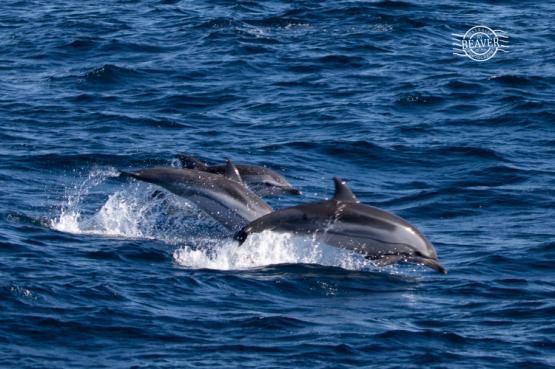 Dolphins were very abundant in the area on both days, with the Saturday group encountering a pod of approximately 500 individual Striped Dolphins (above, R Beaver) as well as Common Dolphins. The Sunday group also sighted around 100 Bottlenose Dolphins mixed with a few Common Dolphins (below, T Marwood).
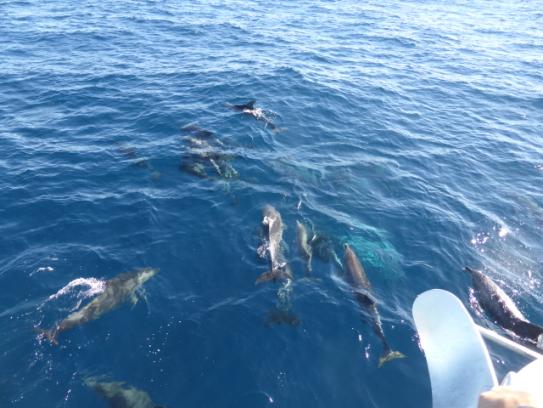 The animals raced along in front of and around the bow of the vessel, playing at riding the bow wave. There were mothers with calves and one dolphin appeared to have a strange blue appendage stuck to it. We were informed that this was a Remora (a kind of parasitic fish).
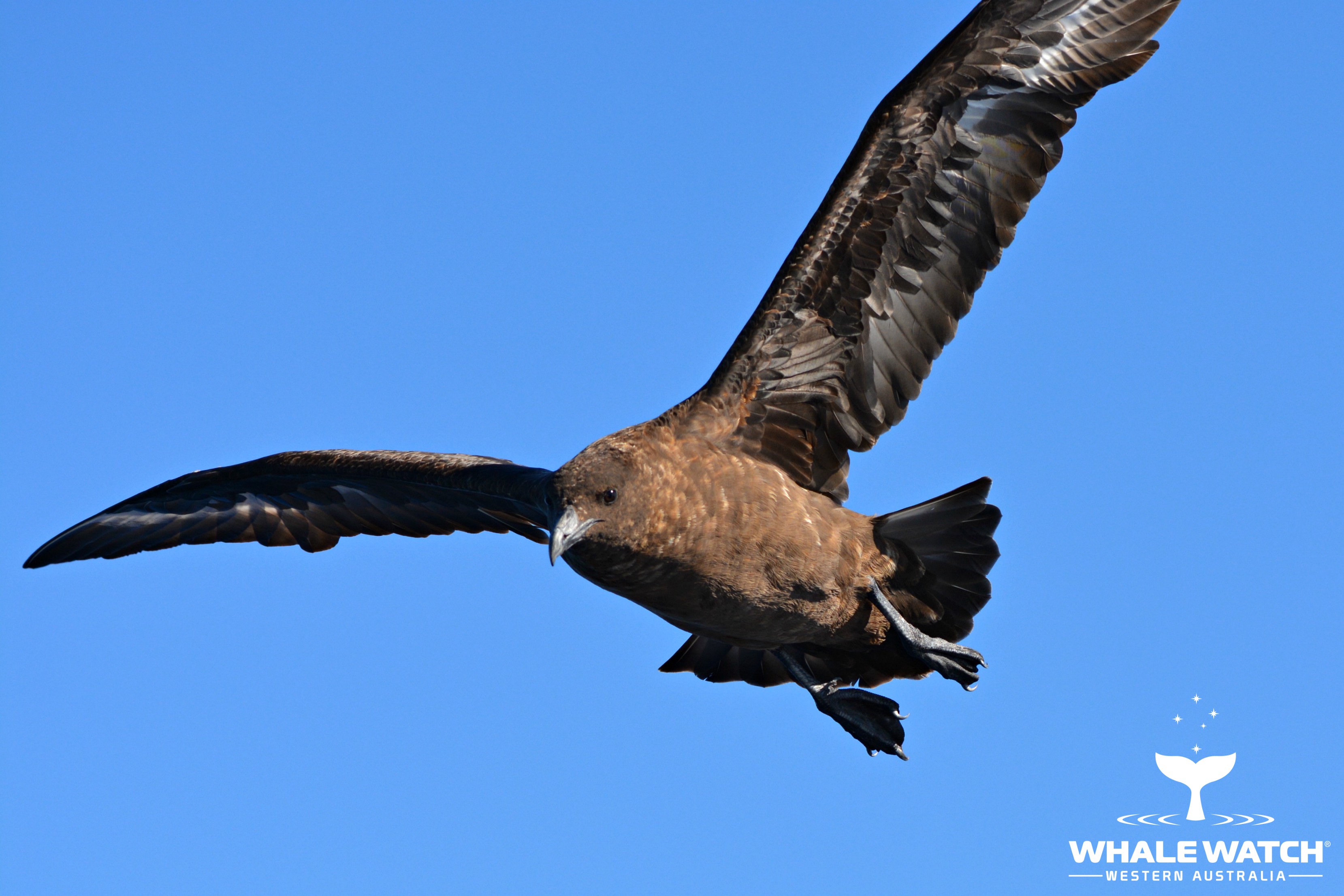
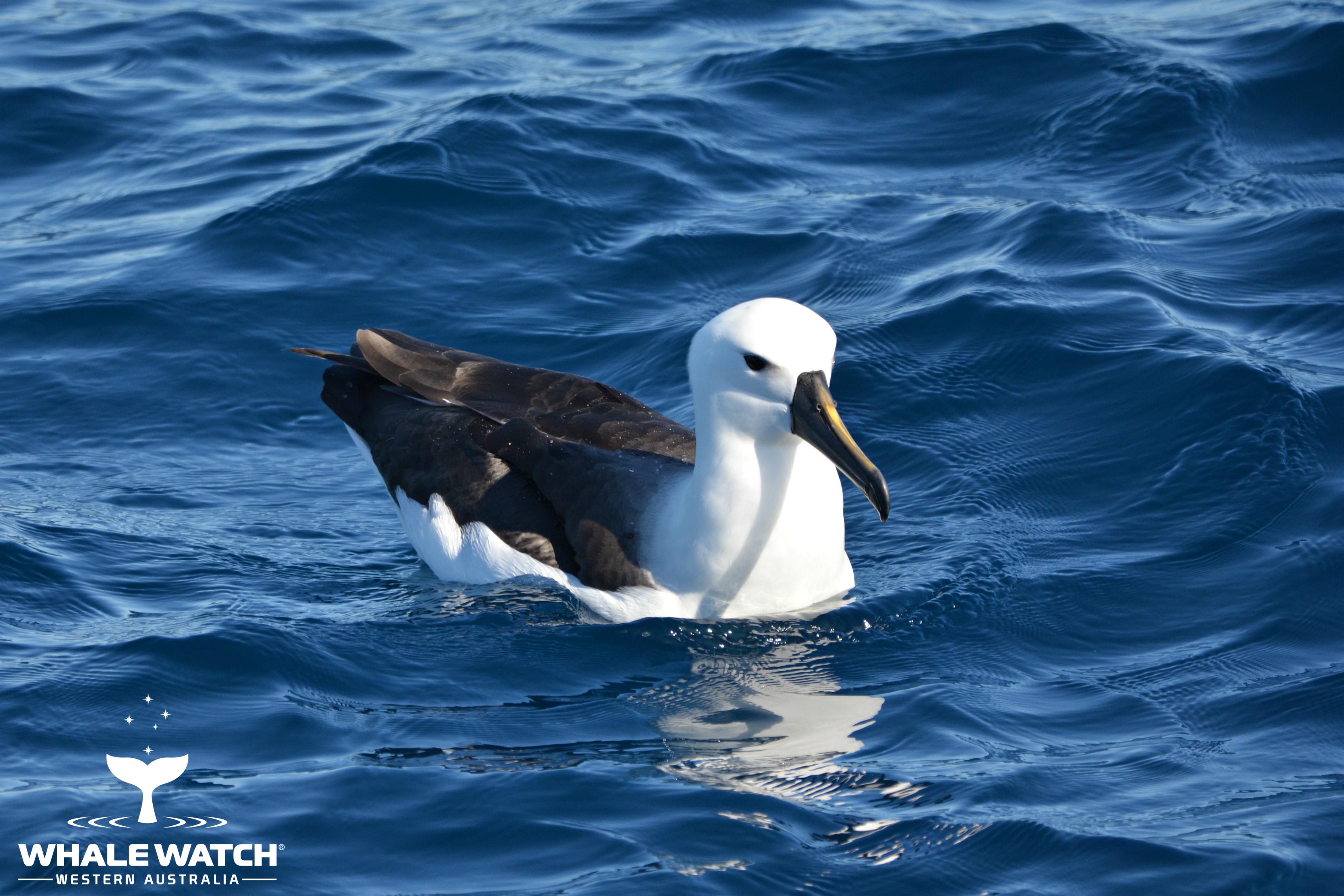 A variety of pelagic birds was seen on both days, with notable sightings of Australasian Gannet (adults and juveniles), Wilsons Storm Petrel, Indian Yellow-nosed Albatross (above), as well as a curious Antarctic Skua (below) which circled the boat a number of times. There were also some Silver Gulls and Fairy Terns on the way out to the canyon.
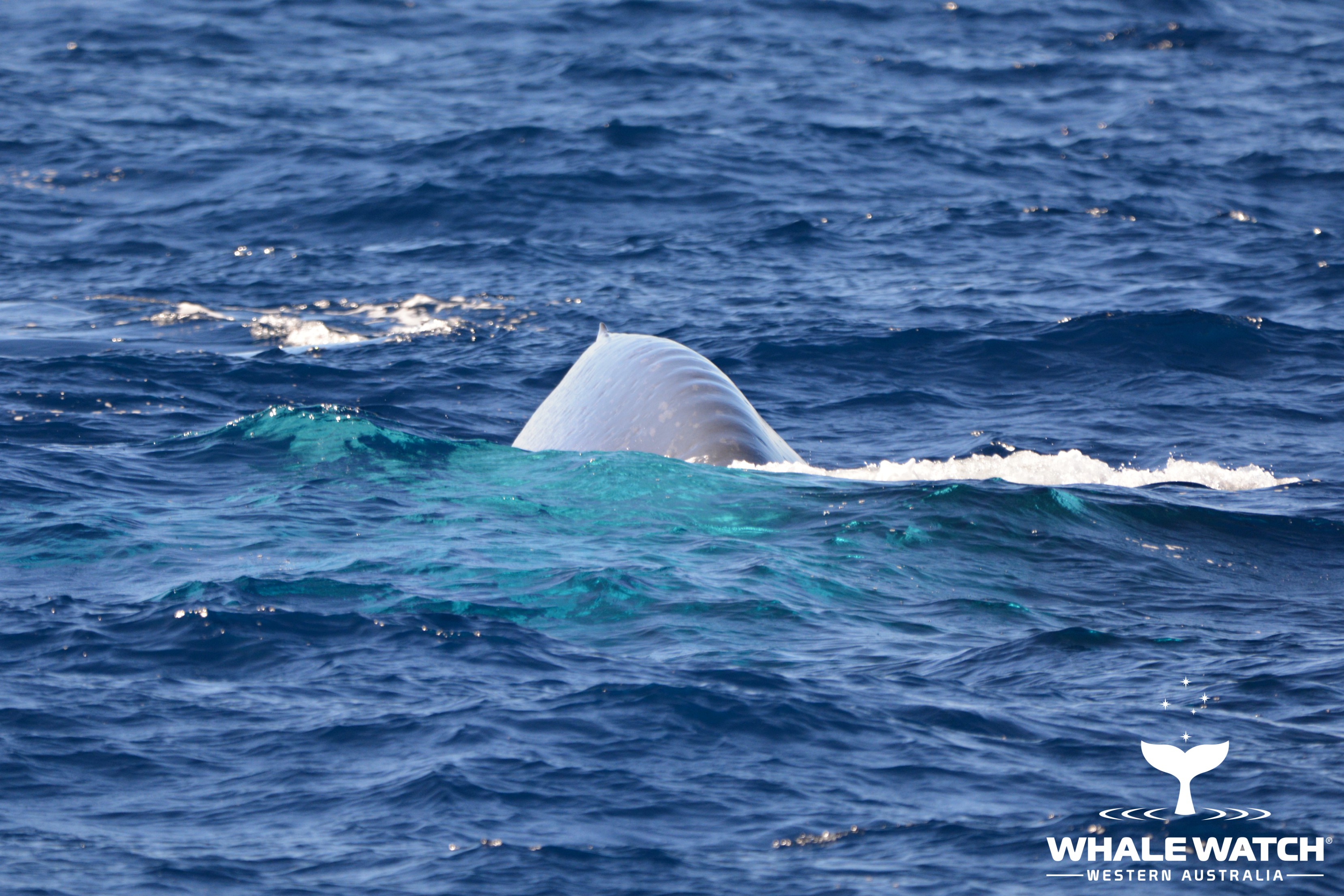
 Finally, the Blue Whales, which tend to remain in deeper water around the canyon wall, were located by WWWA’s experienced crew. On Saturday, there were a number of encounters—possibly with the same pod each time, including a very large individual of approximately 25m, as well as a smaller individual, possibly a juvenile. One Blue Whale was sighted on Sunday, apparently a younger individual. All appeared to be generally circling, typical of Blue Whales’ feeding habits, with an average surface/sounding dive cycle of around 10-15 minutes indicating a leisurely pace. A number of older, larger individuals were identifiable by mottling and scarring from Cookie-cutter Sharks. All of the Blue Whales displayed the characteristic turquoise blue colour (below) visible as they approach the surface, then their usual mottled grey colour when they surfaced.
 On Sunday the crew told some of us about collecting whale poo samples for researchers and showed us some frozen samples, which were bright orange—the colour of the krill that forms the main diet of the Blues. We also heard the story of a Bowhead Whale, the longest-lived individual whale known: it was found washed up on a beach in North America with a 200-year-old arrowhead in it!
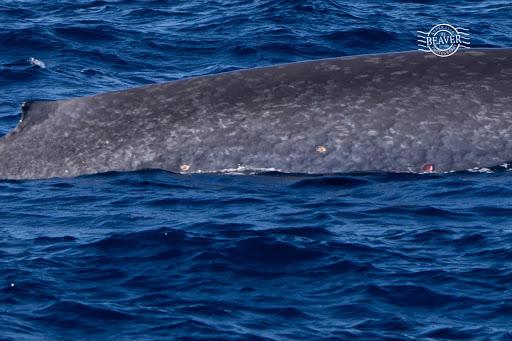
Pygmy Blue Whale with wounds from Cookie-cutter Sharks
The group would like to thank Whale Watch Western Australia, a family-run company who have an excellent operation that’s contributing to research and providing visitors the opportunity to see and learn about the whales and their migration through the unique protected environment of Perth Canyon. For more pictures see the Club’s Facebook page and Whale Watch website daily report for MAY 19 and MAY 20.
Josette Loomes & Tanya Marwood