

Northern Suburbs Branch 16th March 2022
The theme for this year’s mini-series is All Things Marine. Out first speaker was Angela Rossen. Angela is an artist who works with scientists. The following institutions currently recognise her work:
- Honorary Research Associate School of the Biological Sciences UWA
- Adjunct Lecturer Oceans Institute UWA
- Adjunct Artist Australian Institute of Marine Science
In addition to being an artist, Angela is a biodiversity educator who uses art and science as media for engaging the community, particularly school children, in understanding and appreciating the importance of our natural environment. Angela explained her particular interest is the nearshore marine environment focusing on seagrasses and algae and their associated animal communities. Her work focuses on the tiny marine invertebrates that live within the leafy canopies of these marine gardens and plankton. She said, “Tiny invertebrates are often overlooked despite the major role they play in the food web”. In introducing children and the wider community to the minute wonders of nature, Angela uses iScopeStands which augment the optics of digital phones and tablets up to 25x.
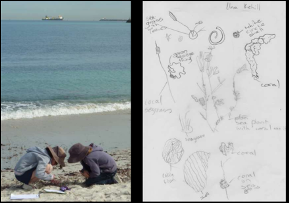
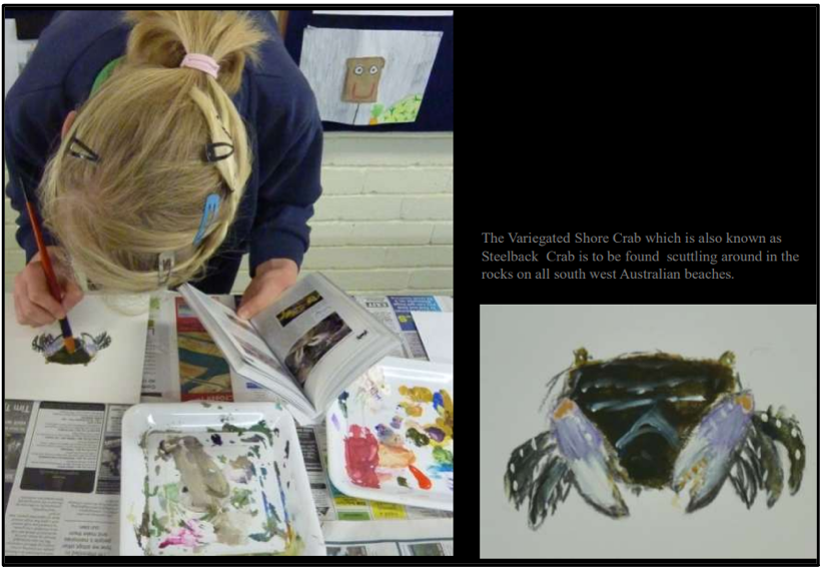
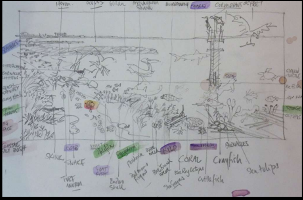
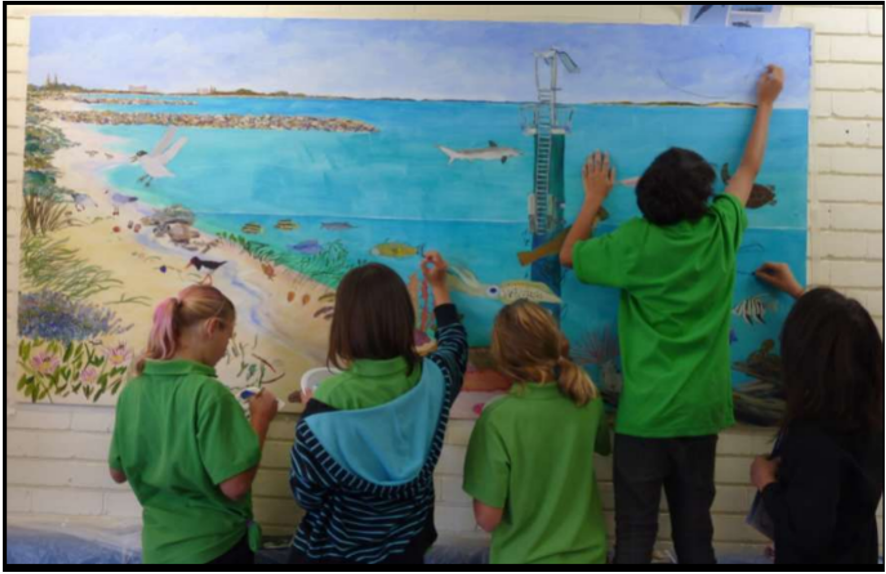

Angela explained that she aims to deliver a range of site-specific projects designed to engage children’s curiosity in nature so that they will want to continue their discoveries in their own lives and of their own volition. These projects include biodiversity surveys to observe and document nature and include drawing, painting and video making workshops both in the field and in the classroom. One type of project which has proved particularly successful and permanent is the creation of collaborative paintings (murals) documenting whole ecosystems. After a field biodiversity survey with the students, Angela paints the background and students paint the flora and fauna they have found or researched. One example she showed depicted over 500 individual specimens.
Angela suggested photographic competitions with modest cash prizes or vouchers from camera stores would be a great way to engage young people with the Naturalist Club. The competitions could have a bimonthly turnover and range across particular seasonal subjects such as eucalyptus flowers unfurling, bees pollinating, or insects hatching, which are easily found in parks, reserves and gardens. The emphasis should be on native plant and animal species. This would be a great way to engage children in the first place and can lead to a lifetime of involvement. If the competitions were ongoing, they could gain a following amongst school students. Angela suggests one-off competitions will make no long-term changes to recruitment. Some food for thought.
Don Poynton