

Our speaker Dr Nicole Willers gained her PhD studying Rock Wallabies and is an ecologist with the Parks and Wildlife Service (DBCA). She has worked for Parks and Wildlife since 2000 and has also worked for the United Nations Environment Program in Geneva, Switzerland. She has a strong interest in macropods and is deeply passionate about the preservation of native species and their habitats for future generations. Her talk, knowledge, photographs and videos fascinated the audience.
Nicole explained that there are four species of wallaby we might see in the Perth Hills and nearby south-west: the Black-gloved Wallaby, the Rock Wallaby, the Tammar Wallaby, and the Quokka. The last one was a surprise to many of us because we hadn’t known it was classed as a wallaby. Wallabies are all members of the macropod (“big-foot”) family, just like the larger kangaroos, with size being the major difference between wallabies and kangaroos.
Nicole brought a taxidermy specimen of a Quokka to show us. It was much larger than the friendly little guys we see on Rottnest Island, but as Nicole explained, the Rottnest population has been separated from the mainland population for so long that differences are emerging. For example, because of genetic differences, no attempt has been made to reintroduce Quokkas from Rottnest to any areas on the mainland. The island species are very friendly, but not many of us have ever seen any of the shy mainland animals despite them being widespread—though not at all common—through the south-west.
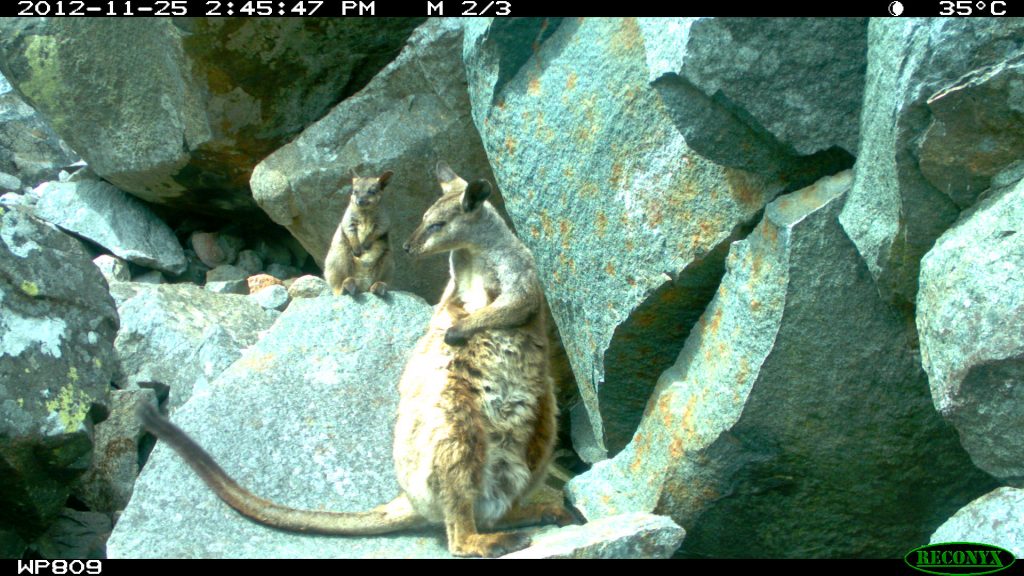
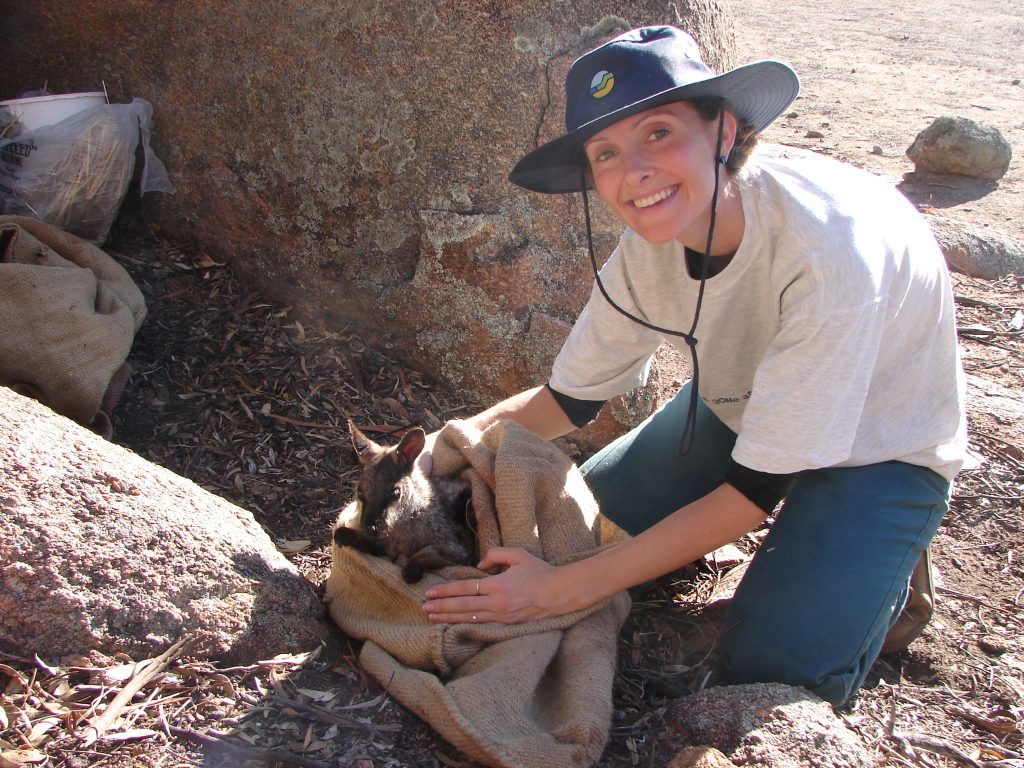
Nicole does much of her research on Rock Wallabies. She showed us a fascinating video clip of herself and a colleague trying to replace an abandoned joey into its mother’s pouch before letting the mother go—it took minutes as the joey just didn’t want to go in! Success in the end though. Once the joey was inside, the team carefully placed a form of sticking plaster over the pouch hole to stop the mother from removing the joey when she was freed—a common stress response amongst macropod females. Later, when she’d calmed down, she could remove the plaster at her leisure, allowing the joey to survive.
It was interesting to learn that fox control on land where the Rock Wallabies live has been so successful that in some places there are now more wallabies than the reserves where they live can cope with. The solution? Translocation and birth control. Nicole also explained how land clearing around Jandakot airport had resulted in the need for translocation of Black-gloved Wallabies. The point was made that it is apparently so easy to legally clear land near an airport and that the animals don’t seem to matter.
Nicole’s talk was followed by a lively question and answer session involving several first-time members. Many thanks to Nicole for a captivating talk.
Mike Green