

Our August excursion was planned around the monthly activity day of the Friends of Brixton Street Wetlands (FBSW). This enabled Nats members to meet people who are very familiar with the wetlands and for some of us to lend a hand in its maintenance before our walk.
After morning tea with the FBSW, Trevor Drummond led us on our journey of exploration.
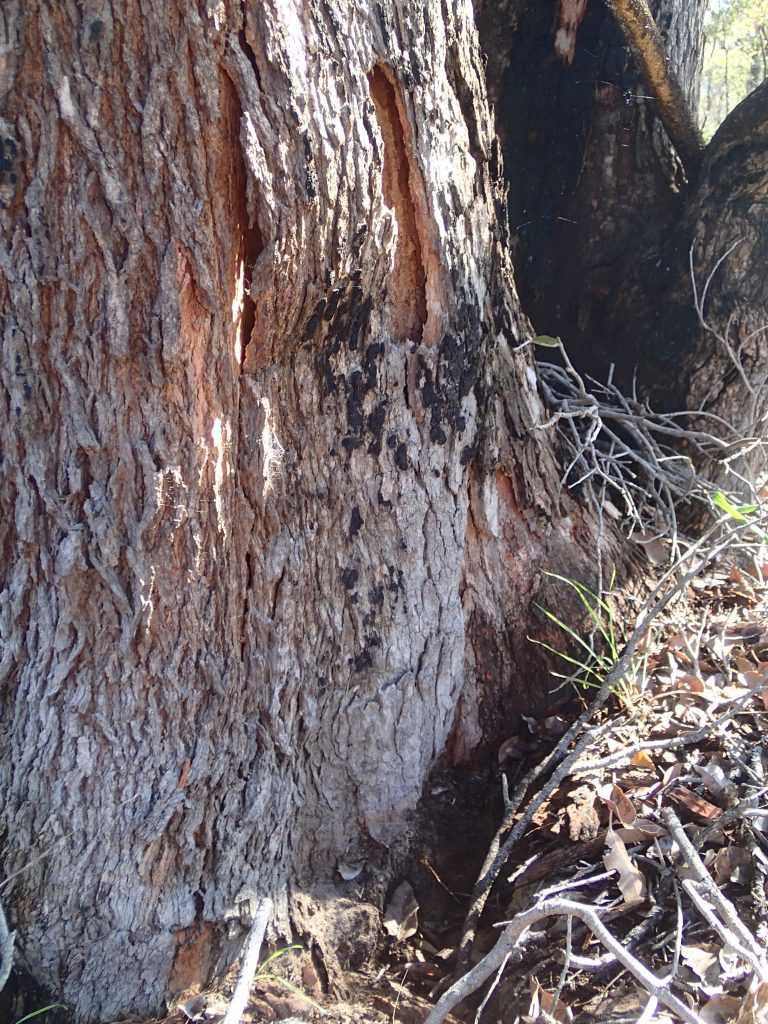
Our first stop was a large Tuart with the beginnings of a burrow at the base and scratch marks and elongated strips of bark missing about a metre from the ground.
These have been attributed to a large goanna which has been spotted in the area. The tree contains several birds’ nests, so the scratching is believed to be from the goanna’s attempts to climb the tree.
Not all the paths were accessible as the recent rain meant some were under water. However, this did result in an extremely picturesque setting for the Hoary Twine-rush (Leptocarpus canus previously Meeboldina canus).

Other claypan plants in flower included the Robin Redbreast Bush (Melaleuca lateritia) and the White Flannel Flowers (Tribonanthes species).
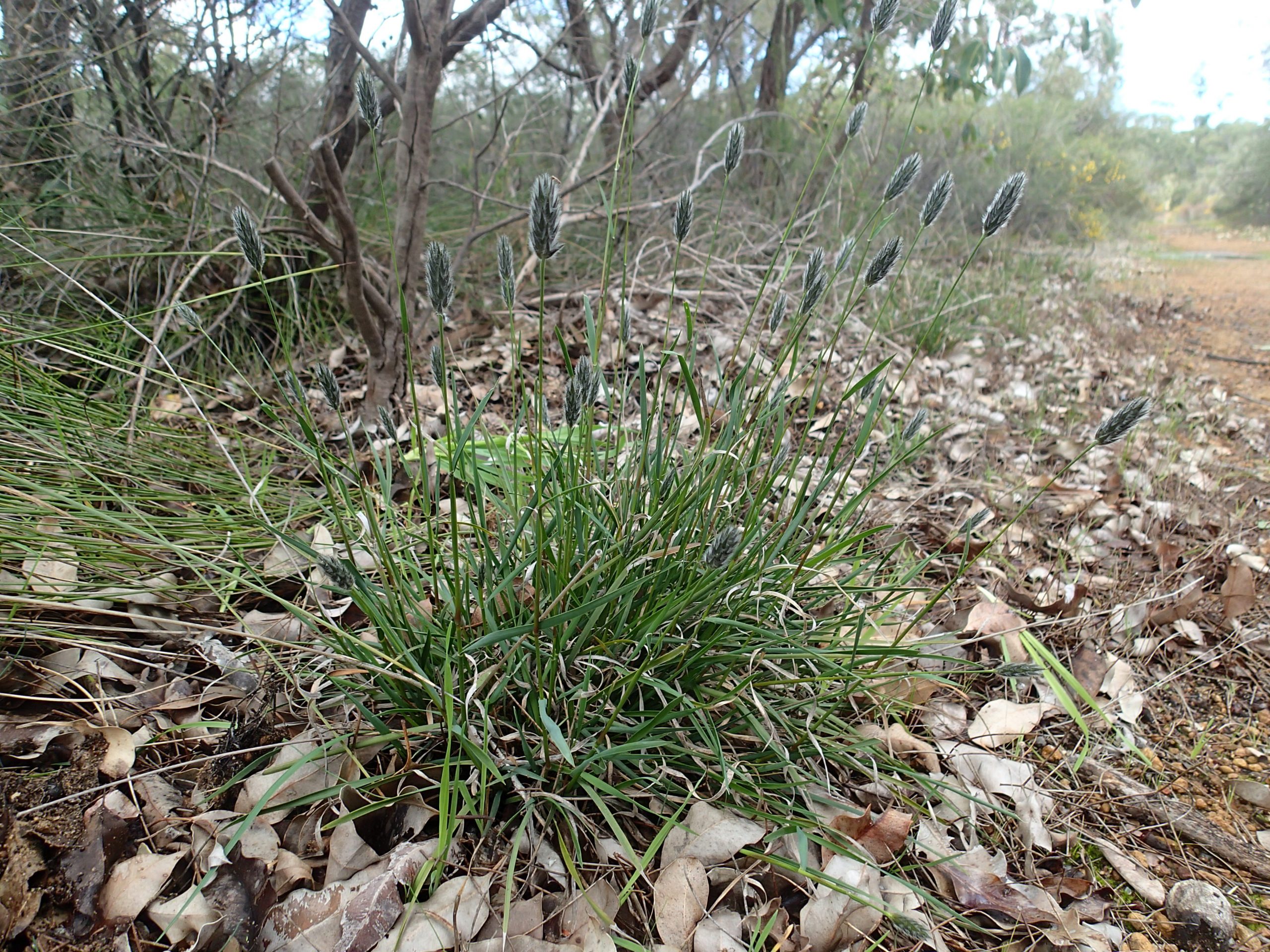
Many of the paths were edged with Foxtail Mulga Grass (Neurachne alopecuroidea).
Other plants flowering along the paths included White Myrtle (Hypocalymma angustifolium), Synaphea sp., Buttercups (Hibbertia hypericoides), Two-leaf Hakea (Hakea trifurcata) and Prickly Moses (Acacia pulchella).
The twiners included Mangles Fringed Lily (Thysanotus manglesianus) and several climbing sundews. Milkmaids (Burchardia congesta) were very common, while the only orchids we saw were Blue Beards (Pheladenia deformis).
On our return journey we came across Kingia (Kingia australis) still with their distinctive flower stalks.
Despite the wet weather only a few fungi were spotted, the most obvious being Crimson Bracket Fungi (Pycnoporus coccineus), a small ghost fungus (Omphalotus nidiformis) and cluster of unidentified small brownish red toadstools.
Birds included a small flock of Red-tailed Black Cockatoo (Calyptorhynchus banksii), numerous New Holland Honeyeaters (Phylidonyris novaehollandiae) and several Western Gerygone (Gerygone fusca). We also heard a couple of different frogs which no one was able to identify from the calls.
Don Poynton