
Thirty-two DRB members came to a members-only event at the Greens’ Land-for-Wildlife and Streamcare property in the Perth Hills on August 26. They started with a wildflower quiz. Forty-nine Western Australian flowering plants, including five with significant conservation status, had been named and labelled in the property prior to people’s arrival. The names were then hidden and each plant numbered. Members were given the full list of names and required to identify which number went with which plant. Sounds easy? Not according to the members! The most frequent comment was “I know the genus and that’s it!” The winners were Joy McGilvray and Anne Bologa with Sally Robertson a close second, all new members of the club—congratulations!
Some of the most spectacular plants seen were Hakea neurophylla (Pink-flowered Hakea), more typically found at Mount Lesueur and which has a Priority 4 conservation status; the bright yellow Acacia ashbyae and Hypocalymma tetrapterum which has a Priority 3 status.
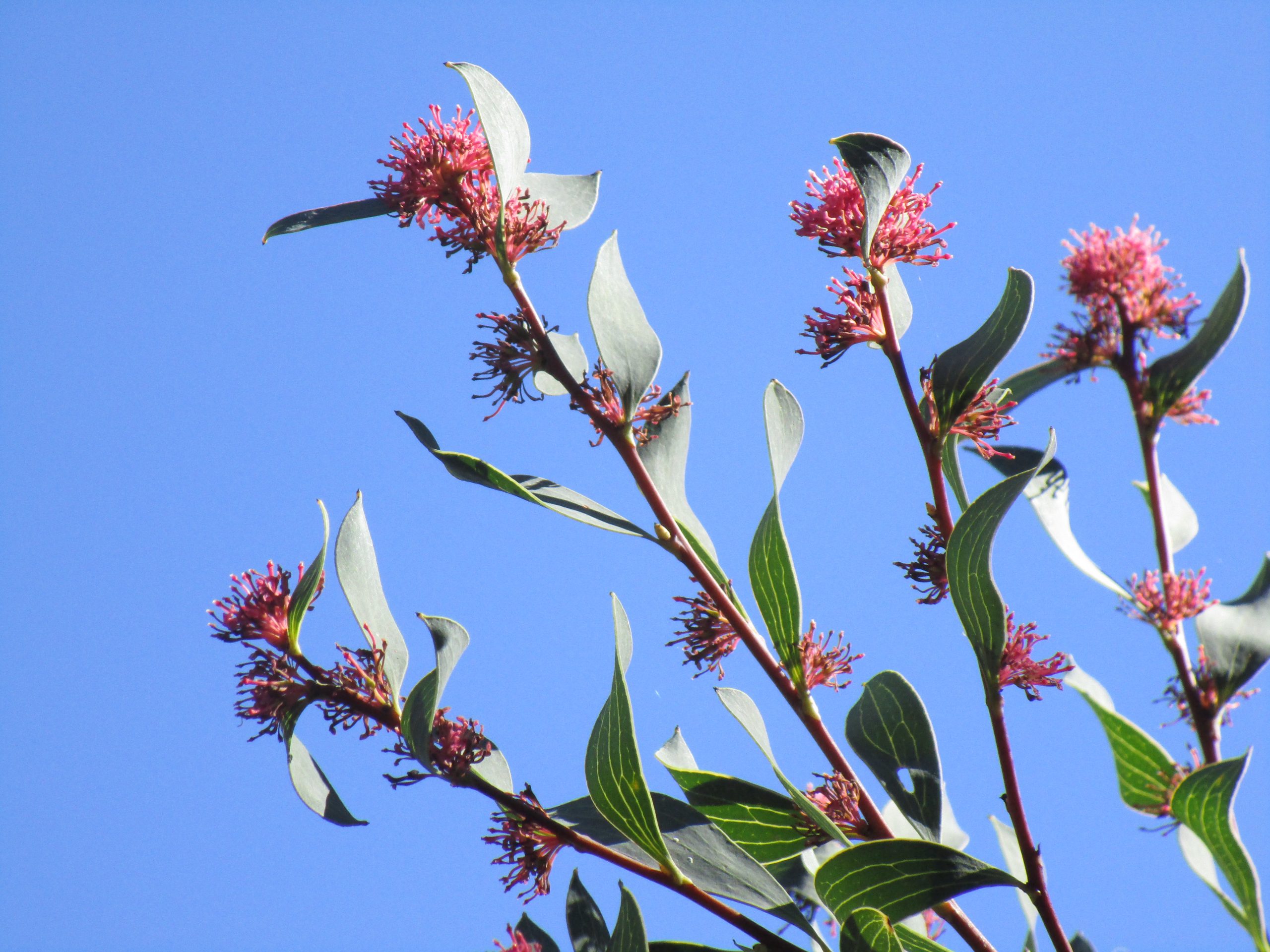
Hakea neurophylla R Green) 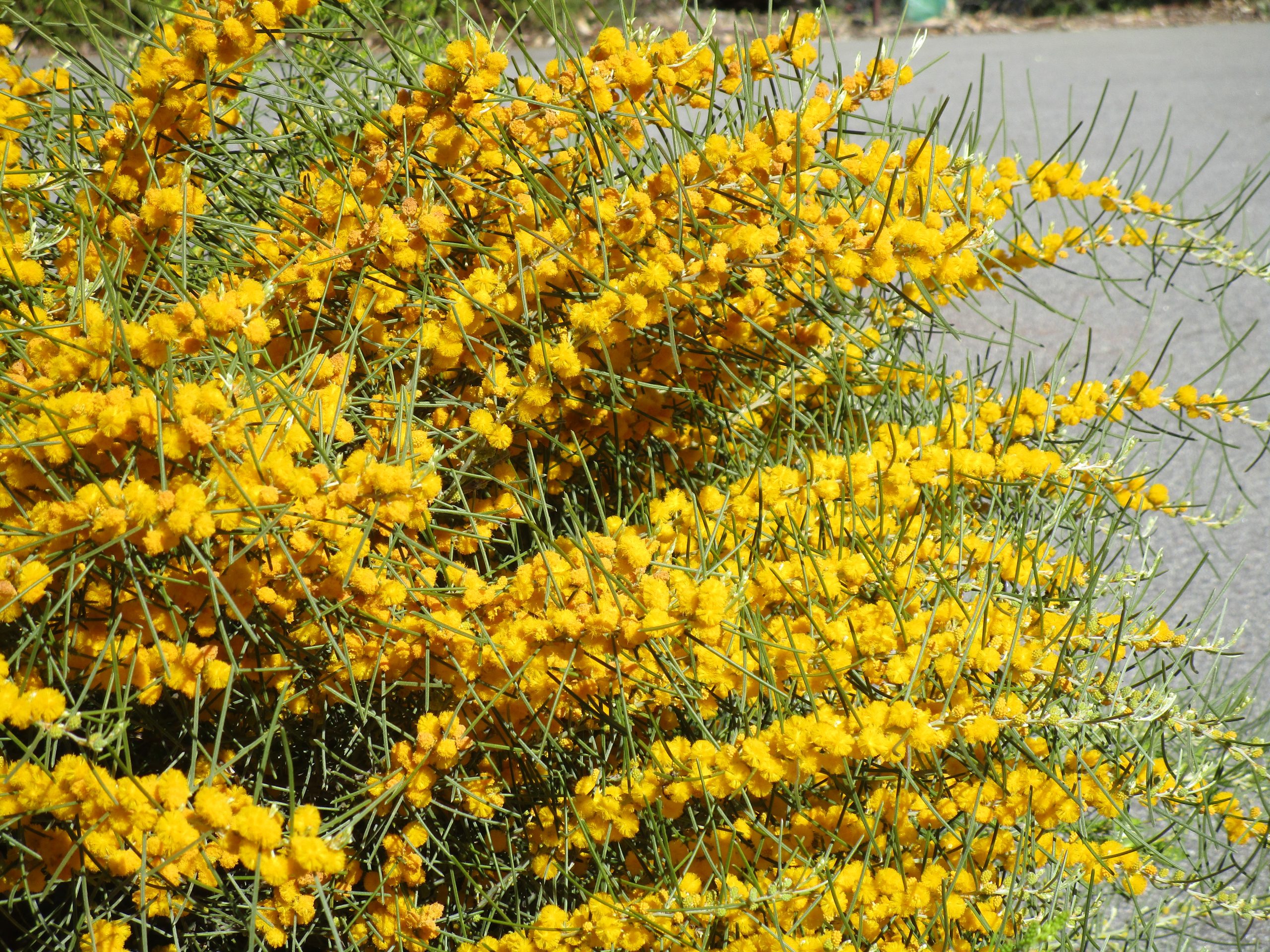
Acacia ashbyae R Green 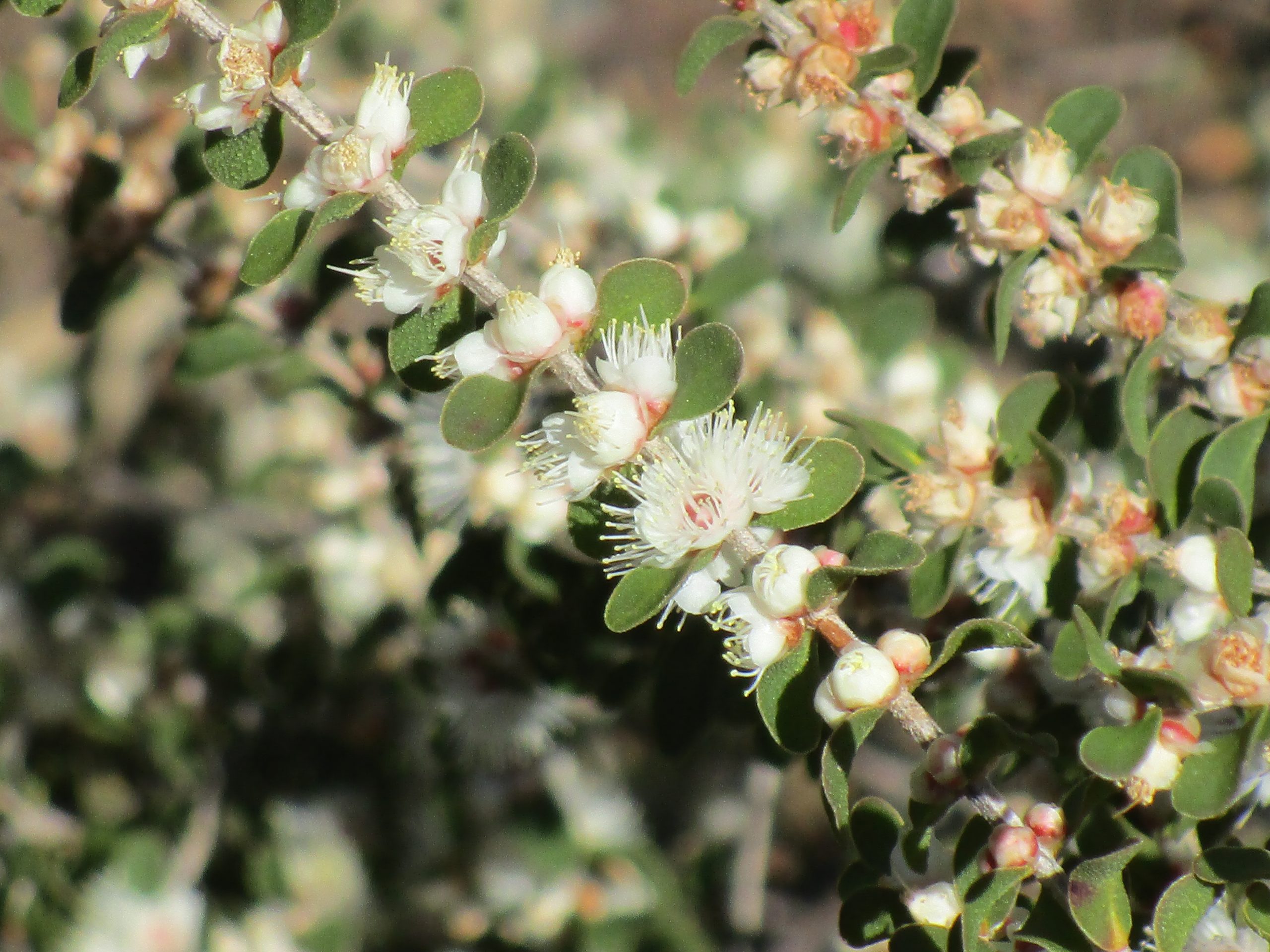
Hypocalymma tetrapterum R Green
Three of the other unusual plants included, Darwinia chiddarcooping which has Priority 4 status; Grevillea pimeleoides with its typical hairy leaves and which also has Priority 4 status; and Eremophila pinnatifida (Dalwallinu Eremophila) which is declared rare flora. Joff Start, our Eremophila specialist, suggested the few displays of it near Dalwallinu may have died out.
After the quiz, people enjoyed a shared meal and good conversation. Then we were taken on an absorbing natural history journey through members’ photographs. Kevn Griffiths started by taking us down memory lane to Laverton in the 1950s, Eric McCrum took us to Alice Springs, and Susan Stocklmayer to Iceland. We continued with Edwin and Joy Dell’s visit to the Australian Garden in Cranbourne Victoria, and Andrew Wallace (aged 10) showed us his new orchid photographs. We finished with bird photographs by Irene and Michael Morecambe including Ninox strenua (Powerful Owl), Machaerirhynchus flaviventer (Yellow-breasted Boatbill), Malurus coronatus (Purple-crowned Fairy wren), and a Ninox connivens (Barking Owl) in full flight.
We also saw many fungi thanks to Haydee Adel; a video of Rachel quacking to Crinia georgiana, (the Quacking Frog) and them quacking back; and Esacus magnirostris (Beach Stone Curlews), Isoodon auratus (Golden Bandicoot) and Petrogale burbidgei, (Monjon) in the Kimberly, thanks to Joff and Joan Start. Tony Start produced some fascinating photographs too, from Thailand. He showed us a butterfly, Parantica sita, which tastes bad due to the plants it eats, (usually milkweeds or related). Then he showed another butterfly which was a mimic of it, Papilio agestor. This looked so similar we had problems telling them apart. Ross McDougall also showed us a photograph of a Papilio demoleus (Chequered Swallowtail butterfly) he’d photographed on his Toodyay property. Few of us had ever seen one. To top it all off, Michael and Irene Morecombe told us they are producing a new app on wildflowers. We could certainly have benefitted from that for the quiz! Maybe next year…
Rachel Green