

With many members away and others with other commitments there were only four attendees for our August 27 excursion at Gooralong Park in Jarrahdale, which turned out to be a beautiful morning. Our visit coincided with a walk along the Kitty’s Gorge Trail organised by the Jarrahdale Heritage Society, so rather than get in the way of participants in the Heritage Society walk we chose to take the Stacy’s Loop walk starting opposite the cemetery. The walk passes through Jarrah woodland with some Bull Banksia (Banksia grandis) also present. The understorey was a mix of grass trees (Xanthorrhoea sp.), Hovea sp., Prickly Moses, Zamia Palms (Macrozamia riedlei), Hibbertia sp. and Hakea.
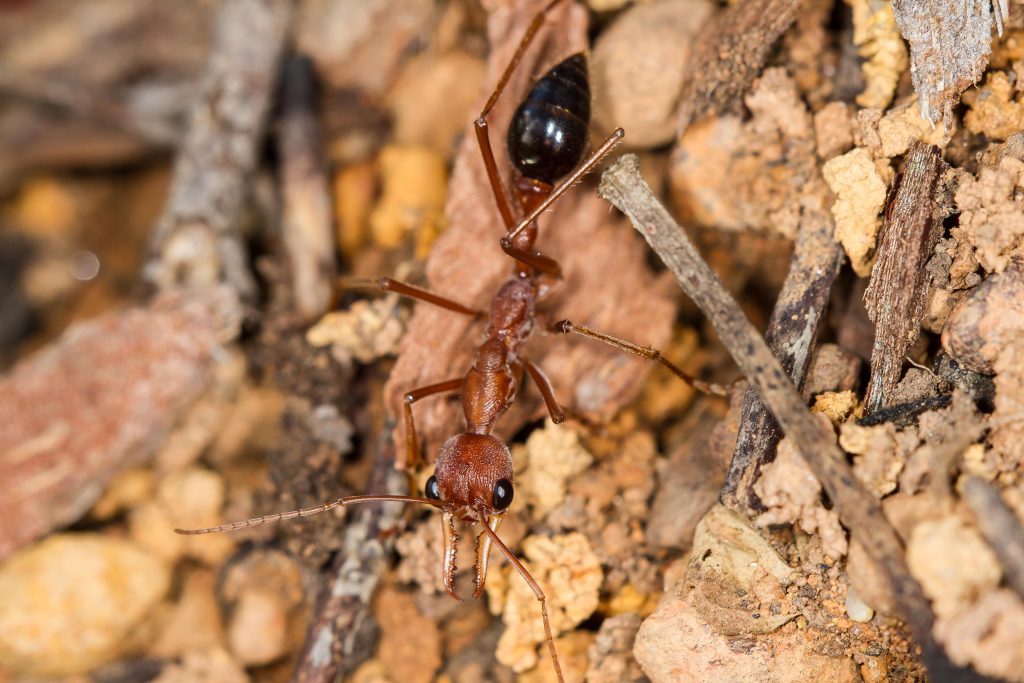
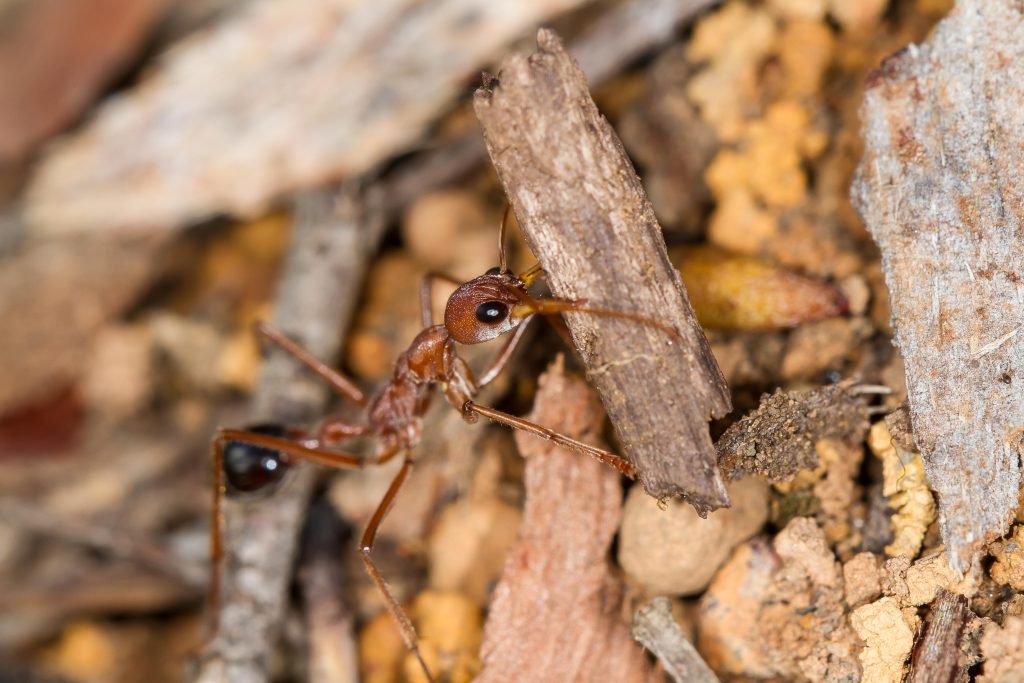
Shortly after commencing the walk we noticed a horizontal spider web close to the ground. We tried to find out what spider had made the web but the spider was not in sight—then, all of a sudden, it rushed out from its refuge to grab a prey item from the web then rushed back into the refuge. However, it was too quick for us to identify it. During our walk we also spotted numerous jumping spiders and webs with tiny orb weaver spiders were common. Daniel, our invertebrate spotter, found several small Leaf-mimic Grasshoppers on the side of the trail. There were also many Stick Nest Ants; one colony we spotted appeared to be moving home— there was a lot of activity around the entrance to the nest and ants were seen carrying pupae. Daniel explained that these ants sometimes change nests depending on the season, preferring the nest made from sticks in winter and a deeper nest in summer. There were also several nests of Bulldog (Bull or Sergeant) Ants (Myrmecia sp., possibly M. gratiosa). One ant was spotted doing housekeeping around the entrance, moving sticks that were larger than the ant itself.
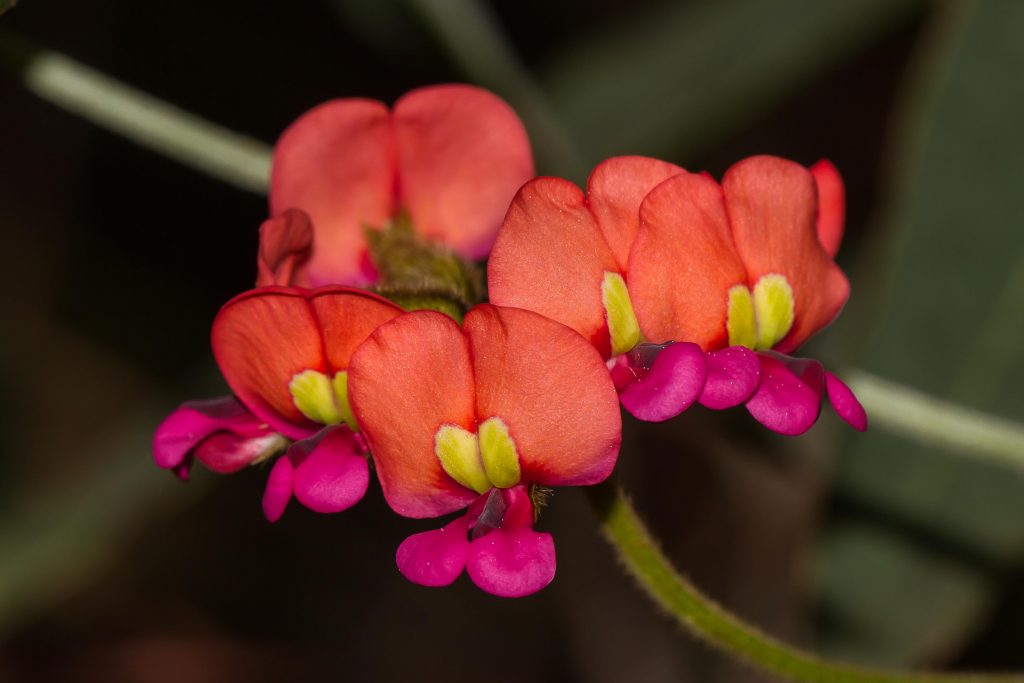
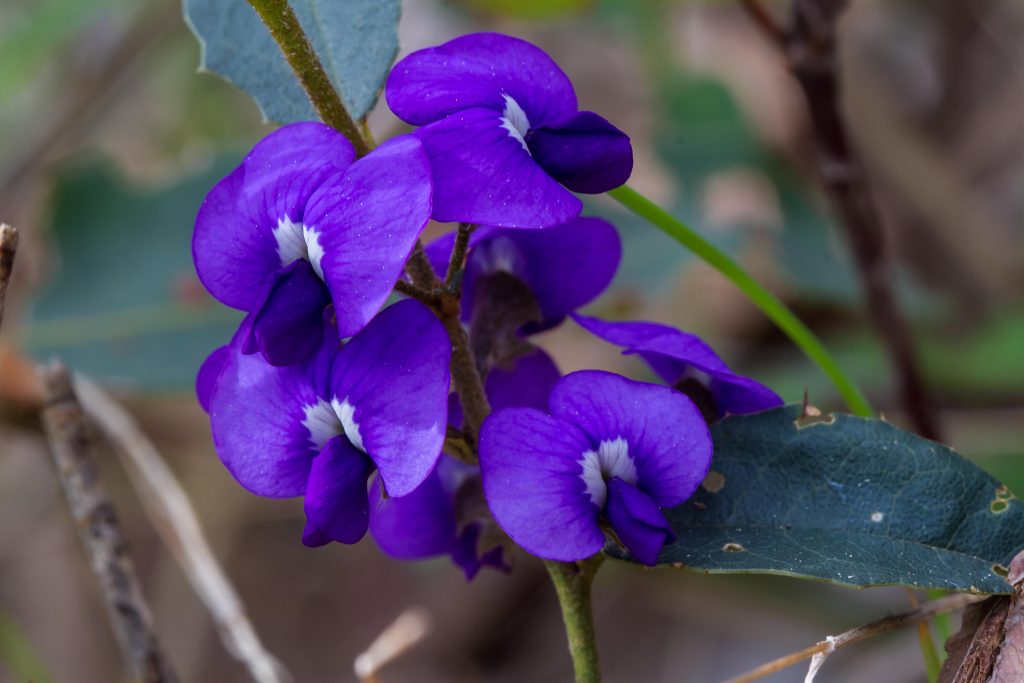
There were not a lot of plants in flower; it appeared we were a bit early in the season for many of them. A climbing plant without leaves was seen on one shrub, it was believed to be the Twining Fringed Lily (Thysanotus patersonii). The Mat Rush (Lomandra nigricans) was in flower at the edge of the trail. At the top end of the trail we saw the Hairy Guinea Flower (Hibbertia pilosa) in flower but as we got lower down Hibbertia hypericoides became the dominant Hibbertia. Other plants in flower included Tetratheca nuda, Coral Vine (⇓ left Kennedia coccinea), Holly-leaved Hovea (⇓ right Hovea chorizemifolia), Common Hovea (Hovea trisperma), Native Wisteria (Hardenbergia comptoniana) and Honey Bush (Hakea lissocarpha).
There were also some weed species including the Large-flowered Wood-sorrel (Oxalis purpurea) and Freesias. We spotted a number of fungi including Common Tubaria (Tubaria serrulata), lots of Tough Cinnamon Fungus (Coltricia cinnamomea) and Scarlet Bracket Fungus (Pycnoporus coccineus).
We did not spot many birds on the walk, though Carnaby’s and Forest Red-tailed Black Cockatoos were seen. It was evident why they were frequenting this area—we had found numerous Jarrah nuts that had been chewed by Black Cockatoos. Striated Pardalotes were heard calling in the canopy but not were not sighted. Other sightings included a Kookaburra and a Magpie. The trail itself was quite popular on the morning; we met several groups of walkers along the way, some using it to access the longer Kitty’s Gorge Walk Trail. The trail was just the right length for our walk and when we returned to our parked cars we were ready for a cuppa and snack. Though not as productive in terms of flowering plants and bird sightings as we had hoped, it had been a pleasant morning’s walk.
All photos C. Prickett
Colin Prickett