

Darling Range Branch 10 July 2026
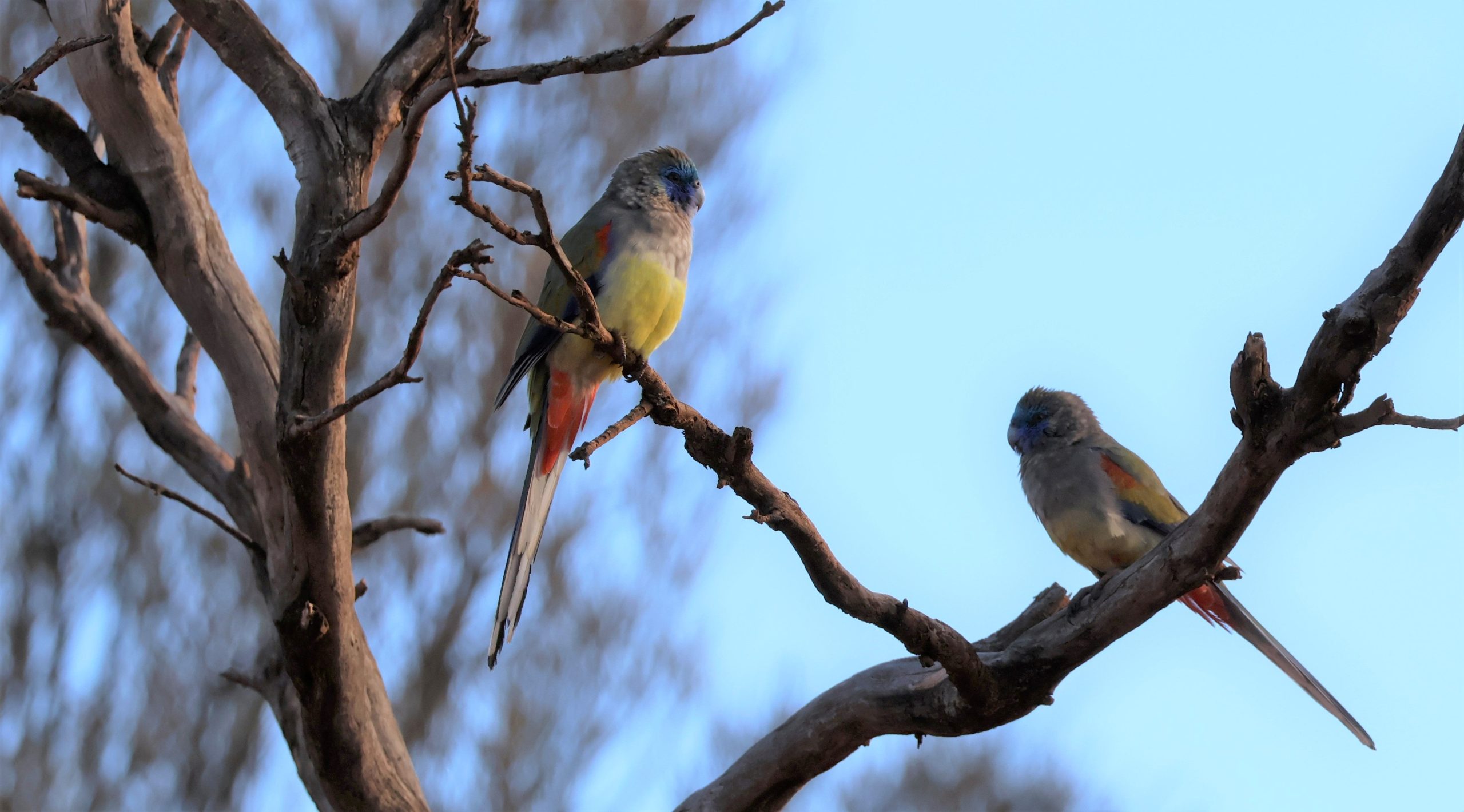
Lois Gearing presented at DRB in July 2026 information on the remote habitat, discovery, and conservation of the Naretha Bluebonnet Parrot, emphasising its ecological and historical significance. Wayne answered questions on the logistics of the endeavour.
Saltbush and Silence: What Remoteness Has Protected – and What It Cannot explores the remarkable story of the Naretha Bluebonnet, one of Australia’s least-known parrots, and the fragile arid woodland ecosystem on which it depends. The presentation argues that while the remoteness of the Naretha homelands has long protected both the bird and its habitat from extensive human disturbance, isolation alone can no longer safeguard them from modern environmental pressures.
The Naretha Bluebonnet inhabits the isolated Myall Belt that stretches across the fringes of the Nullarbor Plain in Western and South Australia. This landscape of Western Myall woodlands, saltbush, she-oaks and vast open spaces is harsh, dry and difficult to access. Historically, these challenging conditions limited development and helped preserve an ecosystem that supports a unique assemblage of plants and animals. However, climate change, grazing pressure, mining, transport infrastructure, disease and invasive species now threaten its long-term resilience.
The East–West Railway played a pivotal role in bringing the Naretha Bluebonnet to scientific attention. During an expedition in 1921, bird collector Frederick Whitlock learned of an unusual pet parrot kept at a railway siding. Following investigations at Naretha, Henry White formally described the bird as a distinct subspecies. Ironically, a railway built to connect Australia also connected one of its most remote ecosystems with the scientific community, revealing a bird that may otherwise have remained unknown for many years.
The presentation highlights that the Naretha Bluebonnet’s identity is inseparable from its habitat. The Naretha has evolved within the sparse Myall Belt, relying on chenopod shrubs such as saltbush and bluebush for food and mature she-oak trees for nesting hollows. These old trees are essential breeding sites, yet many are ageing, declining or damaged, with little evidence of natural regeneration. Loss of suitable nesting trees, combined with browsing by cattle and feral animals including camels, goats, rabbits and donkeys, threatens the bird’s future.
Human impacts extend beyond habitat degradation. Historical nest robbing and specimen collecting left lasting scars, with many she-oaks still showing evidence of hollows being cut open. In response, Western Australia’s former Department of Conservation and Land Management established a managed captive breeding program during the late twentieth century. Foundation birds were genetically recorded and distributed through approved aviculturists to reduce pressure on wild populations while maintaining genetic diversity. Many captive Naretha Bluebonnets today descend from this conservation initiative.
The authors describe their own involvement in the program, emphasising that successful aviculture depends not on sophisticated facilities but on understanding the species’ natural history, providing appropriate nutrition, environmental enrichment and conditions that reflect the bird’s natural habitat. They regard themselves not as owners but as custodians of a living genetic safeguard for future conservation.
Ultimately, the presentation is both a celebration and a warning. The Naretha Bluebonnet represents an extraordinary adaptation to one of Australia’s most remote landscapes, yet its survival depends on protecting the Myall woodlands that sustain it. By increasing awareness, conserving habitat, supporting responsible captive management and valuing this little-known species, Australians can help ensure that the silence and remoteness which once protected the Naretha Bluebonnet are complemented by active conservation for generations to come.
Arlene Quinn