

Darling Range Branch, 22 August 2026
A key role of the Naturalists’ club is to help people develop their knowledge of our local birds. This doesn’t just mean providing highly scientific and new information on our rare species but also helping people who are new to birdwatching (and other aspects of natural history) develop their skills and become more confident in what they are observing. Both new and experienced birdwatchers were successfully catered for at this Broz Park excursion, which the Shire of Mundaring ran in collaboration with the Darling Range Branch.
Broz Park is nestled between a residential housing estate and the Helena River in the Shire of Mundaring. It supports a variety of habitats for different bird species including tall trees, medium and small shrubs, grasslands, a large lake and a seasonal wetland. Although seemingly not of much interest to passers-by, it has had 72 species of birds recorded there so far.
Our group of 20+ included all ages and was split into two. I led the beginners around the lake, and the more experienced bird watchers were led by Michael Green. We are both former leaders of the Branch and authors of the book: “A Guide to the birds of Broz Park”. This was published thanks to the support of the Shire of Mundaring after we made 70+ visits to the park.
What fascinates us is how many people who come along to the walks and live in the area have never been to the park, until now.
A big drawcard, thanks again to the Shire of Mundaring, is that everyone receives a free copy of the book. This makes a significant difference to participants as they can go to the relevant page for each bird seen and look at more details and close-up pictures. Once again, several people arrived without binoculars and the four spare pairs we had were enthusiastically used. More were needed.
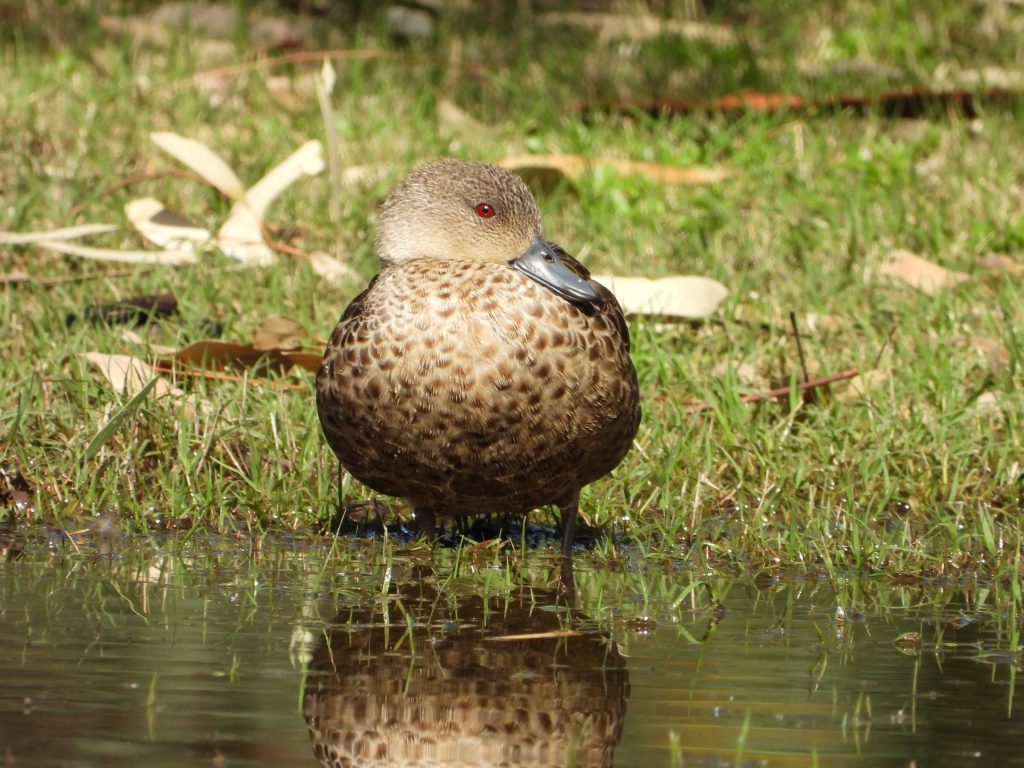
What did we see? Twenty-six species altogether. The shallow waders disappointingly were not there, there were no Pied Stilts, Yellow-billed Spoonbills, Great Egrets, Shovelers or the like that we commonly see on the wetland around this time of year. However, this didn’t matter to the beginners’ group who were happy to learn how to identify anything including Pacific Black Ducks, Eurasion Coots and Australian Wood Ducks!
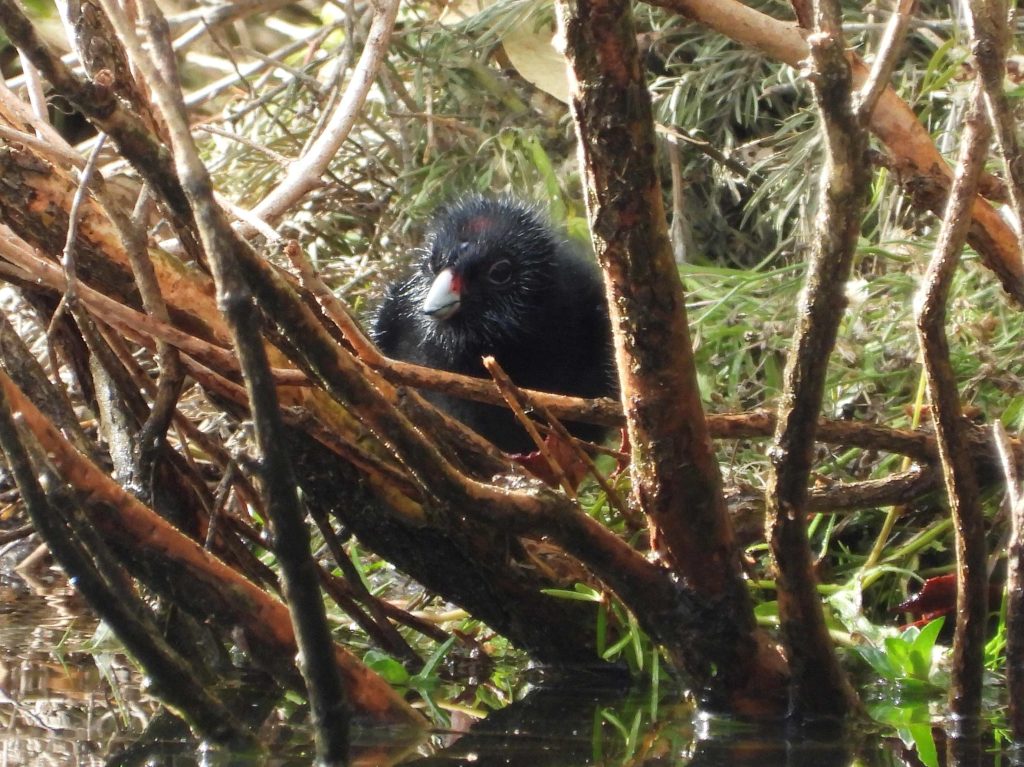
One tip for the novice birdwatchers that worked successfully was the suggestion that they look for movement, i.e. to stand quietly and look for a bird flying or hopping on a branch or leaves moving. Imagine their delight when I pointed out movement in a bush and on looking, they saw an Australasian Swamphen with a chick. What’s more, the Swamphen then took to the water and came up close to have its photograph taken in the full sun. Some had never seen or heard of such a bird before. The walk was worth it for that moment alone!
The more experienced group, meanwhile, were being helped to identify the bird calls of Weebills and Striated Pardalotes, sight unseen, and the flight behaviour of birds such as Grey Fantails and Black-faced Cuckoo-shrikes.
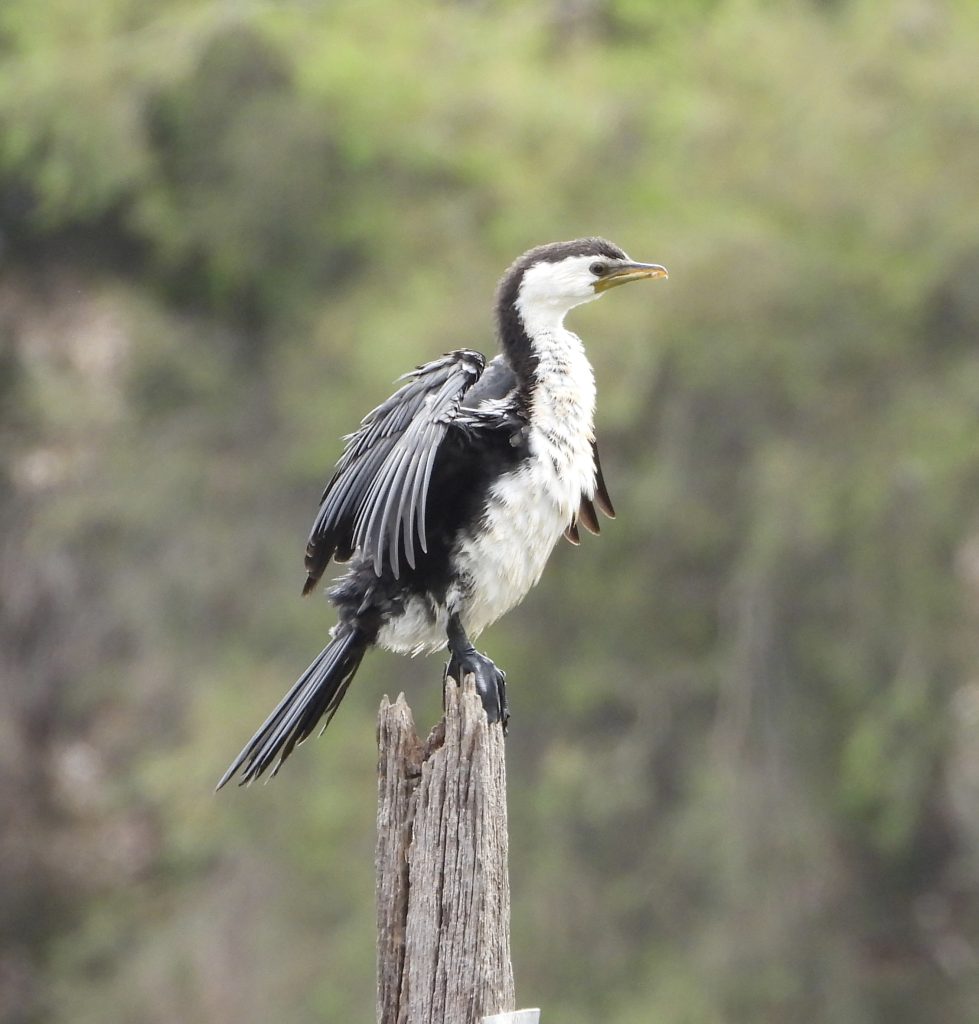
Seen by both groups were the five Hardheads swimming in the middle of the lake, the active nest of the Red Wattlebird and the Little Pied Cormorant who posed for a photograph (right, R Green).
It was a successful birdwatching expedition, with people leaving wanting to buy their own binoculars, attend club meetings and do more birdwatching. Mission accomplished! We thank Dani Crichton from the Shire of Mundaring for all her hard work in organising and her enthusiastic hosting of the event. Working together with the Shire is a win-win.
The next Broz Park walk will be on Saturday 22 May 2027. If you haven’t been before, come and join us, you might be surprised by what you see. We saw an Eastern Cattle Egret here once!
A full list of the 72+ species seen at Broz Park is available on eBird: https://ebird.org/hotspot/L8284126/bird-list
Rachel Green