

Northern Suburbs Branch, 26 August 2026
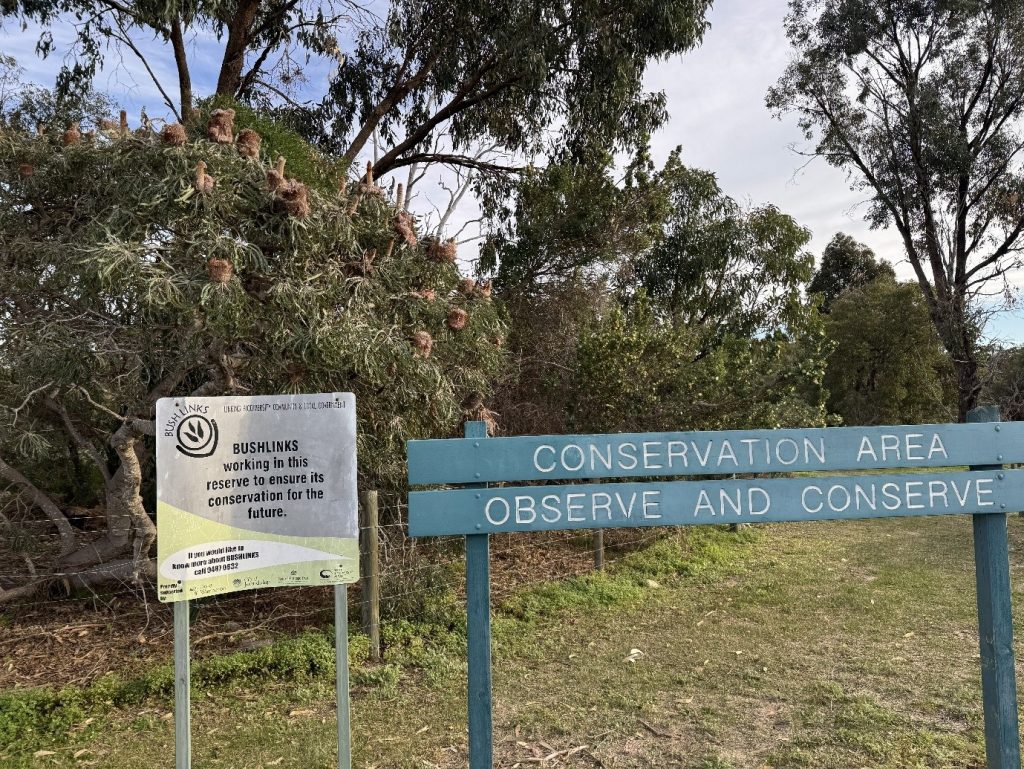
Cadogan Park in Kingsley was part of the now-defunct Bushlinks program. However, it remains an important link in the corridor of isolated areas of bushland between Yellagonga Regional Park and the coast.
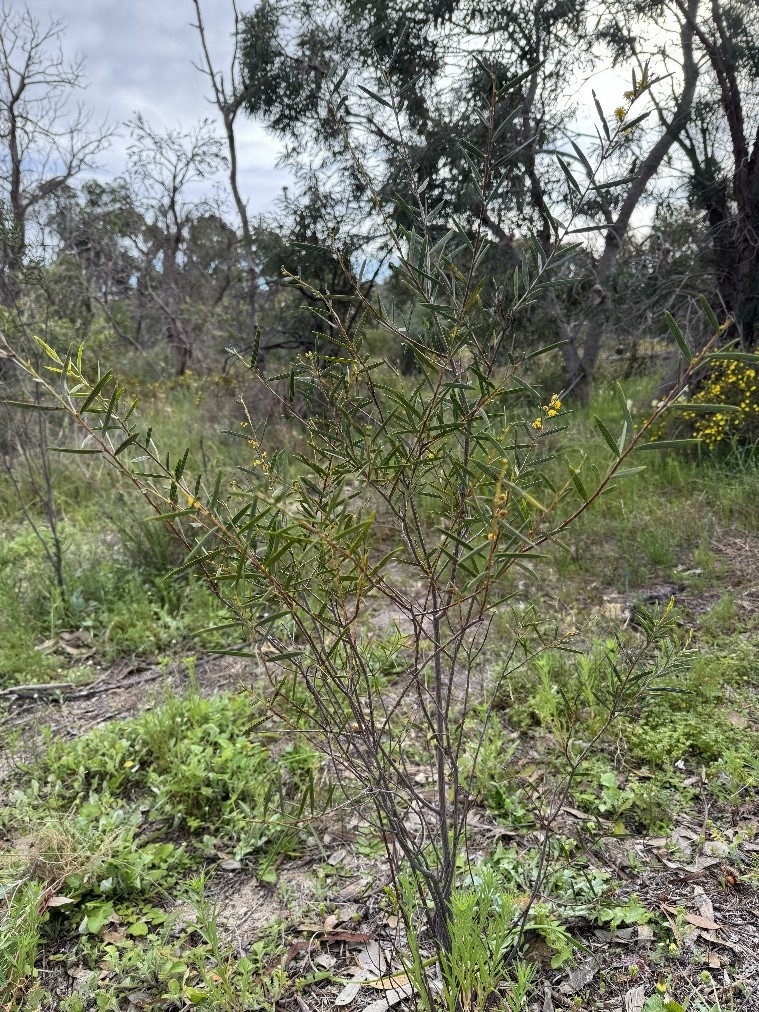
The 3.2 ha reserve comprises banksia and jarrah woodland. In 2004, a survey recorded 48 native plant species, including Bentham’s wattle (Acacia benthamii), a priority two species.
Jan Richards, the coordinator of the Friends group, led the attendees along the formal path where we spotted the first of many Purple Pansy Donkey Orchids (Diuris longifolia). The sound of numerous Red Wattlebirds and Rainbow Lorikeets was suddenly interrupted by two Grey Butcherbirds, which appeared to have a nest in a dead jarrah tree.
The most common plants appeared to be dull green-grey Prince of Wales Feathers (Ptilotus polystachyus) and the white Milkmaids (Burchardia umbellata). Purple Tassels (Sowbeaea laxiflora) and Morning Iris (Orthrosanthus laxus) added splashes of purple and blue respectively.
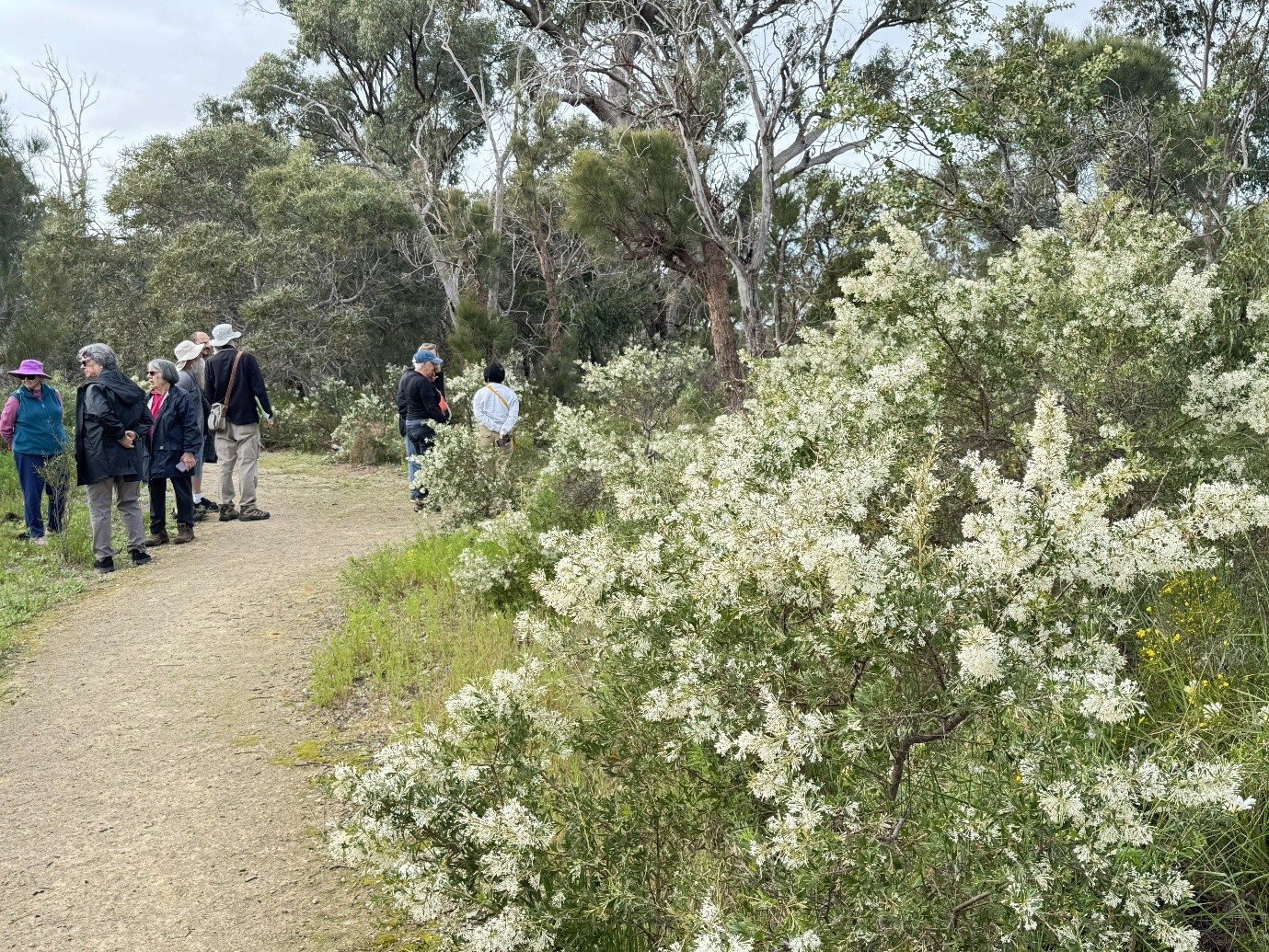
As we turned a corner, we were struck by a wave of white, which upon examination turned out to be vast numbers of Grevillea vestita. A Brown Flower Beetle (Glycyphana stolata), a scarab beetle, was recorded on one bush.
The Slender or Candlestick banksia (Banksia attenuata) was easy to recognise, but questions were asked about another banksia with slender leaves and large (dead) flowers. Jan said in the early days of conservation the City of Joondalup had planted the northern variety of the Acorn Banksia (B. prionotes) before local provenance became de rigueur. We did see Firewood Banksia (B. menziesii), but these were rare.
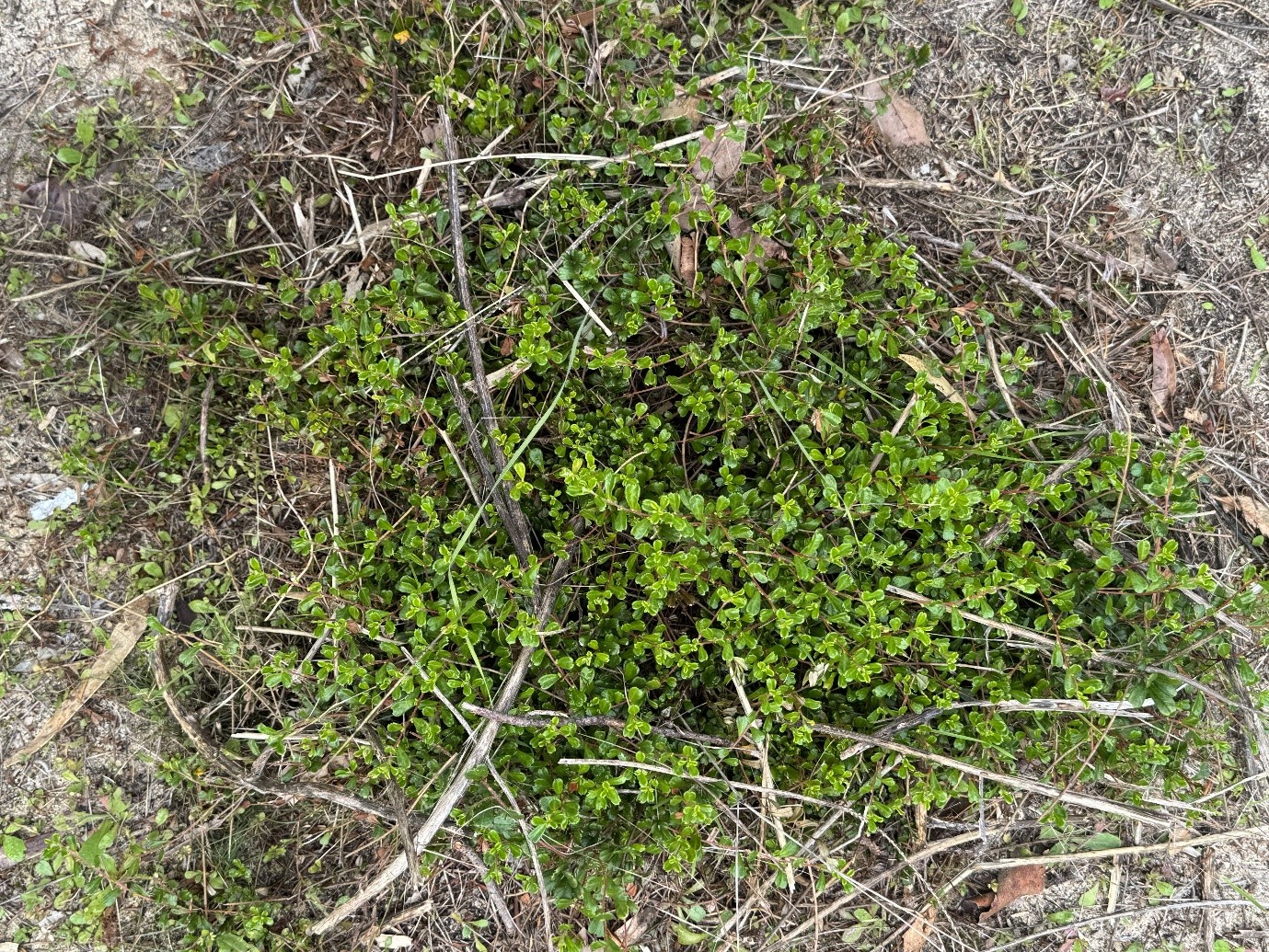
To return to our starting point, Jan led us through the bush. Here we saw many more Purple Pansy Donkey Orchids, Granny’s Bonnets (Isotropis cuneifolia), Hairy Yellow Pea (Gompholobium tomentosum), Pepper and Salt (Philotheca spicata), Grey Scaevola (Scaevola canescens), Petrophile sp. and Stenanthemum sp., probably S. tridentatum, which is recorded in the nearby Shepherds Bush Reserve. Western Sheoak (Allocasuarina fraseriana) were scattered throughout the park.
Due to the park’s small size and lack of dense bush, no small birds were sighted. Ian Abbott recorded only ten birds (in order of recording: Red Wattlebird, Yellow-throated Miner, Grey Butcherbird, Australian Shelduck, Little Corella*, Australian Magpie, Australian Raven, Rainbow Lorikeet*, Carnaby’s Cockatoo, Laughing Kookaburra*, Australian Ringneck, Red-capped Parrot*. All species marked with (*) are not native to the area.
On 10 July 2004, the Club participated in a fungi foray. 18 species were recorded. Sadly, our visit found no specimens, despite more rain falling in 2026 before our visit (392mm) than in 2004 before the survey (320mm). Maybe the 42mm that fell on 7-8 July 2004 made the difference.
No reptiles were recorded, and the beetle seen on the Grevillea vestita was the only insect.
Don Poynton