

Kwinana Rockingham Mandurah Branch, 19 April 2026
The April Excursion was to Bibra Lake, and 10 members met at the car park on a fine morning. The lake had reasonable water levels for this time of year (thanks to the wet period in late March) and was supporting large numbers of waterbirds.
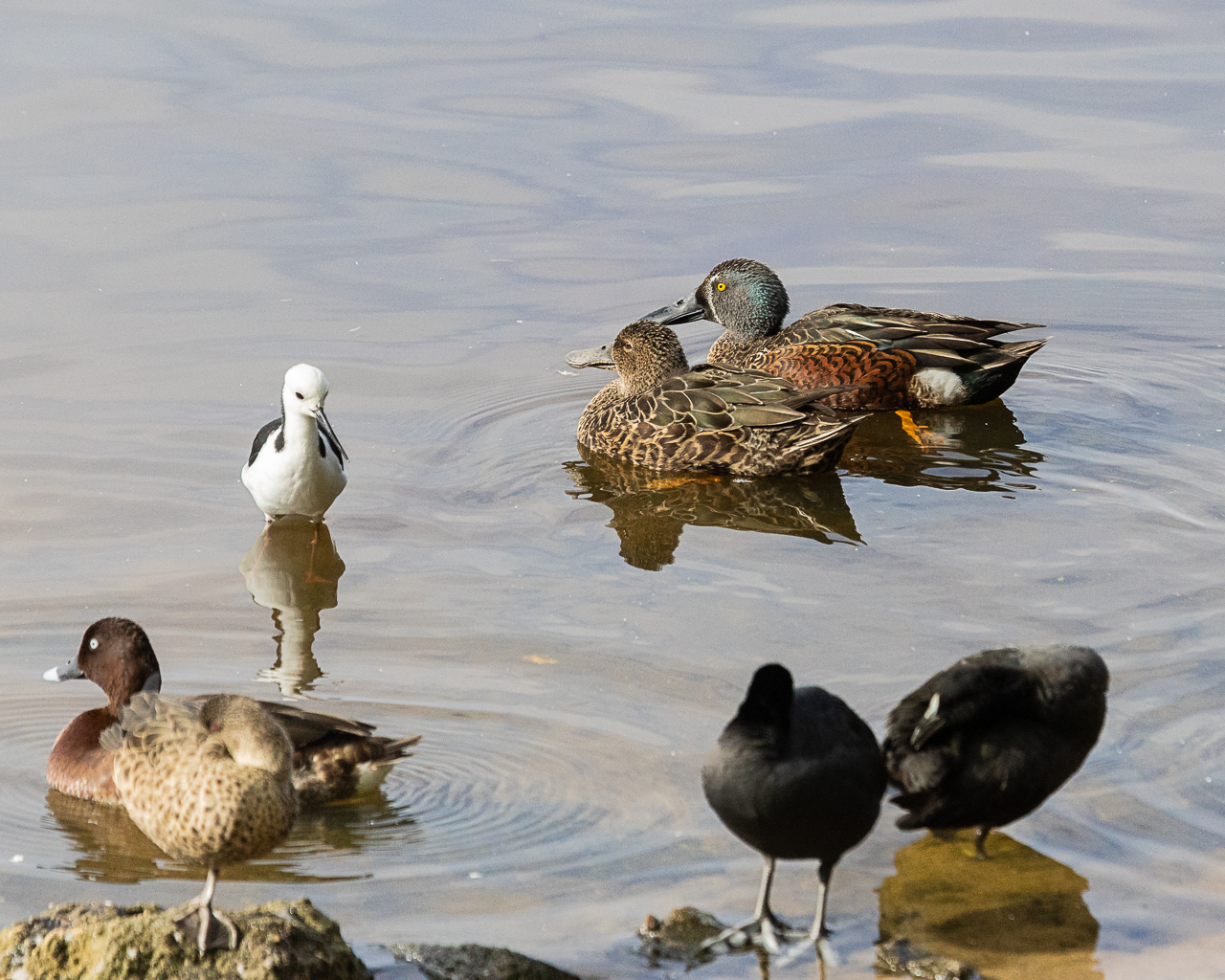
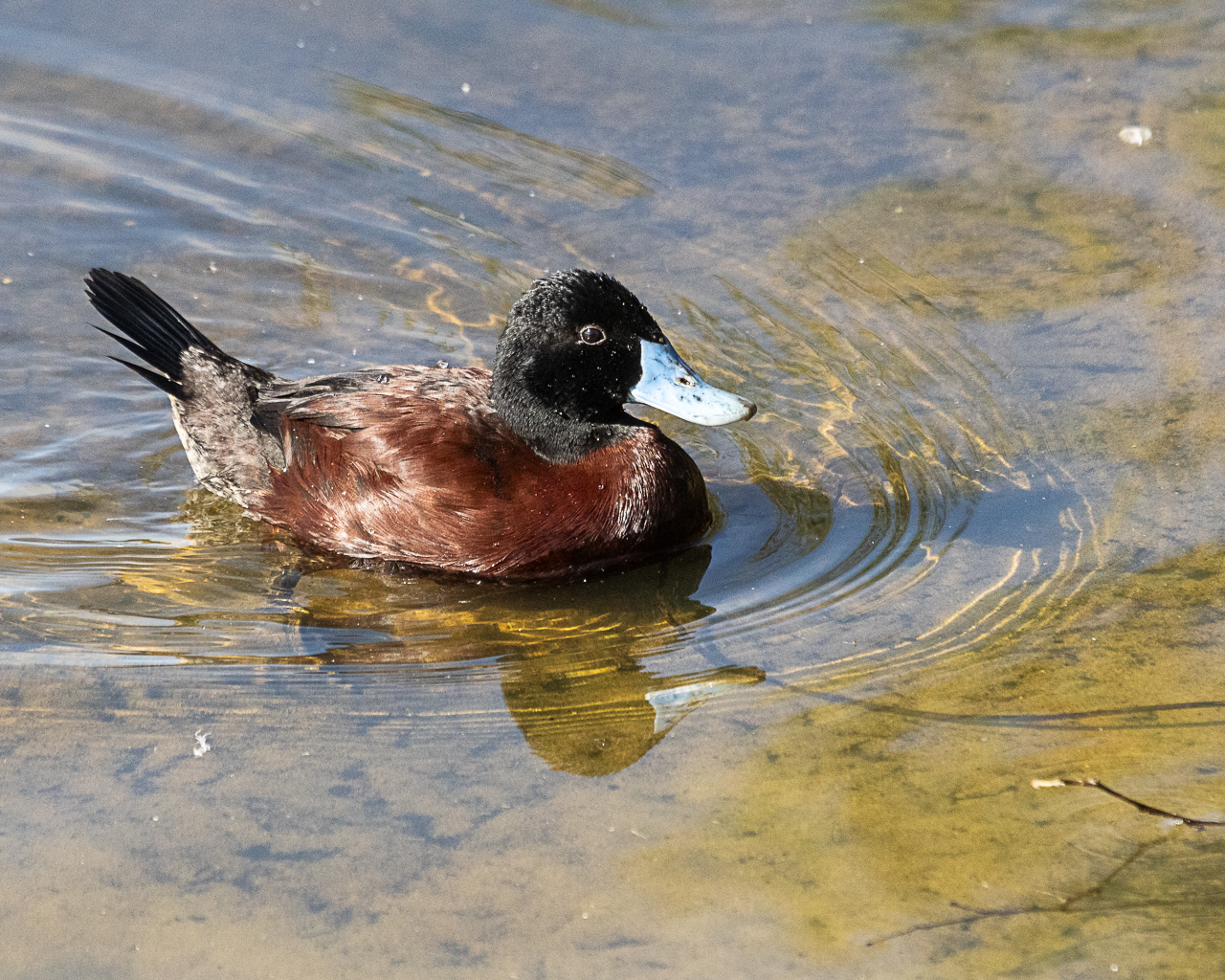
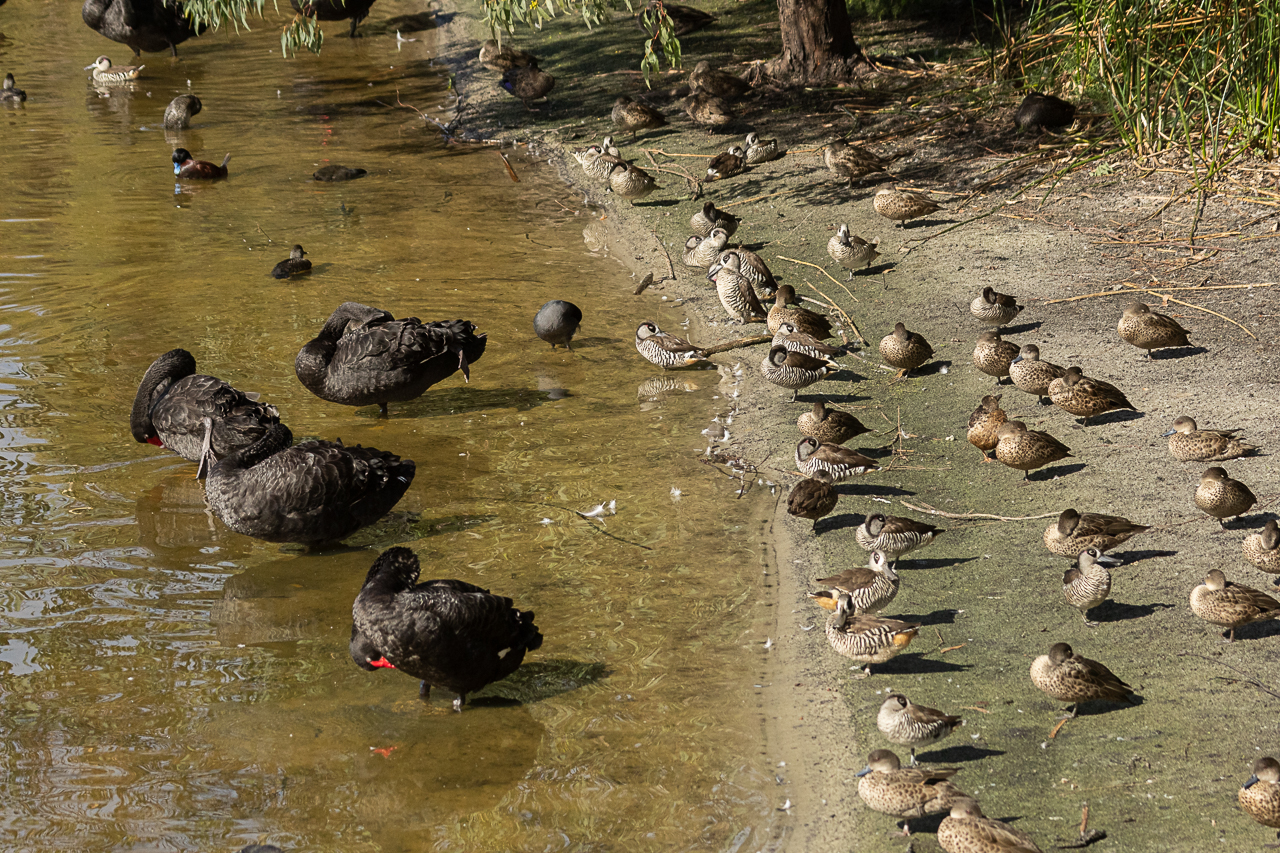
Setting off from our meeting spot, it was especially good to see large numbers of Blue-billed Ducks and Pink-eared Ducks close to, and resting on, the shoreline. Australian Shovellers, Grey Teal, Musk Ducks, Hardhead Ducks and Black Ducks were also present. Male Musk Ducks were in full courtship mode, with tail slapping and loud “Plonk – Plonk” calls, but the females seemed less interested. Pied Stilts were present along the shoreline while Eurasian Coots and Dusky Moorhens were also spotted.
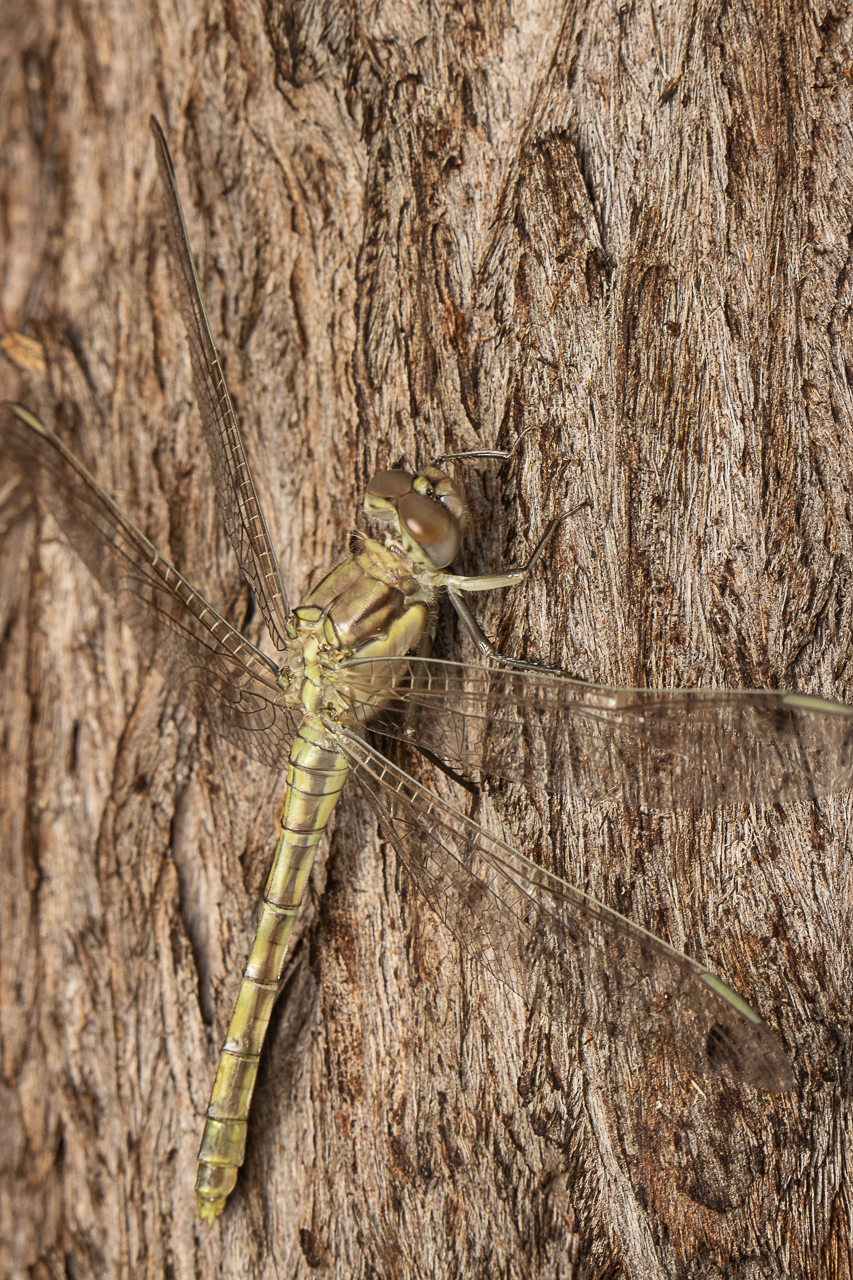
As we made our way towards the lookout, we examined the shrubbery and trees for signs of invertebrates. We found large numbers of cast-off exoskeletons (exuvia) of dragonfly larvae on Melaleuca trunks near the edge of the lake. At one location, a recently emerged dragonfly still completing its transformation to the adult stage was also spotted. It was identified as a female Blue Skipper on iNaturalist.
Lots of spiders were also found; some appeared to be Stretch Spiders (Tetranagatha sp.), and Golden Orb Weavers, with kleptoparasites such as Dew Drop Spiders, were spotted in large webs littered with the remains of their prey.
From the boardwalk/lookout, we again had great views of waterbirds, plus some woodland birds such as Splendid Fairy Wrens and White-browed Scrub Wrens, Red Wattlebirds, Magpie Larks, Willie Wagtails, and Australian Ringnecks. An immature Nankeen Night Heron was roosting on a nearby tree. Black Swans were spotted taking flight in the centre of the lake, always an impressive sight to see such a large bird take to the air. Some swans were also found along the shoreline. Further afield, it was possible to see White Ibis, Great Egrets, White-faced Herons and a Yellow-billed Spoonbill.
After a short break for a cuppa and snacks, a few of the group made our way over to the Wetland Centre from where we could access the bird hide. The walk through the shrubs provided Daniel with the opportunity to discover some more invertebrate sightings, including a few small wasp species and a Squathopper with an interesting disguise to fool predators. At the hide, we would add several extra bird species to our list, including Australasian Grebes and Hoary-headed Grebes, Little Egret, Purple Swamp Hen, Little Grass Bird, plus a Brown Goshawk, the only raptor for the morning. At the hide, a large flock of Welcome Swallows would fly in and roost for a while on the roof, and afterwards would take off en masse, a lovely sight and a great way to finish an enjoyable excursion.
It had been a great morning, and our Birdata list for the morning totalled 40 species, a very good number.
Colin Prickett