

Northern Suburbs Branch, 21 April 2026
Sarah Visser’s (ECU award winner) presentation exploded the myth that deserts are boring, uninhabitable wastelands.
The Great Victoria Desert (GVD) is Australia’s largest desert, covering approximately 35 million hectares across both WA and SA. It is characterised by sand dunes, spinifex grasslands, salt-lake systems and stony plains, all of which are important habitats for reptiles, birds and marsupials. The GVD is a biodiversity hotspot, with the 2.1-million-hectare Mamungari Conservation Park in South Australia recognised as a UNESCO biosphere reserve. Unfortunately, the Western Australian portion lacks similar recognition, although it does contain several nature reserves.
Indigenous people have lived in the area for at least 25,000 years and continued a nomadic life until most were removed from their land during the 1950s when British nuclear testing began at Emu Field and later at Maralinga.
Even though the desert experiences low rainfall with unpredictable annual patterns and temperatures that can exceed 40 degrees in summer and drop below zero in winter, numerous faunal species have adapted to and survive the harsh conditions. Sand monitors, Thorny Devils, Knob Tailed Geckos, and several dragons, including the Central Netted Dragon and the Great Desert Skink, all call this desert home.
Among the burrowing reptiles, Blind Snakes flick their tongues to taste and smell the trails of ants and termites, then follow the ants’ trails to the nest, and the Half-girdled burrowing snake feeds on reptile eggs buried underground.
The locomotion of members of the Larista genus (skinks) is linked to their body shape. The shorter skinks with prominent limbs travel on the surface; the longer skinks with reduced legs tend to burrow more.
In 2018, 18 native mammal species were identified in the WA GVD. Some of Sarah’s favourites are kultarrs, ningaui, mulgaras and particularly dunnarts.
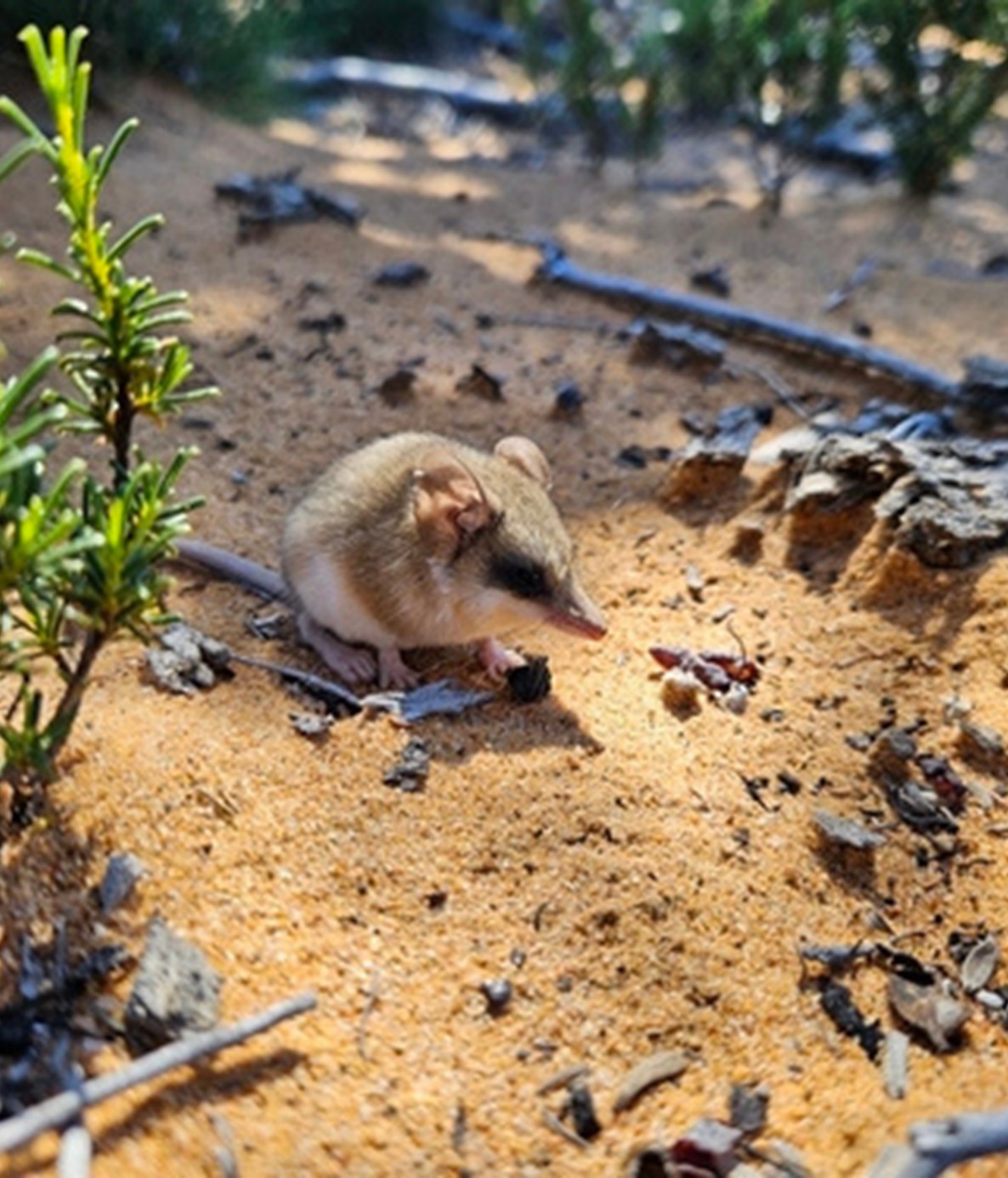
The Sandhill Dunnart (Sminthopsis psammophila) was rediscovered in the 1970s and is listed as Endangered. This small, nocturnal, carnivorous marsupial was once widespread across arid and semi-arid Australia but is now restricted to three known fragmented populations across the Great Victoria Desert and South Australia’s Eyre Peninsula. Since colonisation, they have retreated into dense spinifex habitat, meaning the loss of spinifex en masse by hot, uncontrolled burns is devastating.
Nearly 100 bird species have been recorded, including Princess Parrots (during boom times), Bourke’s Parrot, Southern Scrub-Robin, splendid fairywrens, and even migratory waders and swans after heavy rain.
When rain comes, the stygofauna also comes to life, closely followed by moths, beetles and a whole buffet of invertebrates (usually in plague proportions).
Many of the species Sarah mentioned rely on old, established spinifex grasslands, mulga scrub and marble gum stands for food and protection. Uncontrolled burning is a major threat to all species. Burrowing animals that survive fires are generally finished off by introduced predators.
Spinifex grassland and mulga scrub take between 15-30 years to grow back into a similar habitable pre-burn state.
It is predicted that climate change will make the Great Victoria Desert uninhabitable for many species by 2100.
Don Poynton