

Northern Suburbs Branch, 15 September 2026
A double-header. Our two speakers ventured to two very different parts of the world in 2025. Yet they both witnessed something strikingly similar: the effects of climate change.
Mike Norman commenced his presentation with some empirical observations. His first set of charts showed the atmospheric CO2 variation over the last 500,000 years based on measurements taken from Antarctic ice cores. For most of the period, CO2 levels stayed below approx. 300 ppm, but since the early 20th century, the value has risen to above 420 ppm. His subsequent slide then demonstrated that there is a mathematical relationship between cumulative carbon in the atmosphere and global mean temperature.
Mike said that once major “tipping points” are reached, climate change will become a runaway process that humans will be powerless to mitigate, e.g., permafrost methane release. In a doomsday scenario, this would lead to worldwide deadly heatwaves, severe crop failures, water shortages, higher sea levels, mass climate migration and a massive impact on nature and biodiversity
This led Mike to tell us about some of his mountaineering adventures and the changes he has seen because of climate change.
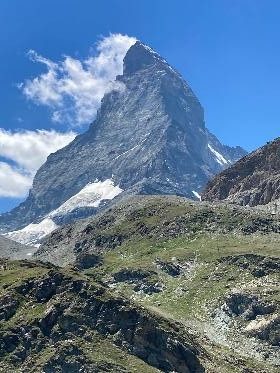
In 1999, Mike climbed four 4000m+ peaks in Switzerland. He said, “In June 2026, we were shocked to see the Matterhorn had no snow or ice on the north face – it was well covered during summer in 1999, and at that time the north face was permanently covered and was a challenging ice climbing route!”
The Matterhorn in 2025, Switzerland – Image by Mike Norman
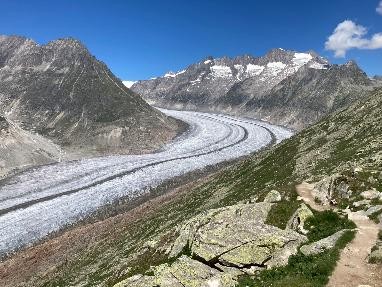
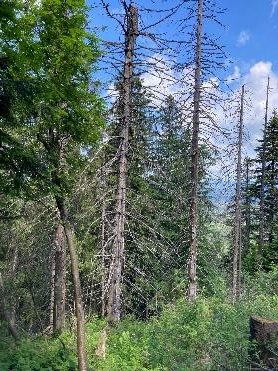
He also noted that the Aletsch Glacier he revisited had lost 1km in length and 120m in thickness since 1999, and belts of spruce trees had been killed by wood-borers that were no longer kept in check due to warmer winters and a drier climate.
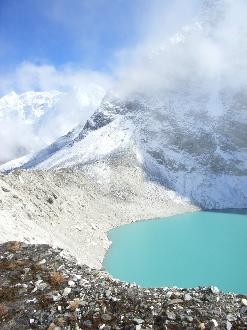
He ended his talk with a particularly relevant story about a conversation he had with one sherpa in 2005 who “confided with me that he was worried about his parents living very near a river, given he could see the high altitude barrier lakes were getting bigger, and maybe one day they would breach. Now look what happened in Nepal at the end of August 2026!
Barrier Lake, Nepal. – Image by Mike Norman
In 2025, the USA’s National Oceanic and Atmospheric Administration (NOAA) commissioned Peter Stephenson to study the dramatic change in scalefish stocks in Alaskan waters. Before commencing work in Juneau, Peter took the opportunity to visit the nearby Mendenhall Glacier. Comparing his photo with those taken in 1986 and 2012 clearly showed a significant reduction in ice.
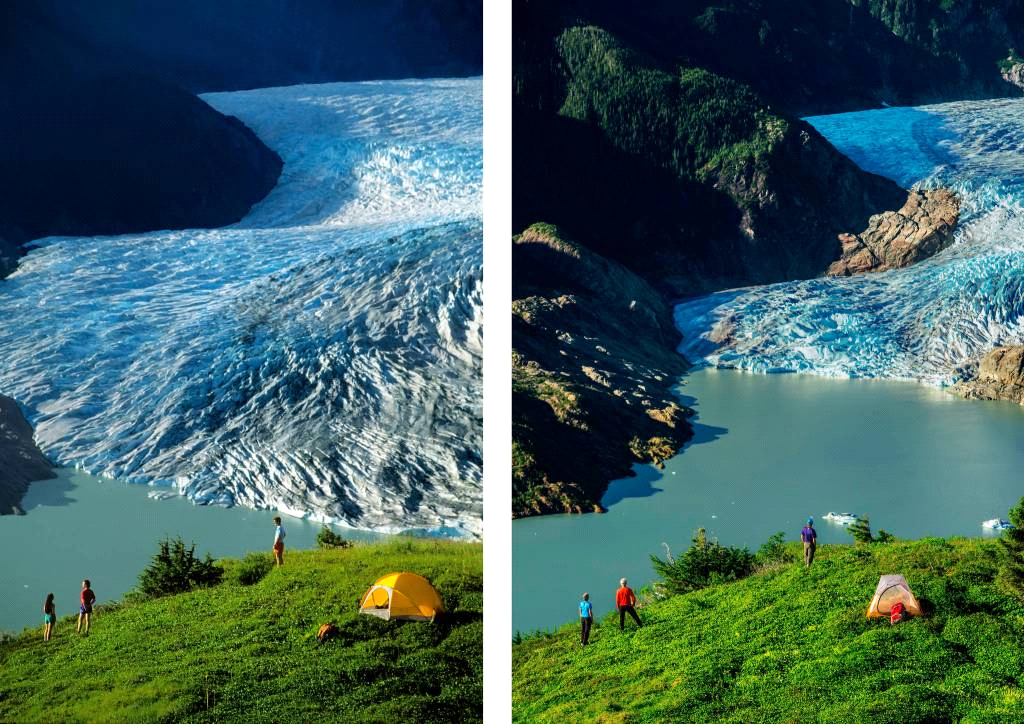
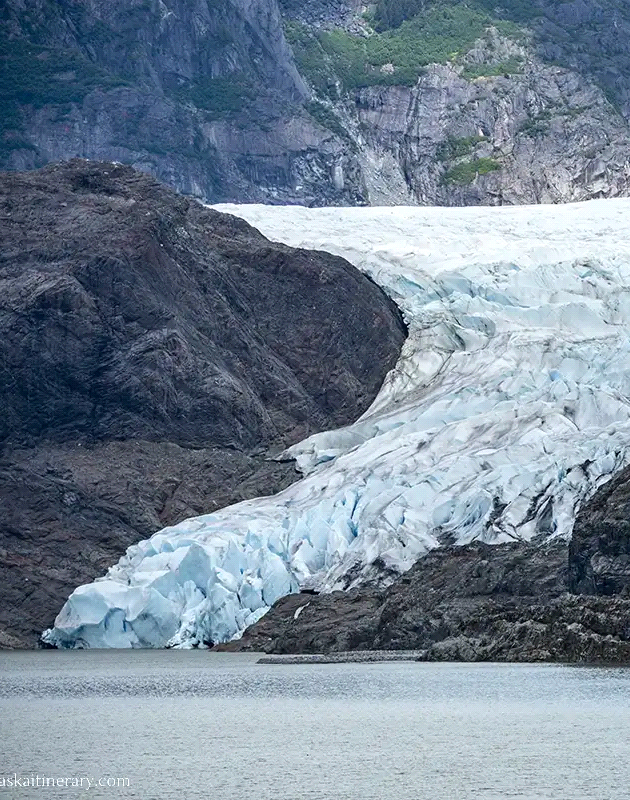
Peter started his talk by telling us about the dramatic drop in the King Crab catch in the Aleutian Islands and Bering Sea in the early 1980’s, due to a combination of overfishing and very poor recruitment, resulting in the closure of the King Crab fishery. This led to many of the crab fishers switching to pot fishing for scalefish, particularly for Sablefish, in the same areas prosecuted by longliners (fishing down to 1000 m). At the request of the longliners, pot fishing for scalefish was banned by NOAA in the mid 1980’s. Peter then showed some incredible photos of killer whales and humpback whales taking Sablefish off the longlines.
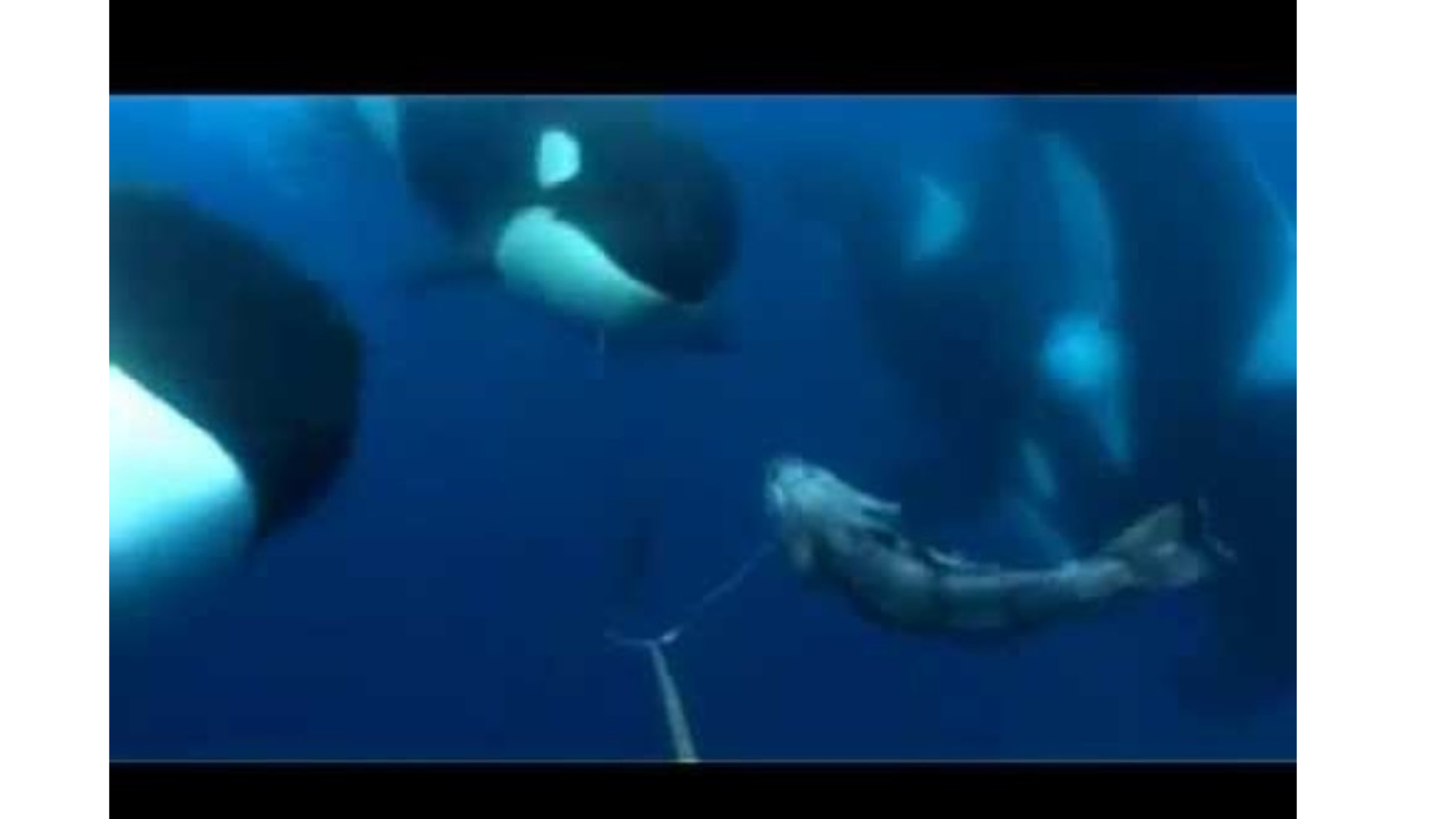
In the mid-2010s, things started to get weird. The increased killer whale and sperm whale numbers made depredation a serious problem, and longline fishers asked NOAA to allow pot fishing for scalefish. NOAA repealed the pot fishing ban, and many small boats switched from longline fishing to pot fishing using easily stackable “slinky” pots to avoid whale depredation.
At the same time, scalefish trawlers (fishing down to 200 m) started to encounter problems. Trawlers used to catch 2-5-year-old Sablefish, with 4- and 5-year-olds being a good marketable size. As the ocean warmed, Sablefish moved to deeper, colder water, and trawlers caught smaller fish that were difficult to market, causing a major decline in this fishing method. Then, for reasons no one could explain, recruitment suddenly and dramatically increased in the 2020s across the Bering Sea, Aleutian Islands, and Gulf of Alaska, but not in all areas in the same year. This led to a large increase in the Sablefish catch, which was considered sustainable.
Peter’s job was to determine whether the methods used to predict Sablefish population size and biomass, and from that, the sustainable catch limits for each area, were the best possible given the available data. However, a three-area stock assessment model required estimation of 723 parameters, which proved intractable due to insufficient data being available in the three areas. In the end, the best that could be achieved was an interim solution treating the fishery as one population with three fleets. This gave reliable biomass estimates from which catch quotas could be estimated.
Peter concluded that while his investigation did not directly address the effect climate change is playing on recruitment and how it will affect the biomass in the future, this may be possible with long-term data collection consistently across the three areas – something which may be beyond NOAA’s current funding. (The Trump administration proposed a $1.7 billion, or about 27%, cut to NOAA’s 2026 budget).
Don Poynton