

Main Club, 2 October 2026
Beneath our Feet
Our speaker, Danny Melville, is a naturalist and amateur herpetologist, a biology student and a member of our Club. Danny emphasised that he is essentially a naturalist rather than a taxonomist. He began by defining the words herpetofauna: the reptiles and frogs of a region, and fossorial as species that have evolved for burrowing.
Being ectothermic, reptiles regulate their body temperature behaviourally. Sand retains heat, so it is a perfect habitat for fossorial reptiles, which can move through the sand and find the right temperature at the right depth. But stony habitats with Acacias can also be suitable, where the shrubs form a dense mat of leaf litter and cast shade, giving reptiles scope to thermoregulate.
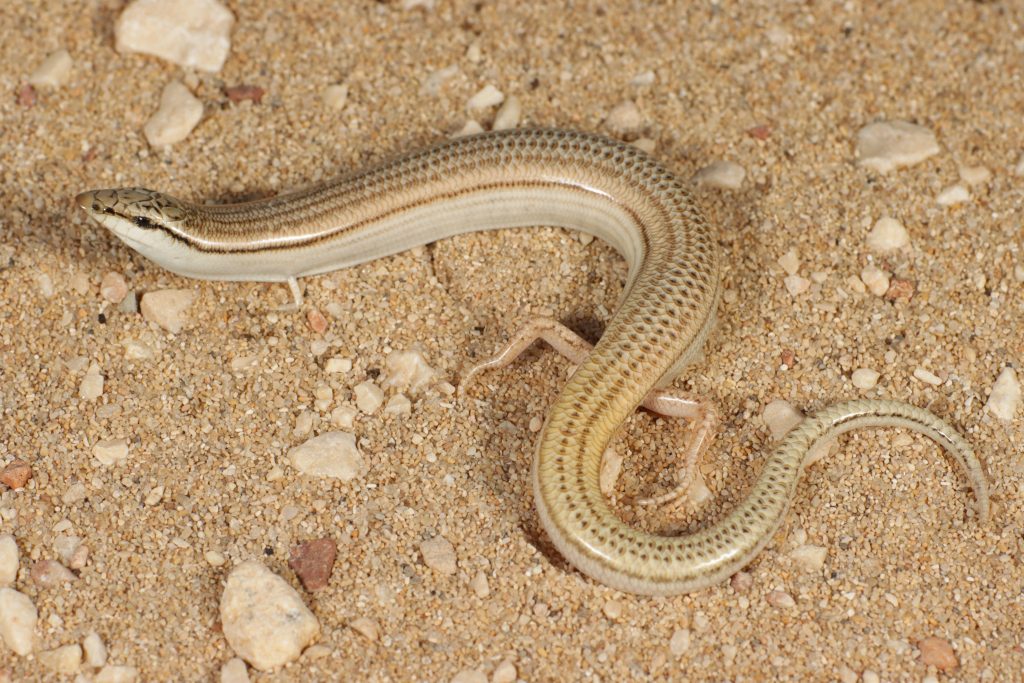
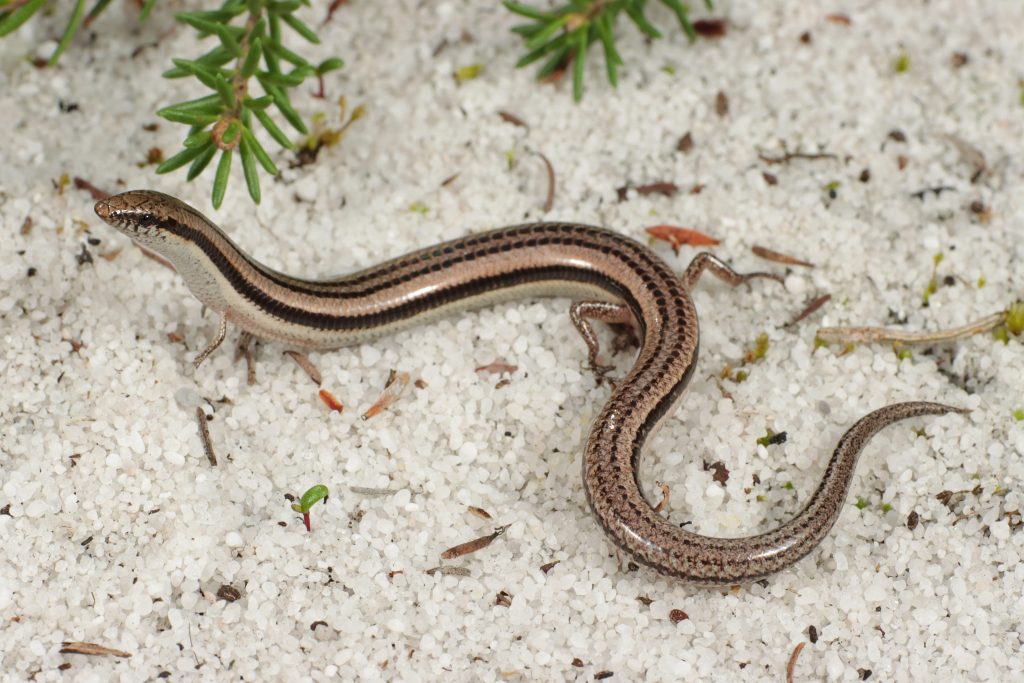
Skinks (family Scincidae) are the most diverse and successful lizard family. Over 450 species have been described in Australia, including 96 from the genus Lerista. Skinks are variable – for example, some are oviparous and some viviparous. Fossorial skinks (e.g. Lerista) show an evolutionary trend toward limb reduction. Leristas such as the Blunt-tailed Slider (Lerista praepedita) are well-suited to fossorial life, with no forelegs and hind legs reduced to flaps, allowing them to swim more easily through sand. In the NW of WA is the Keeled Slider (Lerista planiventralis). It has a ventrolateral keel with two sledge-like ridges to reduce resistance. Danny says it “swims” so fast through the sand that it is very hard to catch. The Perth Slider (Lerista lineata) is only found on the Swan Coastal Plain near Perth, south of the Swan River and on Rottnest and Garden Islands. Unfortunately, much of its bushland habitat is prone to weed invasion and fire.
The pygopods, or Legless Lizards, are, surprisingly, a group of specialised geckos. But they have no front legs, and the hind limbs are reduced to scales. People often mistake them for snakes, but unlike snakes, they have longitudinal stripes, a fleshy tongue they can use to lick their eyes, and visible ear openings. They include the Worm Lizards, which are specialised feeders that gorge on ant larvae.
Elapids are the front-fanged, venomous snakes. They have all evolved from a common ancestor that was isolated on this continent. We are familiar with some of these, such as the Dugite, but some of them are small, fossorial, and, though venomous, seldom bite and are considered harmless. Danny showed us photos of some of these, including some with very colourful banded patterns. Jan’s Banded Snake eats lizards, using python-like constriction to constrain them. The Shovel-nosed Snakes eat lizard eggs. The Black-striped Burrowing Snake is endangered.
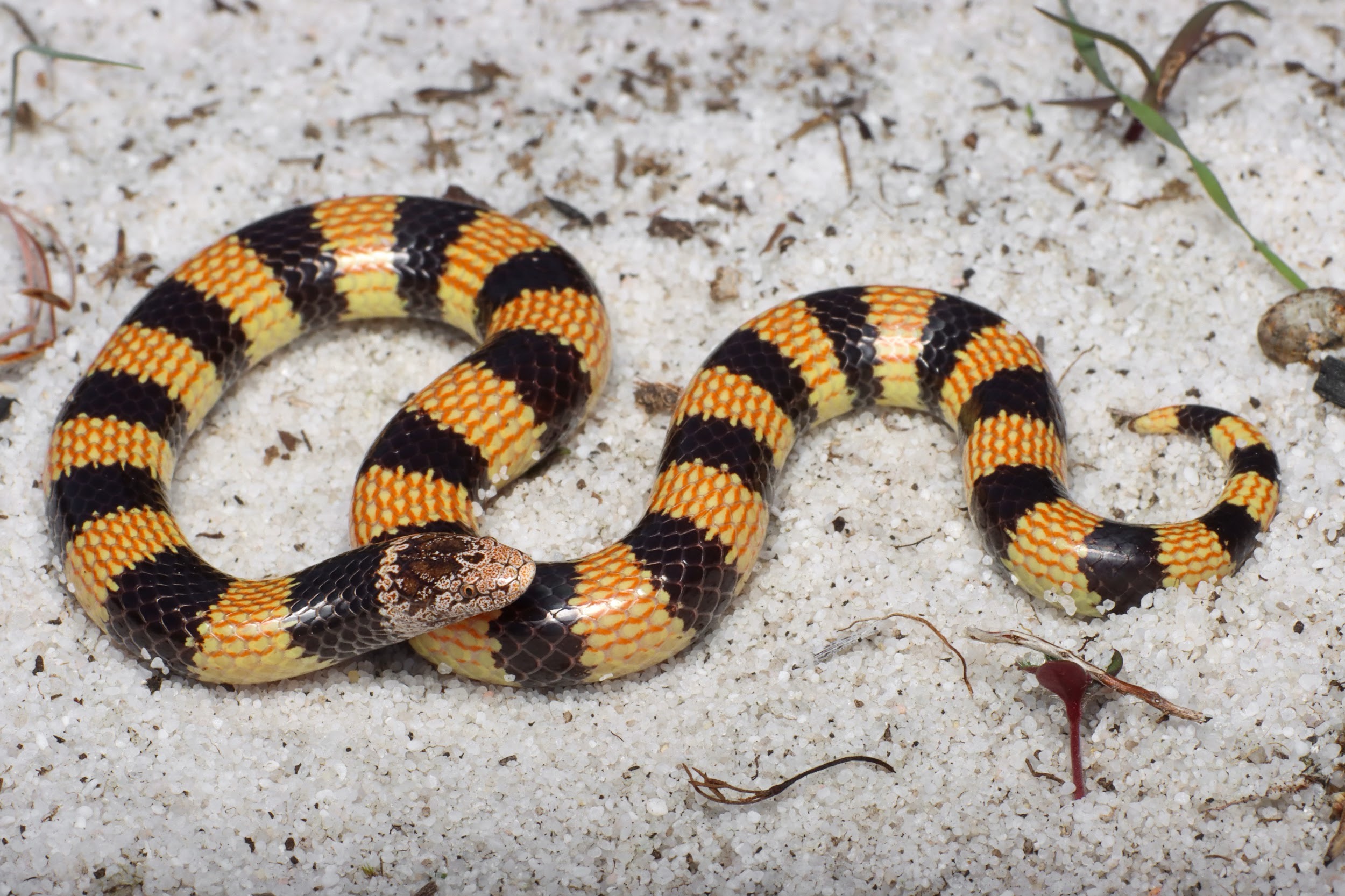
Jan’s Banded Snake – Image by Danny Melville
The Blind Snakes (Typhlopidae) are very worm-like but with scales, with a cylindrical body, a blunt tail and vestigial eyes. They eat ant and termite larvae. They come to the surface on hot nights.
Danny showed pictures of himself and fellow “herpers” raking the sand with cultivators to look for fossorial reptiles. WA, having plenty of sand, is prime habitat for fossorial reptiles, with an amazing diversity of species that most of us never see.
Mike Gregson