

DRNats, 12 June 2026
Dr Kit Prendergast is a native bee ecologist, researcher, and science communicator known for her public persona, “Bee Babette.” Her PhD examined the impacts of honeybees and urbanisation on native bee populations and pollination networks. Her research spans pollination ecology, native bee behaviour, biodiversity assessment, citizen science, and pollinator survey methods. With 89 publications and ongoing postdoctoral research, she is a leading advocate for native bee conservation.
Dr Prendergast highlighted the critical role native bees play in maintaining healthy ecosystems and supporting pollination services in Western Australia (WA). Her interest in the field was inspired by a WA Naturalist presentation showing photos of native bees, which made her fall in love with these creatures. Still, she has had a passion for protecting biodiversity from an early age. Since commencing her PhD, Kit has been dedicated to advancing pollinator conservation and protecting native bee species from threats such as habitat loss, climate change, and bushfires.
Western Australia is home to approximately 800 of Australia’s estimated 2,000 native bee species, many of which occur nowhere else. Despite this diversity, native bees receive relatively little conservation funding and public attention. In contrast, the introduced European honeybee Apis mellifera, brought to Australia in the 1820s, dominates research and public awareness. Honeybees contribute significantly to the economy, generating around $100 million annually through honey production, while pollination services contribute more than $1.1 billion to Australian agriculture.
Kit’s research shows that native bees depend strongly on local vegetation. For example, 81 bee species have been recorded visiting Corymbia calopylla Marri trees. Following bushfires, Kit developed a world-first trial of using bee hotels to assist with the recolonisation and boosting of native bee populations. Kit has conducted baseline surveys for local councils, including the City of Kalamunda, at sites like Gooseberry Hill Reserve. Her surveys for other local councils, like the City of Bayswater, have produced reports that they have shared with the community and that have been used by their environmental teams to guide restoration and management activities. Local councils have invited Kit to hold numerous community workshops. Partnering with Greening Australia, Kit developed a framework for designing seed production areas to support pollinators and ensure pollination of the plants whose seeds are used in restoration.
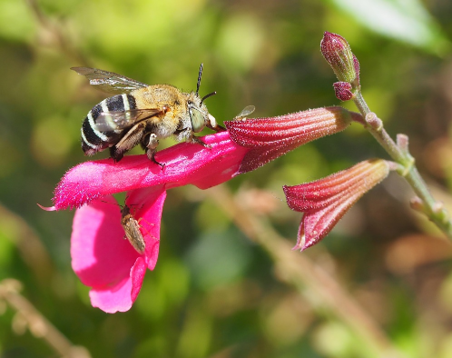
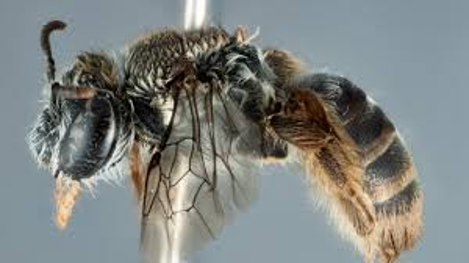
Unlike honeybees, most native bees are solitary and do not live in colonies. Species range from tiny Euryglossina bees (which include species as small as 1.8 mm long) to large carpenter bees (15-24 mm) of the genus Xylocopa. Some species, including Leioproctus zephyr, named by Dr Prendergast after her dog, are considered at risk of extinction but have no formal conservation protection. Many species remain poorly studied, making it difficult to assess their conservation status.
Native bees face several significant threats. Habitat loss through land clearing and agricultural expansion reduces nesting and feeding opportunities. Climate change can disrupt synchronisation between bees and flowering plants, expose bees to temperatures beyond their tolerance limits, and reduce the nutritional quality of nectar and pollen. Herbicides and pesticides may also negatively affect bee health.
Dr Prendergast noted that Australian native plants are far more attractive to native bees than exotics, and that many species will forage only on native plants. Gardeners can support pollinators by planting native plant species in large groups, leaving areas of bare soil for ground-nesting bees, keeping large old trees with small holes for above-ground nesting bees, and installing bee hotels with a range of hole sizes.
Community involvement is essential for native bee conservation. Citizen science projects, recording sightings, sharing photographs, habitat restoration, and increased public awareness all contribute to protecting these important pollinators. Continued research and habitat protection will be critical to ensuring the survival of Western Australia’s diverse native bee populations.
Dr Kit Prendergast is working on an Australian Native Bee & Pollinator Conservation Strategy. You can support this initiative on her Patreon, The Bee Babette: https://www.patreon.com/TheBeeBabette.
For more information, Dr Prendergast can be contacted at:
Email: Kitprendergast21@gmail.com
Her Patreon: The Bee Babette, which provides subscribers with a library of resources on native bees:
https://www.patreon.com/TheBeeBabette
The Facebook group: The Buzz on Wild Bees.
Arlene Quinn