

Northern Suburbs Branch, 27 May 2026
Our May excursion to Galup (formerly known as Lake Monger) to inspect trees infected with Polyphagous Shothole Borer (PSHB) was a follow-up to our April 2025 talk. Since that time, the national approach followed by the Department of Primary Industries and Regional Development (DPIRD) has shifted from an eradication strategy to a long-term management approach. Additionally, the latter is now being handled much more by LGAs.
Thirteen members and a visitor were met by Emad Alshwany, who has the extended title of Capacity Building & Training (Community) Supervisor, Polyphagous shot-hole borer Transition to Management Response, Biosecurity and Emergency Management, Department of Primary Industries and Regional Development (DPIRD), and one of his assistants, who recapped the history of PSHB in WA and passed around pieces of wood from several ornamental species to show us the external and internal signatures of PSHB.
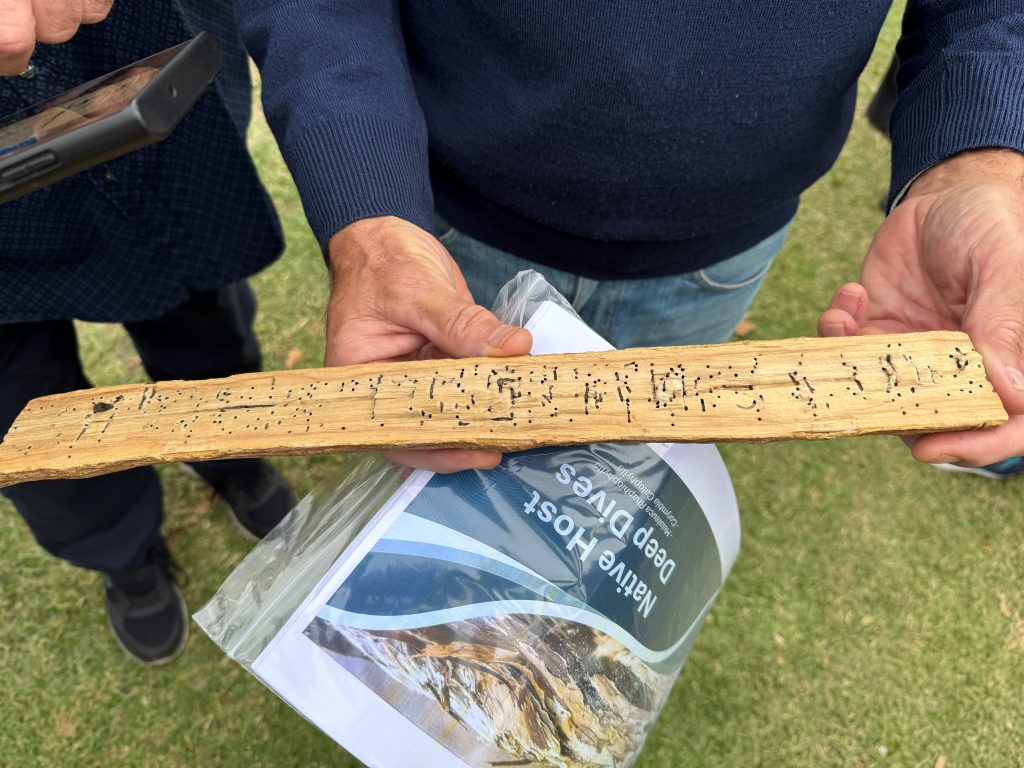
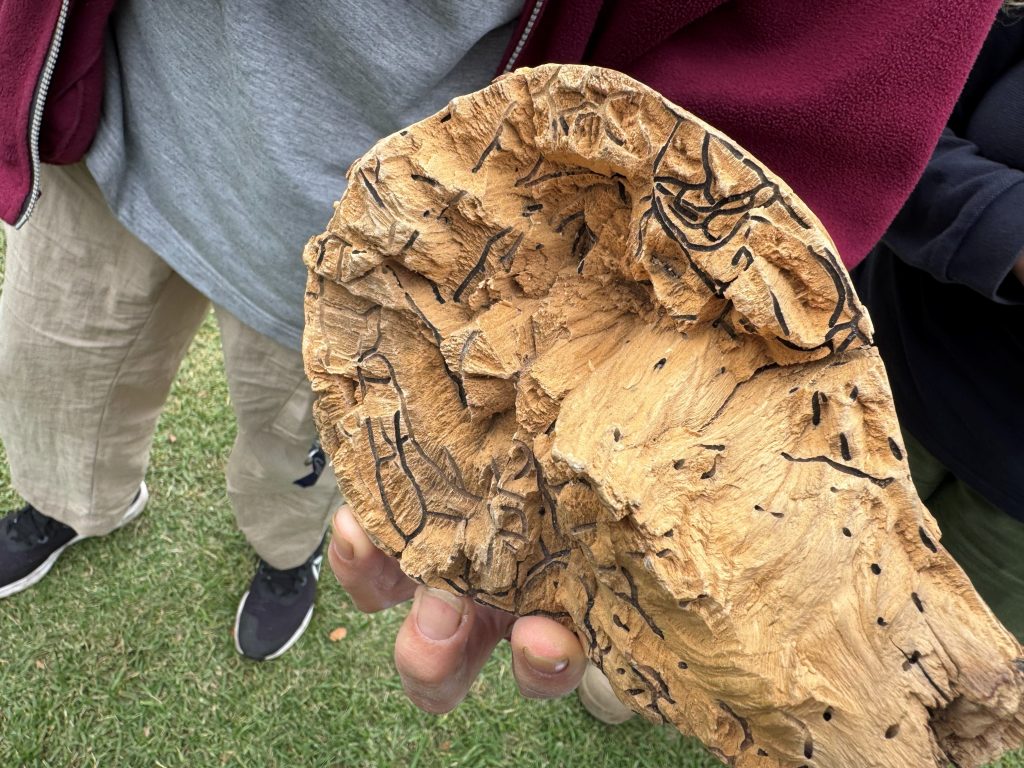
As we learnt at our talk last year, Emad reiterated that it is not the borer that kills the tree- it is the pathogenic fungus it carries on its cheeks that is the killer. The fungus absorbs water, eventually depriving the tree of sufficient moisture and causing it to die.
Before taking us to see some of the affected trees around Galup, Emad summarised the telltale signs we should look for,
From afar:
- Canopy thinning,
- Uneven crown, or
- Sudden dieback.
On close-up inspection:
- Shot-holes, approx. 1mm,
- Frass (fine dust or noodle-like strands),
- Dark staining or lesions around the entry point,
- Gumming or sapping, and
- Galleries in broken or cut branches.
Armed with this information, we set off to inspect several affected species around the lake.
Our first stop was a grove of River Sheoak (Casuarina cunninghamiana), an eastern states tree. Shotholes with characteristic dark red to black staining around the hole were obvious where the bark had been peeled off. Other trees exhibited typical signs of frass.
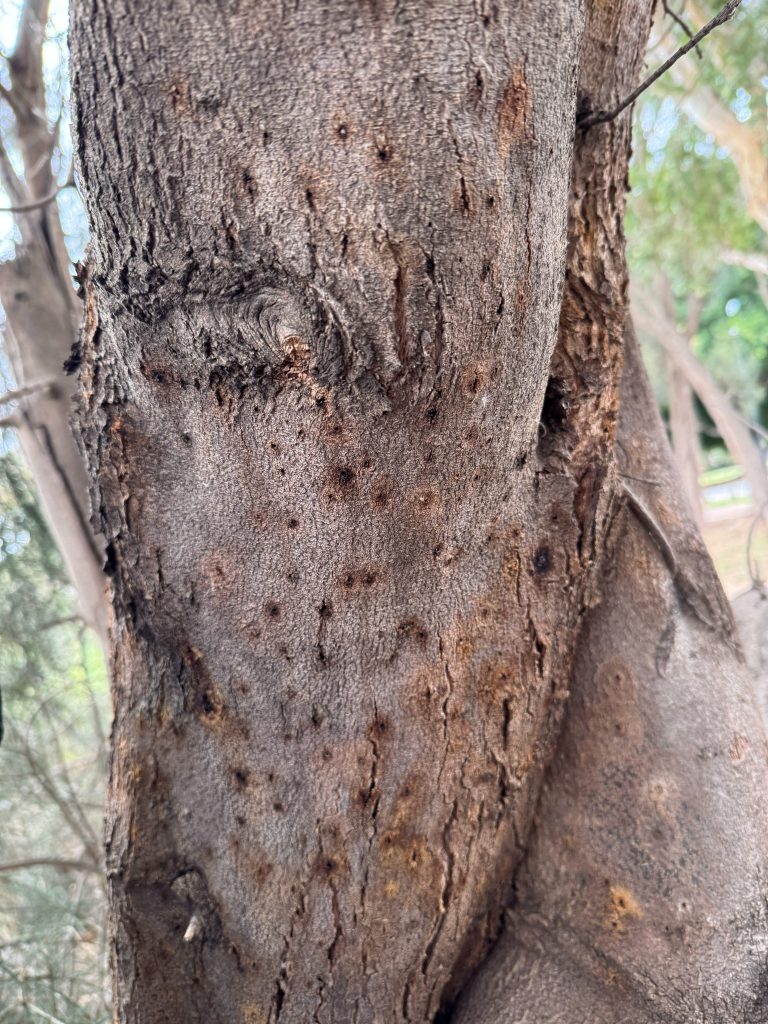
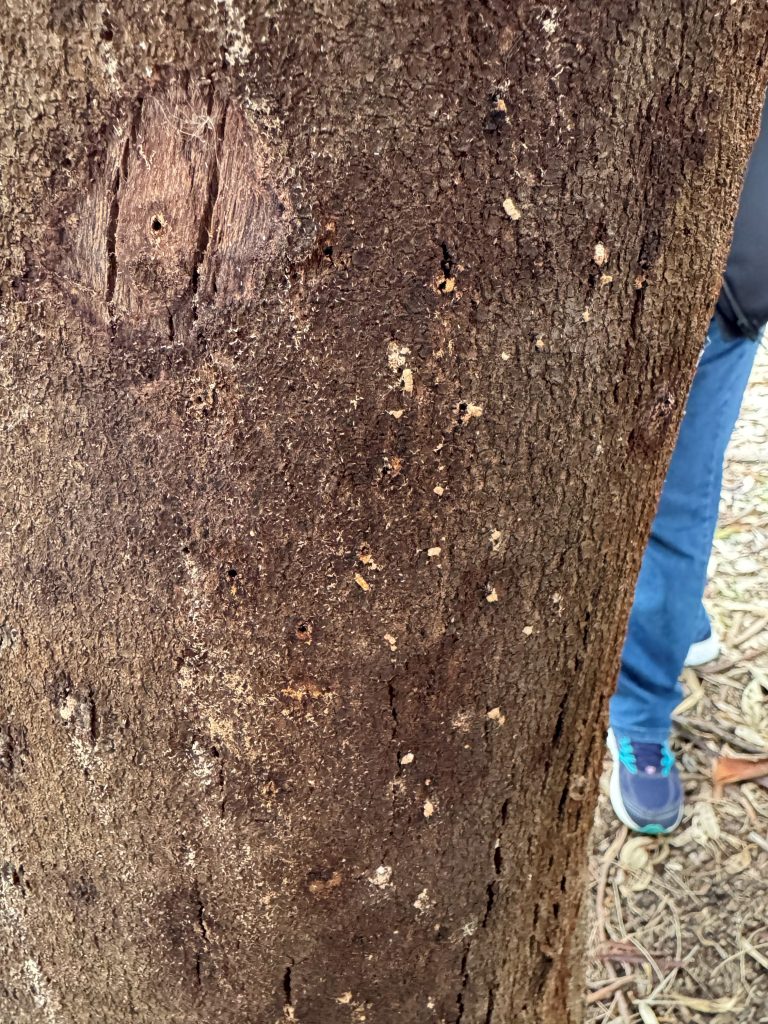
We then moved on to examine some Swamp Paperbarks (Melaleuca raphiophylla), where it was necessary to strip the outer layers of bark to see the shotholes.
image Don Poynton
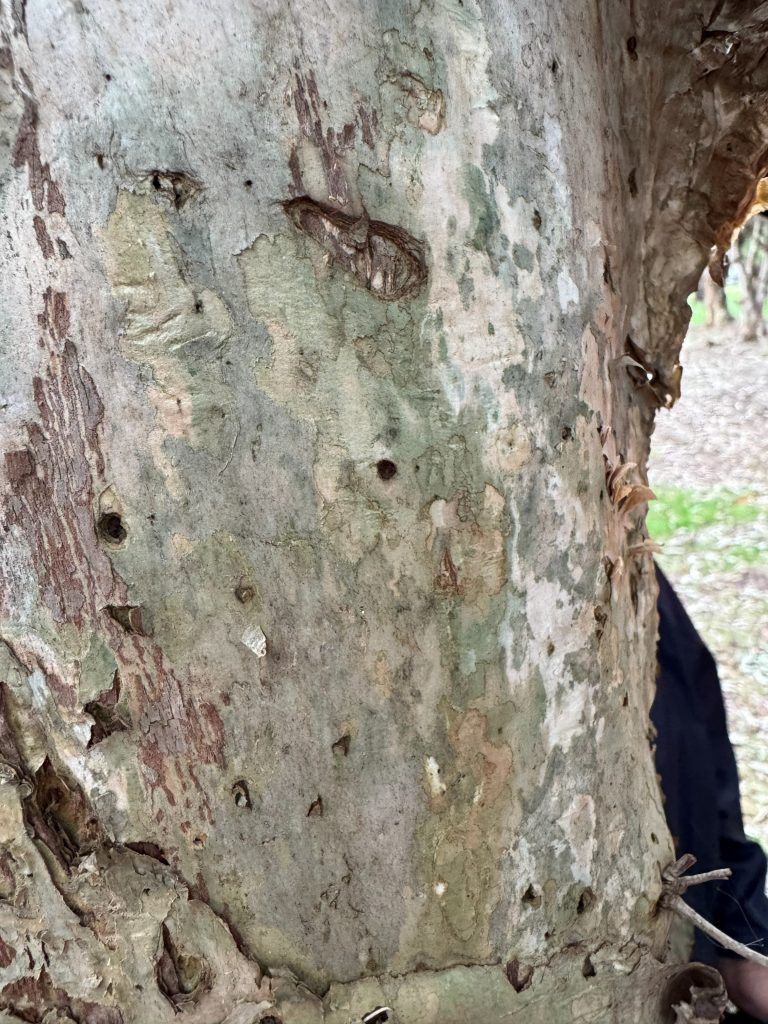
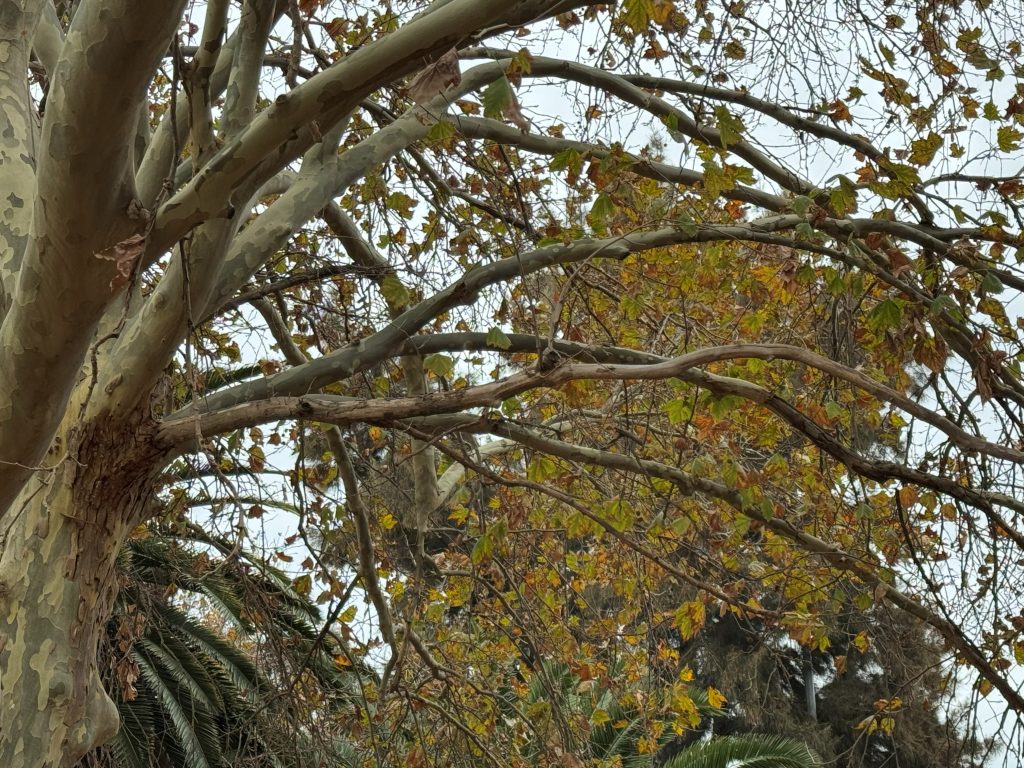
Our next stop was to look for the telltale signs on a very large London Plane Tree (Plantanus x acerifolia). This was more difficult to spot because it was a single dead or dying branch in the lower canopy.
Dead or dying branch in London Plane Tree – Image by Don Poynton
Our final stop was to examine a few small Swamp Banksias (Banksia littoralis), where we found a couple of borers at the entrances to their holes. We had been equipped with torches and found that the borers’ bodies were shiny or iridescent when illuminated.
We ended our very instructive excursion with refreshments at the local coffee van, where another surprise awaited us – a Frenchman who bakes delicious pastries.
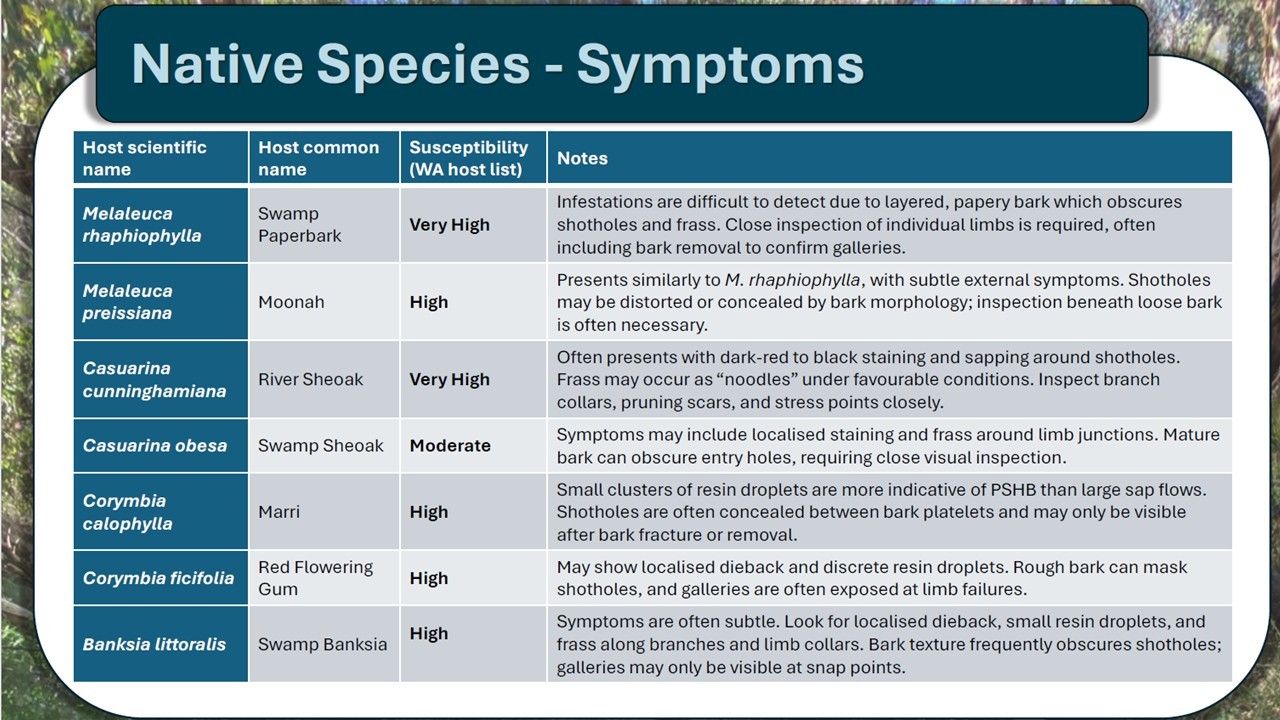
Note: In addition to the species we saw, other native species affected include Moonah (M. preissiana), Swamp Sheoak (C. obesa), Marri (Corymbia calophylla), Red Flowering Gum (C. ficifolia), and Flooded gum (Eucalyptus rudis). See the table for symptoms.
The DPIRD website has excellent information on recognising symptoms in both native and ornamental species.
Don Poynton