

Kwinana Rockingham Mandurah Branch, 21 June 2026
The June Excursion was to the Inglehope Arboretum at Etmylin near Dwellingup. A great turnout of 22 members and visitors gathered at the car park for a walk around the reserve.
The reserve was a new venue for most, if not all, of the group. An information board at the car park outlined the history of the reserve. It was once the site of a camp for sleeper cutters and rail workers, but was abandoned in 1928.
The Inglehope Arboretum was then developed by the Forests Department in 1929, and trees were planted in research plots to determine whether any of the species were suitable for growing in plantations for harvesting. Today, the Arboretum still has many of the non-native species that were planted surviving, and we would see fine specimens during our walk.
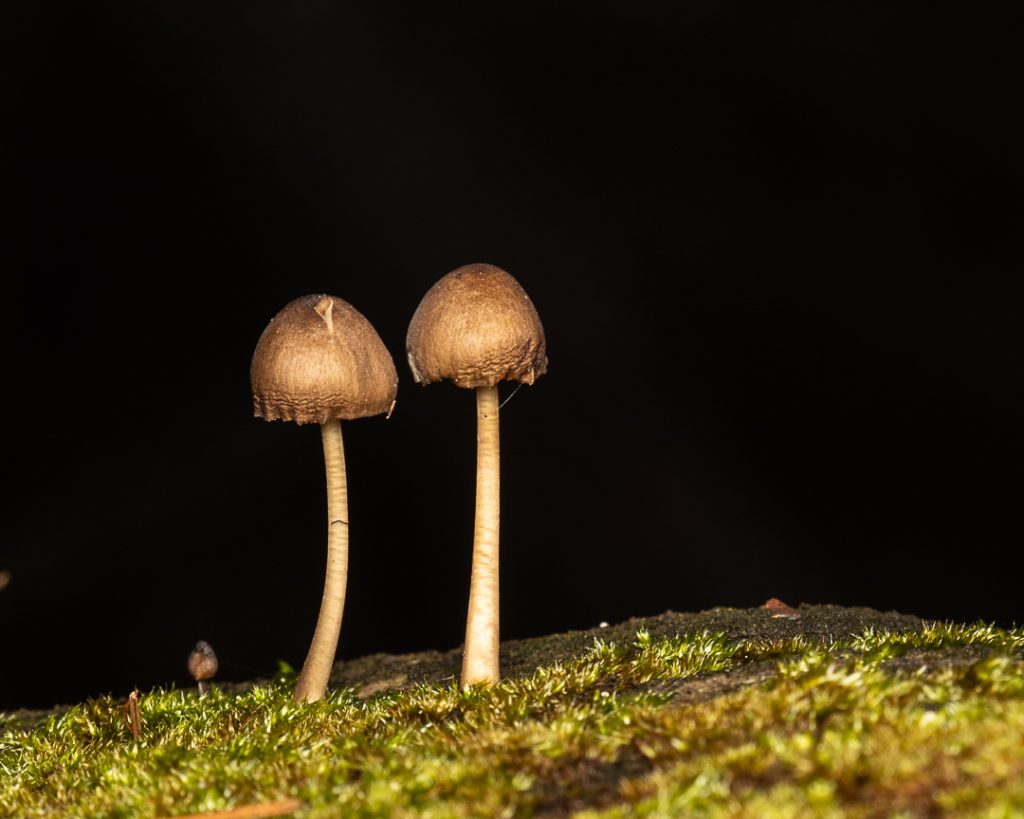
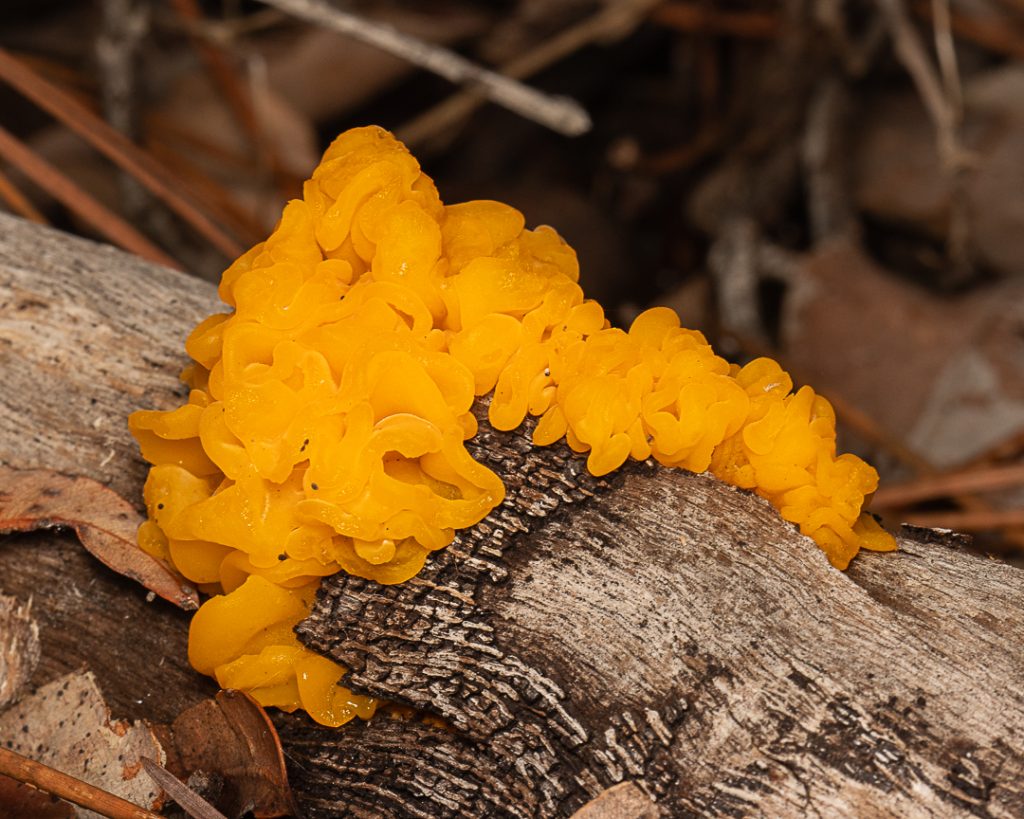
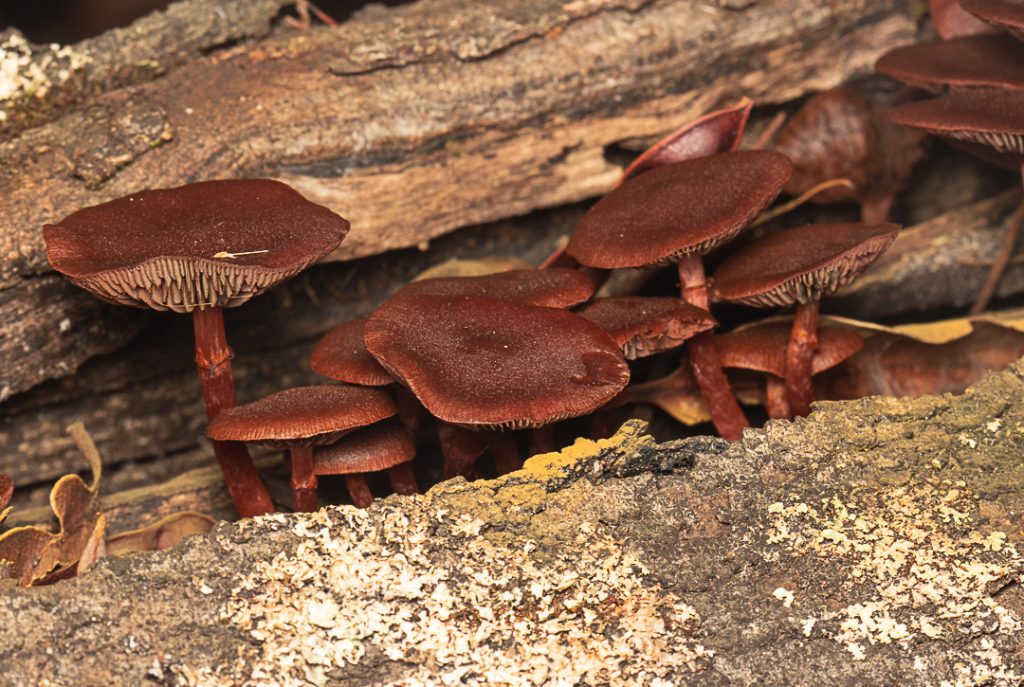
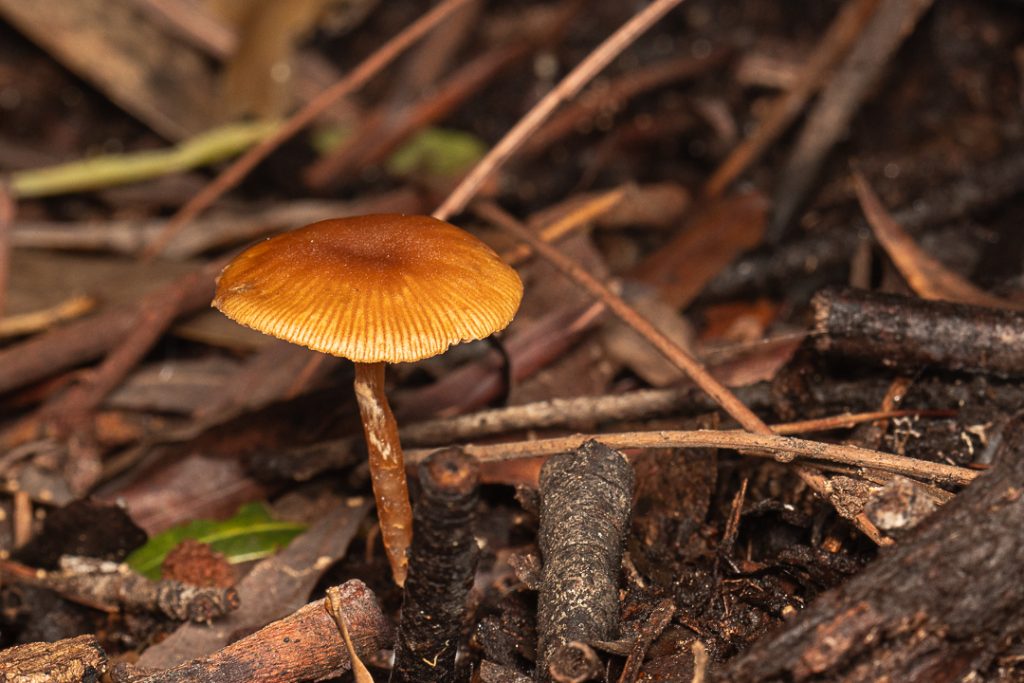
Most of our group set out on a loop trail on the eastern side of the access road. At first, the trail did not appear to have much of interest except for the trees themselves, but that would soon change. A rotting tree trunk was found to have a Gymnopilus sp. and a large Yellow Brain Fungus (Witches Butter) listed as from the Tremella mesenterica group in the Perth Urban Fungi Guide but also identified as Naematelia aurantia in comments on Sophie Xiang’s Facebook Post. Soon, another rotting trunk had large numbers of Burgundy Wood Tubaria (Tubaria rufofulva), a species that became a common sight throughout the walk. Lichens and several species of moss were also sighted. Out of the moss, small Pixie Cap mushrooms (Mycena sp.?) had emerged, providing nice photographic subjects.
Along the track, we found some interesting trees remaining from the 1929 plantings. Some of the trees had identification boards, so we discovered that one species with a very interesting bark pattern was the Maritime Pine (Pinus pinaster) – a Mediterranean species. We also found a Californian Redwood tree.
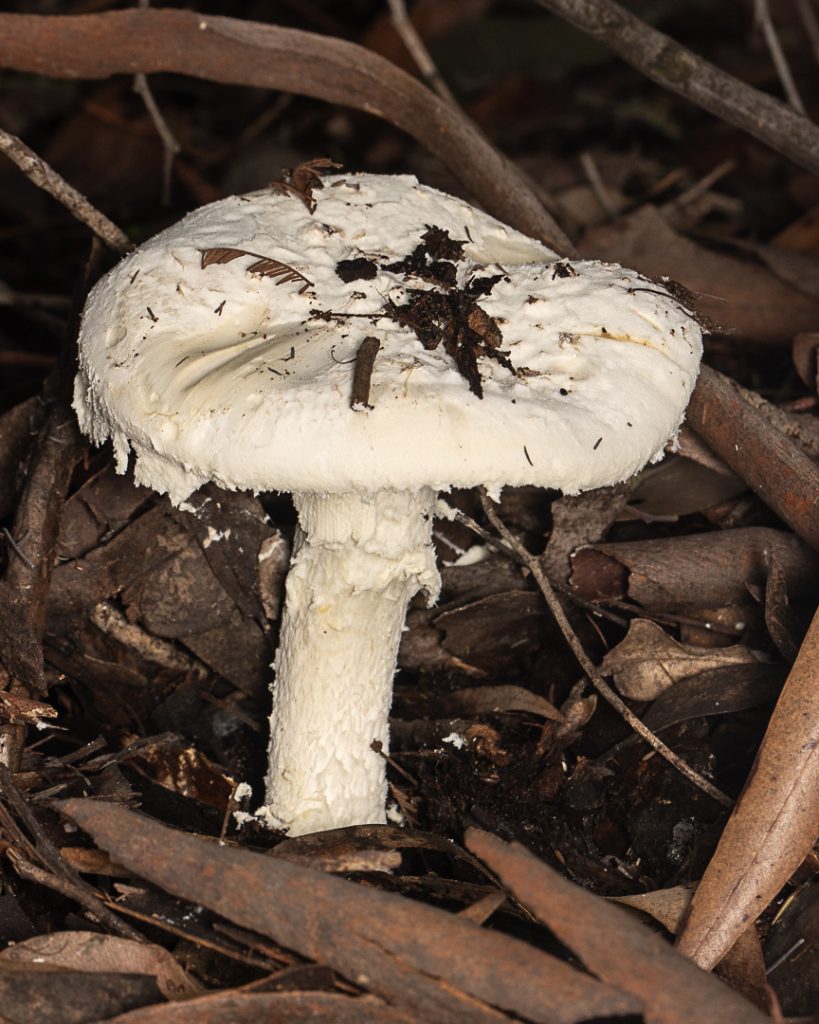
As the loop trail neared the main road, the leaf litter was thicker, providing excellent conditions for fungi. Large white specimens of Aminita farinacea stood out, along with Tubaria serrulata and tiny Pixie Caps were so numerous that one had to be careful not to step on them.
Few birds were spotted, and most of those were way up in the canopy of the woodland trees. Gill Beadell kept a list of those seen, which were:
| White-breasted Robin | Australian Ringneck Parrot |
| Red-winged Fairywren | Brown Honeyeaters |
| Weebill | Red Wattlebirds |
| Silvereyes | Australian Raven |
| Red-tailed Black Cockatoo | Grey Fantail |
| Regent Parrot |
It was not such a good morning for insects, with only winged ants being found.
Completing the loop trail, we gathered for a well-earned cuppa and commented on how great a morning it had been; the reserve was well worth the visit.
Colin Prickett