

MAIN CLUB, 3 July 2026
If you find it hard to tell one Xanthorrhoea species from another, you’re not alone. The classification of the species is not straightforward, as our two speakers are finding out.
Recently, Geoff Cockerton, Linda Dalgliesh and their team of botanists were doing botanical surveys in the eastern wheatbelt. They found three different forms of the dwarf grasstree Xanthorrhoea nana, which is currently considered a single species. This observation eventually led them to work towards a revision of the genus Xanthorrhoea in WA. Geoff is a botanical consultant with Western Botanical, and Linda is an ecologist with both botanical and zoological skills.
Linda opened with the history of botanical collections of Xanthorrhoea in WA, beginning with those of Ludwig Preiss in the 1840s and Desmond Herbert in the 1920s. Collections were few and far between over the years, and the locations of the collections were often vague – eg “Swan River Colony”!
Some of the specimens bore the name of rail sidings that no longer exist. There is little detail of species distribution in the early collections. The most recent work was by David Bedford for the Flora of Australia, published in 1986.
Linda and Geoff find that botanical descriptions for the genus don’t account for the variation they are seeing. They are developing new ways to describe the plants, using different features such as growth habit and morphology of cluster bracts, packing bracts, scape diameter, spike length, whether there are serrations (teeth) on the leaf margins and presence of a woody core. The leaf bases are diagnostic, but only accessible from dead plants. Leaf colour varies from blue-green for those in drier parts of the state to dark green for those species in the more temperate south-west, and even pollen colour varies. Xanthorrhoea flowers sporadically, and it takes a year to examine both the flowers and the fruits of the same plant. They are continuing to expand their collections, and have begun genetic studies, partnering with DBCA’s genetics laboratory, but it is expensive, and they have no external funding.
The pair believe that most of what we have thought of as species in WA are actually species complexes, and that there may be many more species of Xanthorrhoea in WA than we currently understand. The widespread and commonly accepted Xanthorrhoea preissii, for example, seems to have at least nine different forms, each specific to a soil-landscape unit.
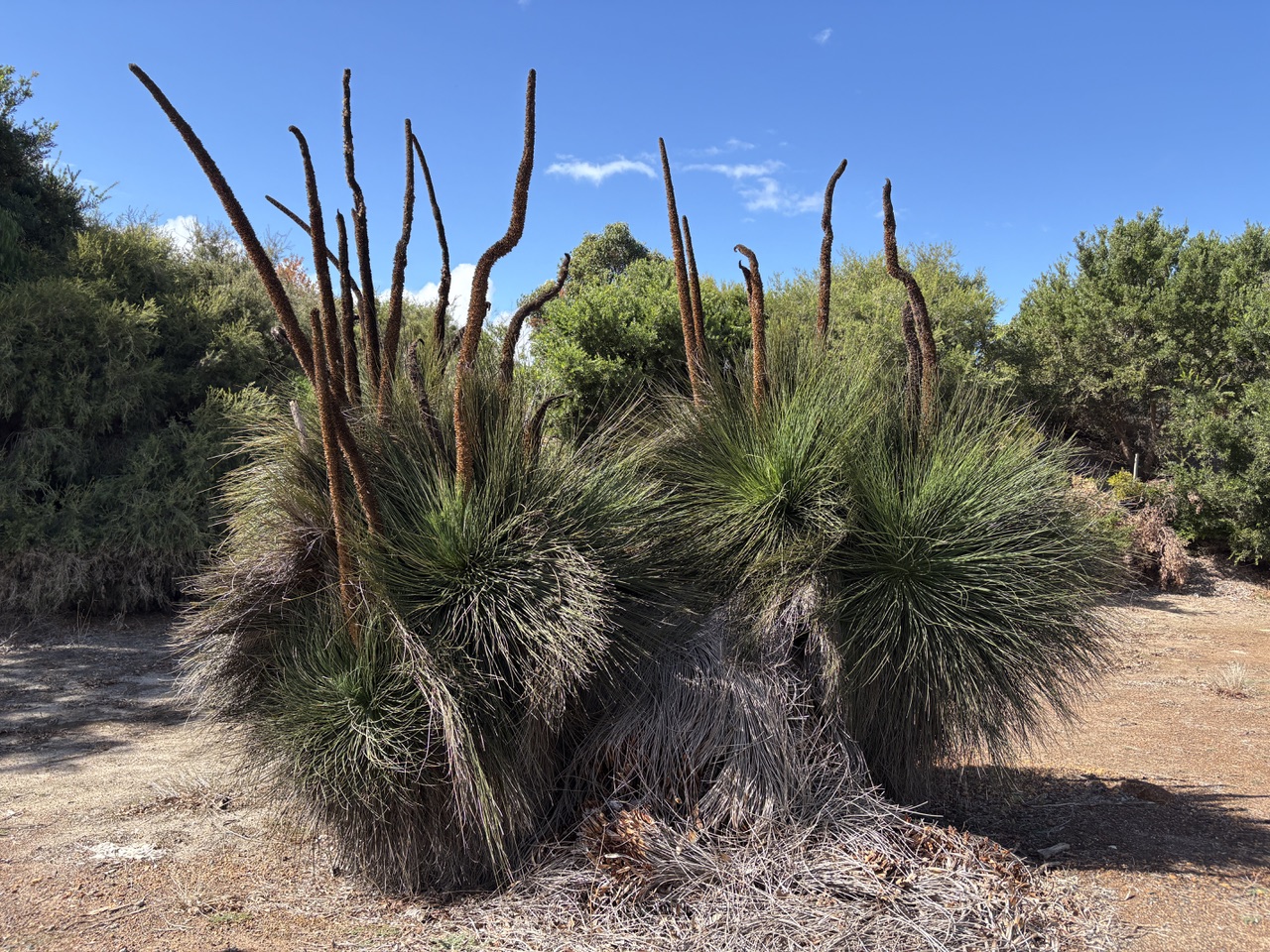
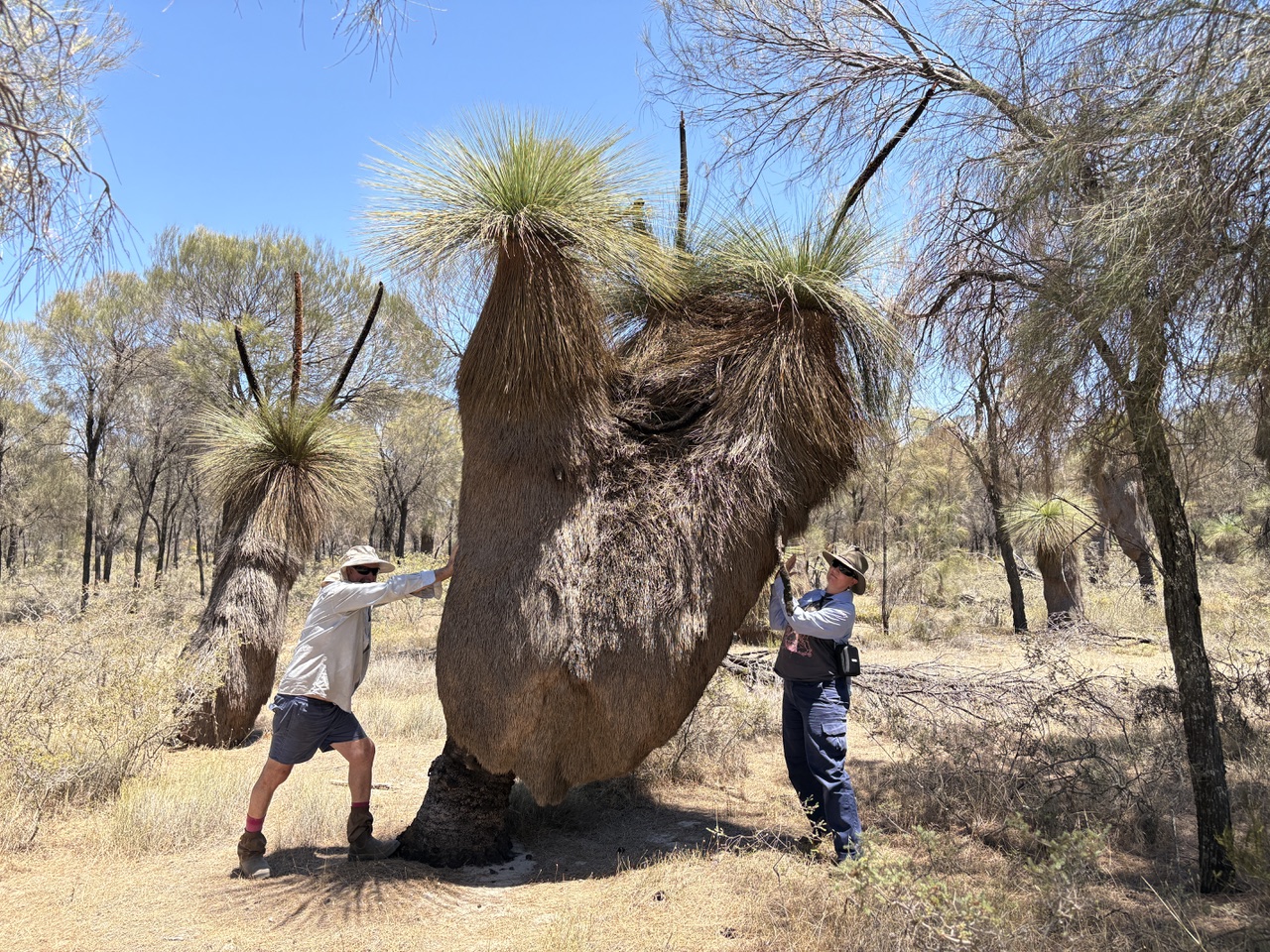
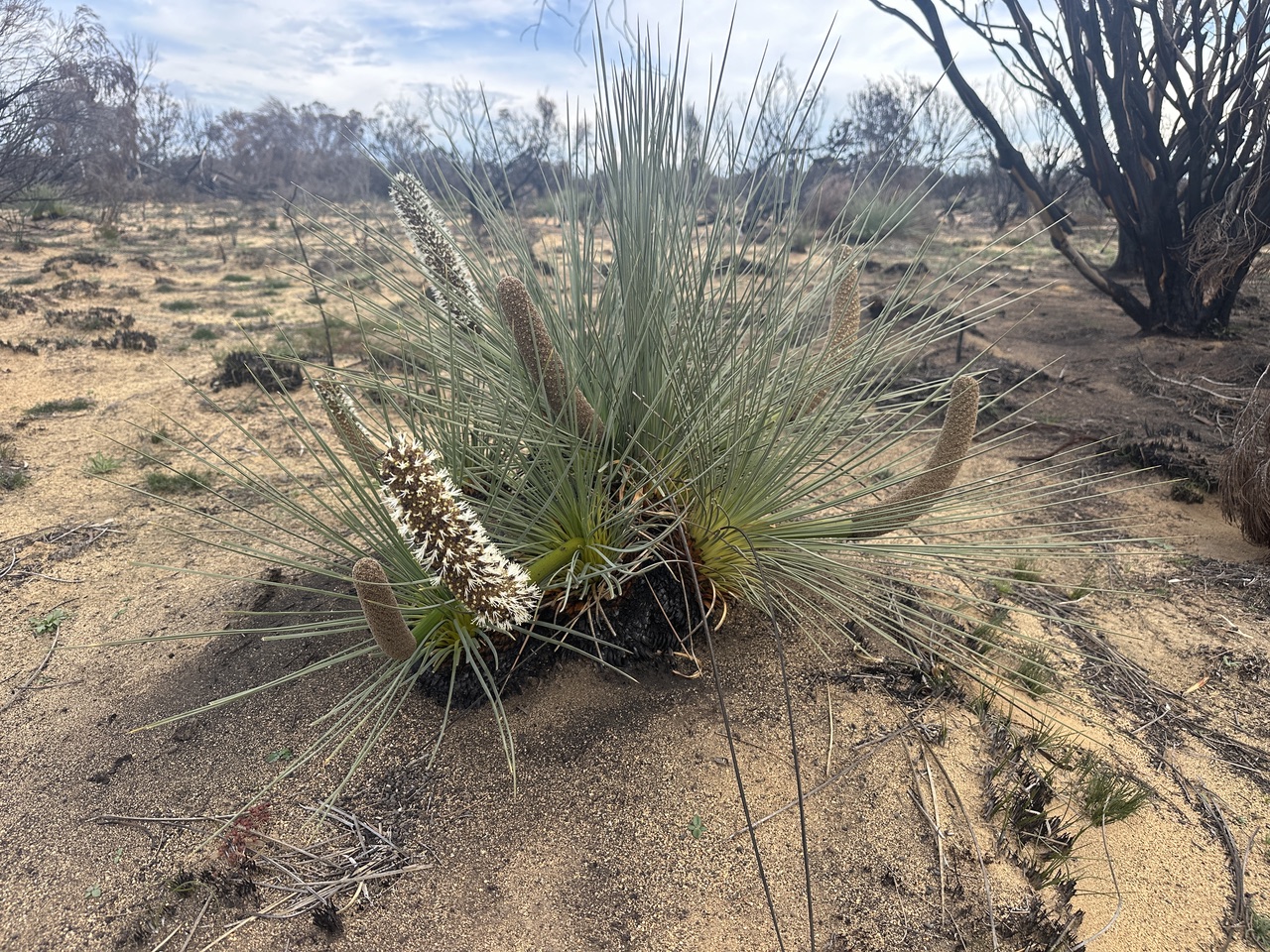
Linda showed us fascinating photos from the early days of people standing under enormous, many-branched grass trees. And there were some interesting facts about the genus: The perennial question of how fast they grow has been addressed by Byron Lamont, who found a growth rate of between 1.0 and 2.5 cm a year. The resin, as we know, was used by indigenous people for glue and other purposes, and dissolved in alcohol it can be used to make varnish. Before World War 1, Xanthorrhoea resin was exported to Germany before it was found that they were using it to make explosives!
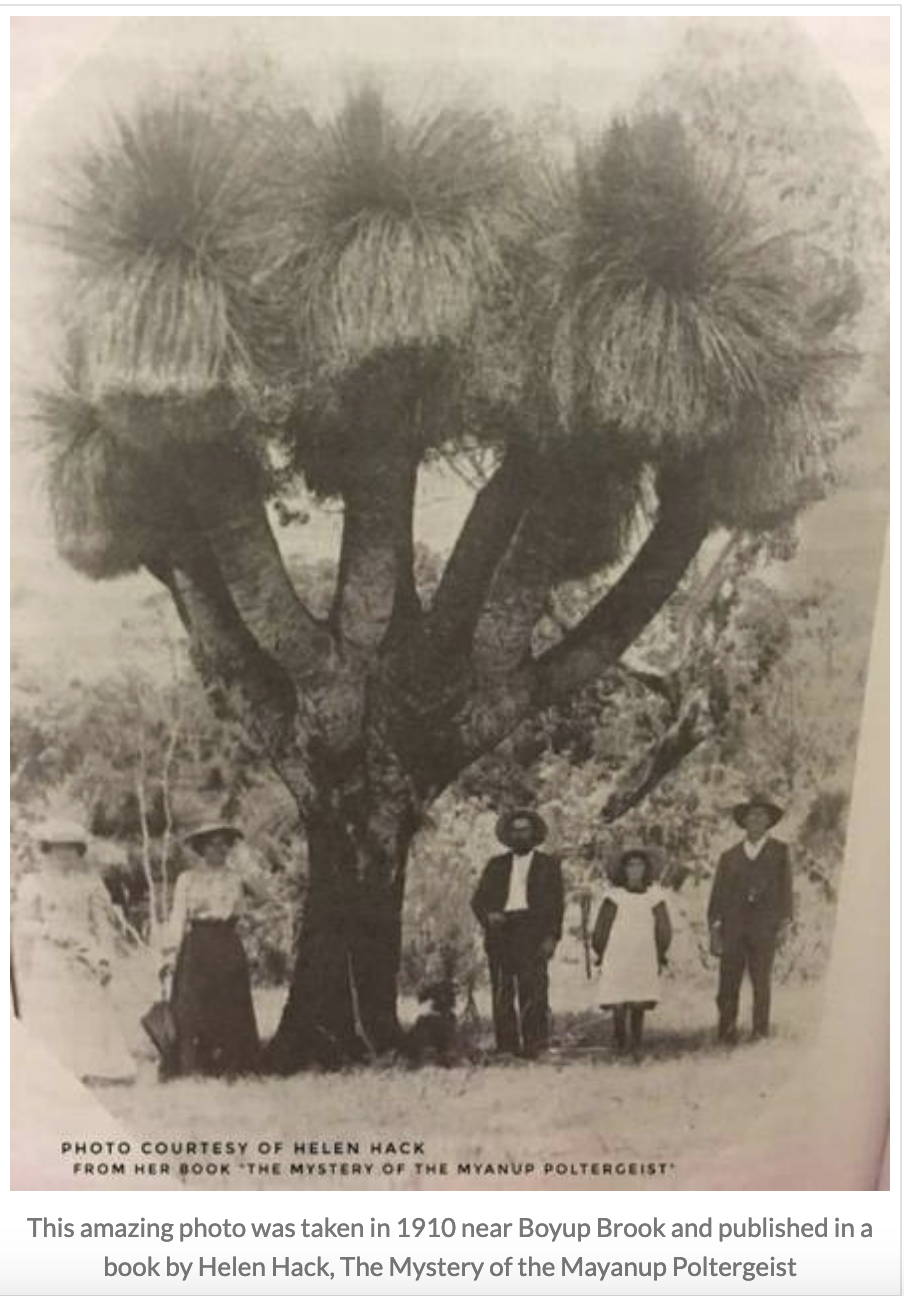
Geoff and Linda are concerned for the conservation of Xanthorrhoea, since without a proper classification of its species, we don’t know what we are losing. Geoff says that in WA we are still in a period of discovering our plant species. He believes we are potentially leading to the extinction of some taxa through clearing and grazing. He sees many locations where there is no regeneration happening around a patch of grass trees because of grazing or competition with weeds.
Mike Gregson