

Northern Suburbs Branch, 16 June 2026
Dr Coupland began by outlining how climate change, poor urban planning, and the Polyphagous shothole borer have led to decreased canopy cover across Perth, decreased biodiversity, and even a possible increase in mental distress and anxiety.
She then introduced the Miyawaki method by explaining that in the 1970s, Japanese botanist Professor Akira Miyawaki noticed how the small remnant forests around shrines and temples provided a blueprint of the area’s potential natural vegetation and posed the question, “How can I replicate this?”
His method of replanting areas using the Miyawaki method was taken up in India by engineer Shubhendu Sharma, who started planting in urban areas. Since then, the method has spread across Asia, Europe and now Australia.
Dr Coupland explained that Miyawaki forests are designed to mirror the natural system and have three key features. Firstly, it is essential to know what to plant. This requires a survey of nearby remnant bushland. The next step is soil preparation, which may include removing existing hard surfaces before soil remediation. Soil improvement adds organic material and reintroduces microbes. Thirdly, planting of seedlings at high density (3-5 plants per square metre) compared to 1-1.5 plants per square metre using traditional methods. In her program, where appropriate, Dr Coupland includes rare and threatened species in the mix. Following planting, the area is heavily mulched.
The Miyawaki method was introduced to Western Australia by Dr Coupland in 2021 when she worked with students from South Padbury Primary School to convert a grassed area into a pocket forest. The program has grown to 25 sites in Western Australia and a recent project in New South Wales.
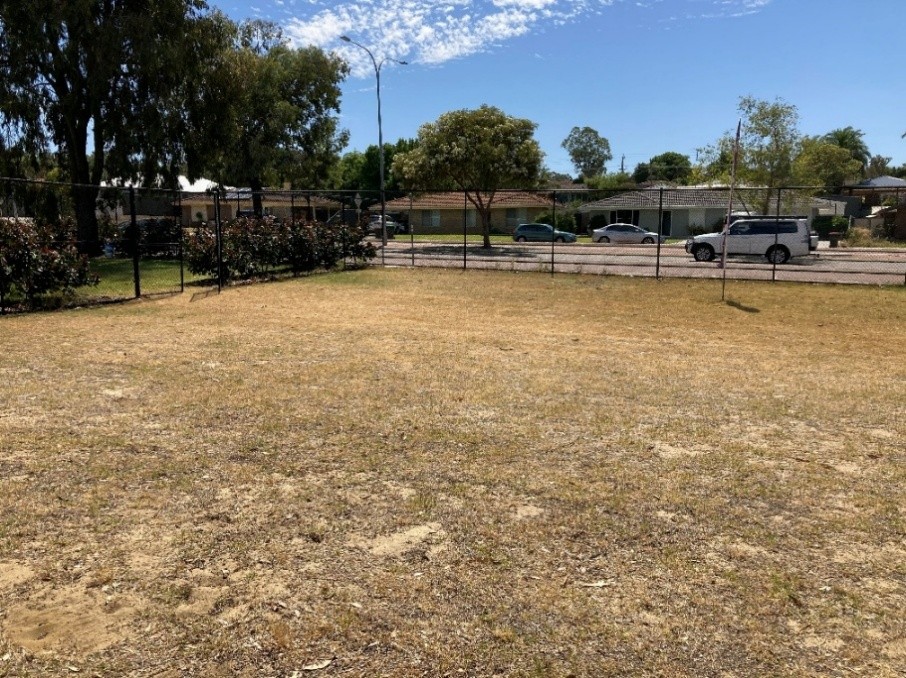
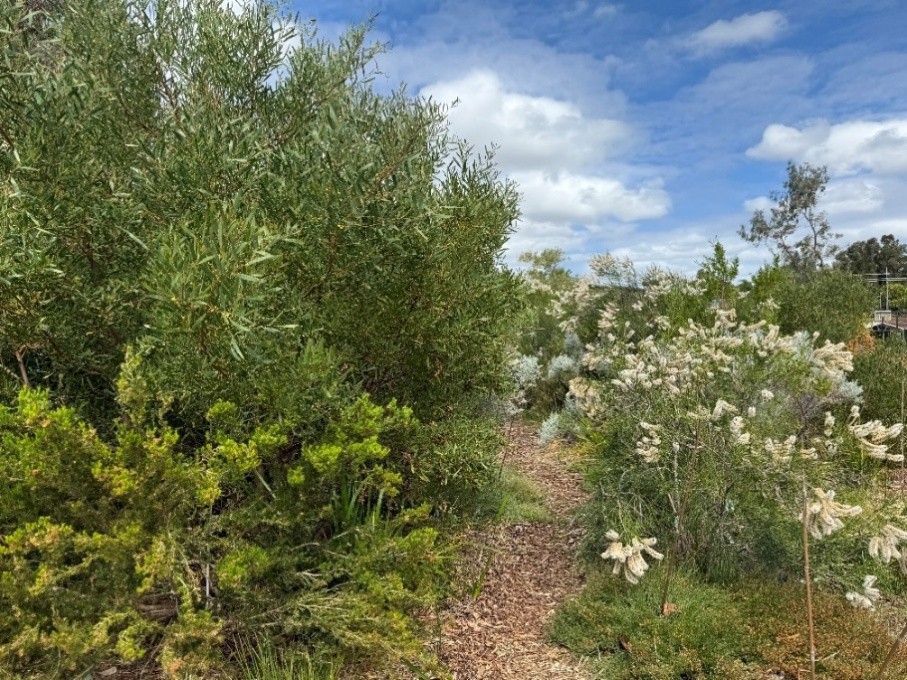
Dr Coupland developed the program with dual purposes in mind – to conduct research into the Miyawaki method in the Australian context and as an outreach program; for example, the impact of climate action on children’s mental health is being undertaken by PhD candidate Ines Zevallos Labarthe, under Dr Coupland’s supervision.
In the WA program, 20 forests are located on school grounds. This benefits students as they can have continued engagement with their forests. Every month, the students conduct monitoring with the Murdoch University team to record plant growth and changes in biodiversity. Invertebrate, reptile, bird and fungi diversity are documented as part of the program, as these provide a practical method of gauging the health and success of the project.
Surveys of the South Padbury site two and a half years after planting reported almost as many ground-dwelling invertebrates in the pocket forest as in the remnant bushland at the rear of the school. One surprising result was that the number and diversity of skinks in the pocket forests was greater than that in the bushland. (Was this because the dense bush provides greater protection from predators?)
And coming back to where she started her talk, Dr Coupland showed that on the day of measurement, the average surface temperature in the forest was 26 degrees, some ten degrees cooler than the adjacent grass area and almost 20 degrees cooler than the adjacent car park surface.
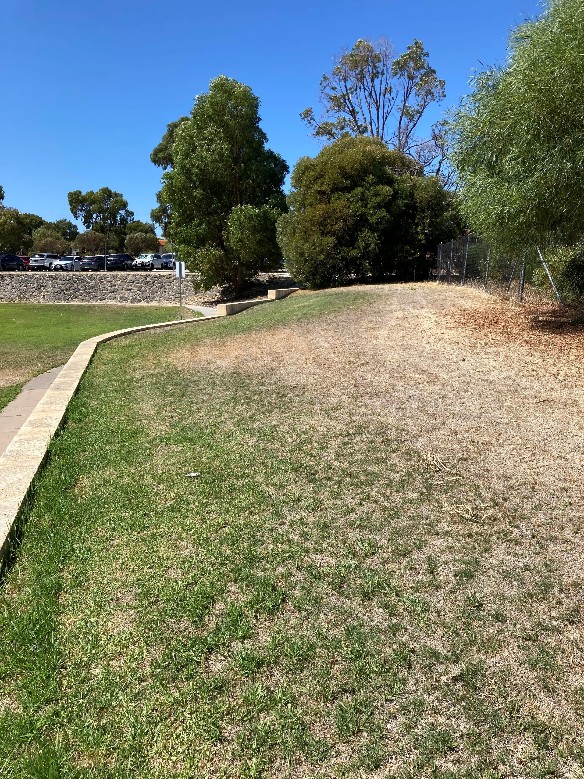
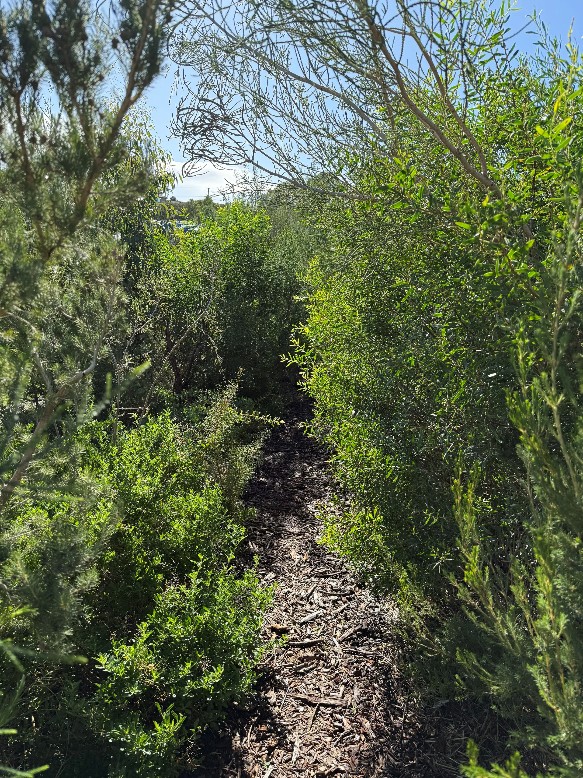
The following week, NSB members were conducted on a tour of the Miyawaki Forest/Bushland Classroom at the Department of Education, Statewide Services Centre, Giles Avenue, Padbury.
More information about the topic and speaker can be found at:
The Miyawaki Method: Rewilding Perth’s Urban Spaces with the Next Generation
Don Poynton