

Main Club, 14 June 2024
Dr Tony Friend is a research scientist who has worked at Fisheries and Wildlife and the Department of Biodiversity, Conservation and Attractions (DBCA). For 40 years, he has worked on the conservation of several threatened marsupials. He talked to us about the beautiful Numbat —our state mammal emblem—and about the numbat recovery program that he has led.
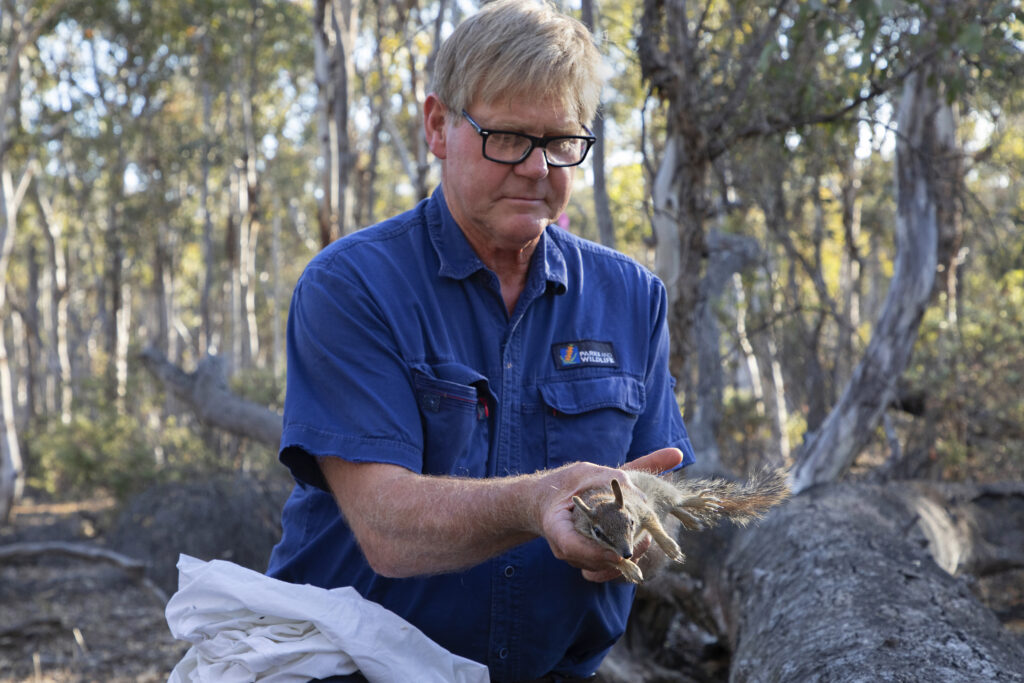
Numbats are not closely related to other marsupials. Their only food is termites, and they are strictly diurnal. They have a rudimentary pouch with four teats. Until European settlement, they ranged across South Australia, parts of New South Wales and Victoria. From that time on, their range shrank westward, and a sudden decline in numbers in the 1970s left populations only in two areas, both in Western Australia – Perup and Dryandra Woodland. It was unknown whether the last sharp decline was caused by drought, prescribed burning or fox predation.
Tony tried fox-baiting in one area of Dryandra to find out, with very good results. With a big increase in Numbat numbers, he was able to begin translocation with some success. Meanwhile, with the World Wildlife Fund (WWF), captive breeding was carried out at the Woodvale Wildlife Research Centre, using an artificial diet and termites and developing husbandry techniques. Captive breeding was moved to the Perth Zoo in 1992, producing 33 young in the first year. It seemed that the problem was solved on all fronts.
But then there was a reversal of fortune. After 1992, the number of Numbats at Dryandra started to fall, even though foxes were being controlled. With such a small population, translocation could only be done with captive-bred numbats. They were translocated to 12 locations, of which only six were successful, for various reasons.
By 2010, there were very few Numbats at Dryandra, not due to disease or starvation. However, a high population of cats was found at the baited sites. Bite marks on the plastic-coated collars of some dead numbats had the teeth marks of cats and the DNA of cats from the saliva. Cats account for nearly 50% of predation, with the rest being eagles, hawks, pythons, etc. Where fox numbers had dropped, cat numbers had increased.
The next challenge was how to control cats. Farmers adjacent to Dryandra were very cooperative, shooting cats on their properties. The use of dogs was not successful. Leg-hold traps were problematic because they trapped native animals. But baiting with Eradicat was successful, along with fox baiting. Although collar swabs showed that Chuditch predation took over from fox and cat predation, from 2020 the sighting rate increased, and numbers in Dryandra rose from about 30 to about 500. Overall numbers (including the Upper Warren and Scotia Reserve in NSW) have risen from 300 in 1985 to 3,000. Chuditches are now preying on Numbats without significant effect on their population.
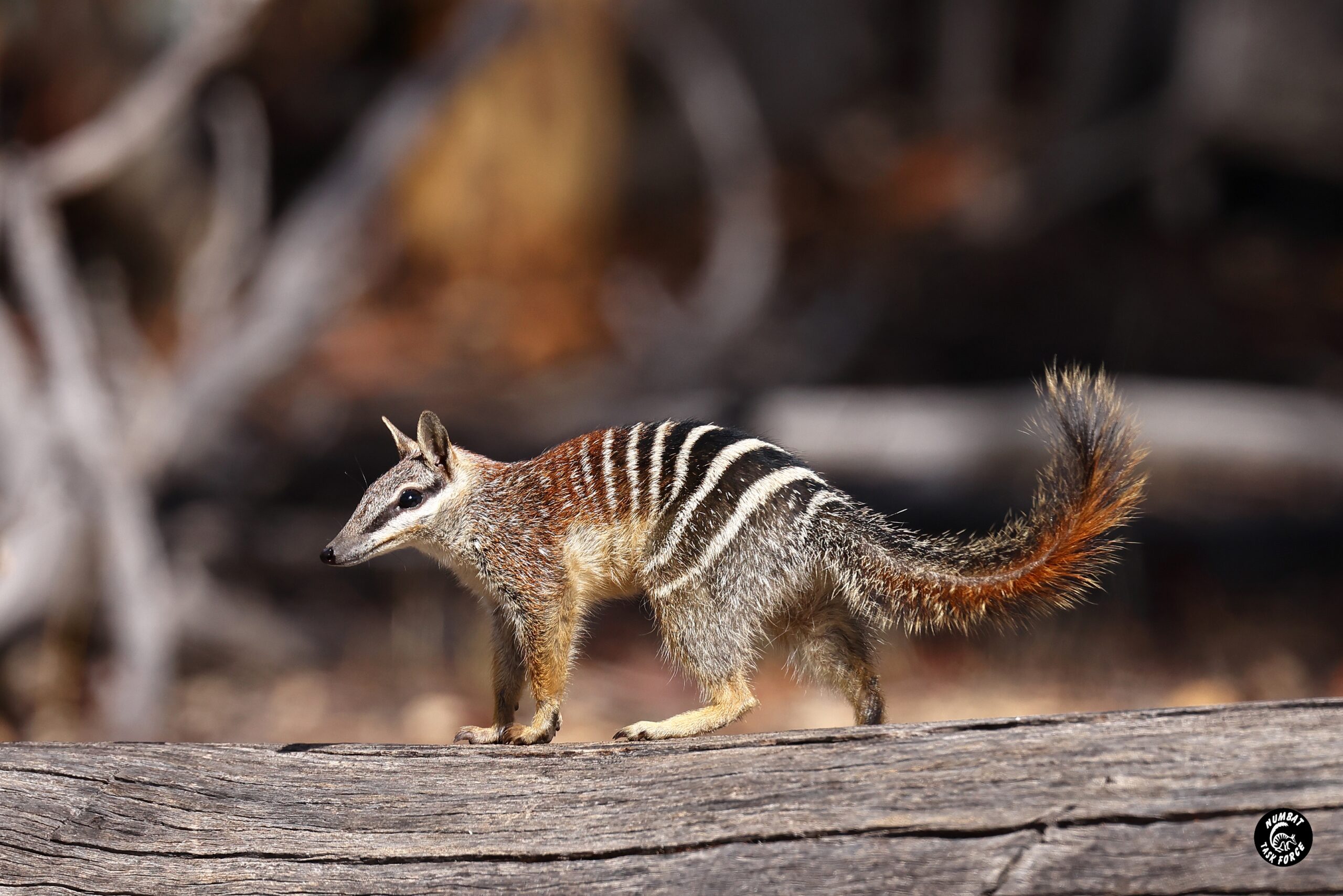
The program’s success has involved lots of volunteer surveyors, including our Club members Otto Mueller and David Robinson. It was refreshing to hear a good news story about our natural environment.
Mike Gregson