

DRB Nats, 8 September 2023

There is more to the birds of the Broz Park Wetlands than is first obvious to the eye. “It just looks like a bit of ordinary parkland”, Rachel explained, “but there are more birds there than we imagined, and we’ve seen birds we’ve rarely seen before. We’ve visited 45+ times and seldom does a visit go by without seeing something of interest”.
Broz Park Wetlands are in the Helena Valley. They are surrounded on one side by a residential housing estate, and run-off from the estate goes into the lake. It was originally part of the Helena River flood plain, drastically altered by building two dams and the housing estate. The wetland is now a key focus of an environmental restoration project undertaken by the Shire of Mundaring and supported by Natural Resource Management (NRM). They are working to improve the health of the wetland, e.g. by improving the water quality, removing non-native fish species, planting native rushes and sedges, educating the community, and more.
Both Mike and Rachel are long-time, passionate bird watchers who present bird workshops to inspire others to love the local birds. They are also long-standing members of the Darling Range Branch.
During their talk, the story of their time with the birds of Broz unfolded through superb photographs and videos of the birds taken by Rachel. These were supplemented by unusual facts and essential identification details by Mike. Their bird list, at the time of the talk, stood at 57.
Reed Warbler – Image by “the Greens”
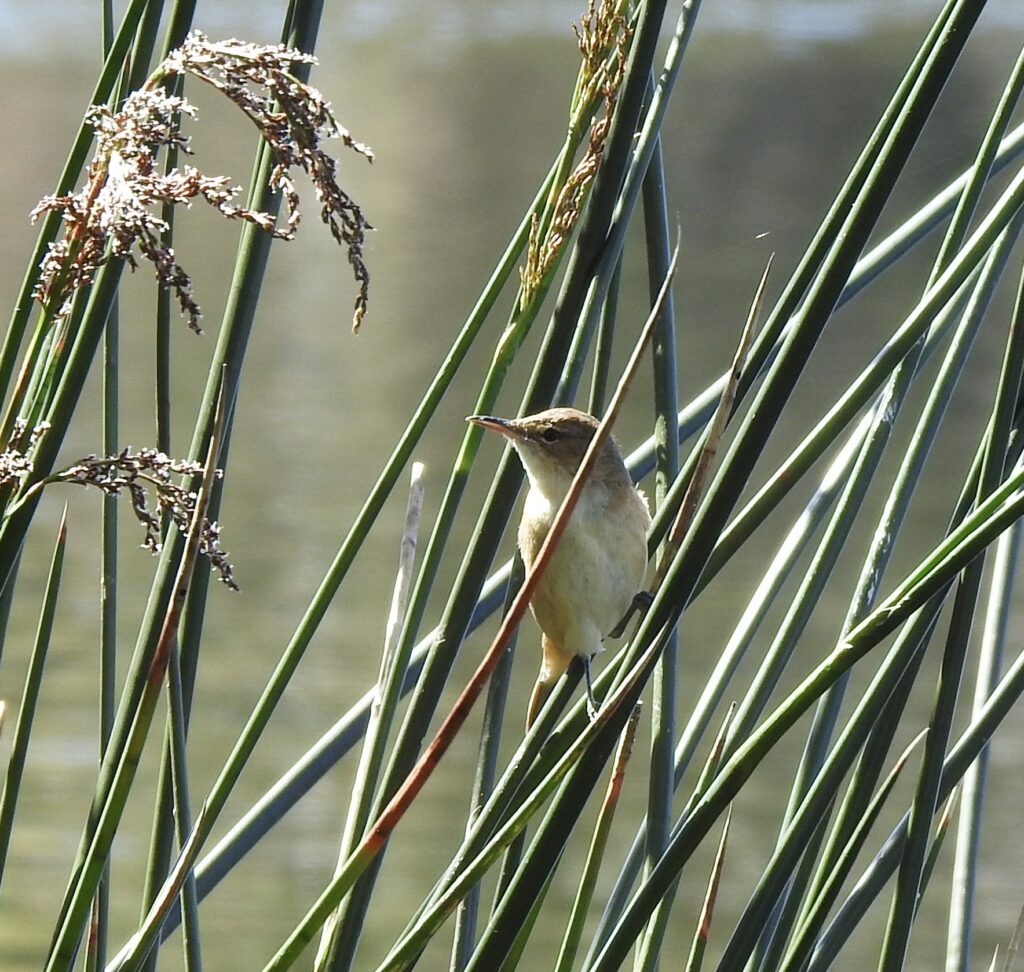
Landbirds shown included, e.g. Yellow-rumped Thornbills (Acanthiza chrysorrhoa), Crested Pigeons (Ocyphaps lophotes), Sacred Kingfishers (Todiramphus sanctus), Straw-necked Ibis (Threskiornis spinicollis) and a Willie Wagtail (Rhipidura leucophrys) whose nest could be seen perched on a dead tree branch over the water.
The wetland is seasonal, and the waterbirds vary depending on the water level, as this dictates, in part, the availability of suitable food for different birds.
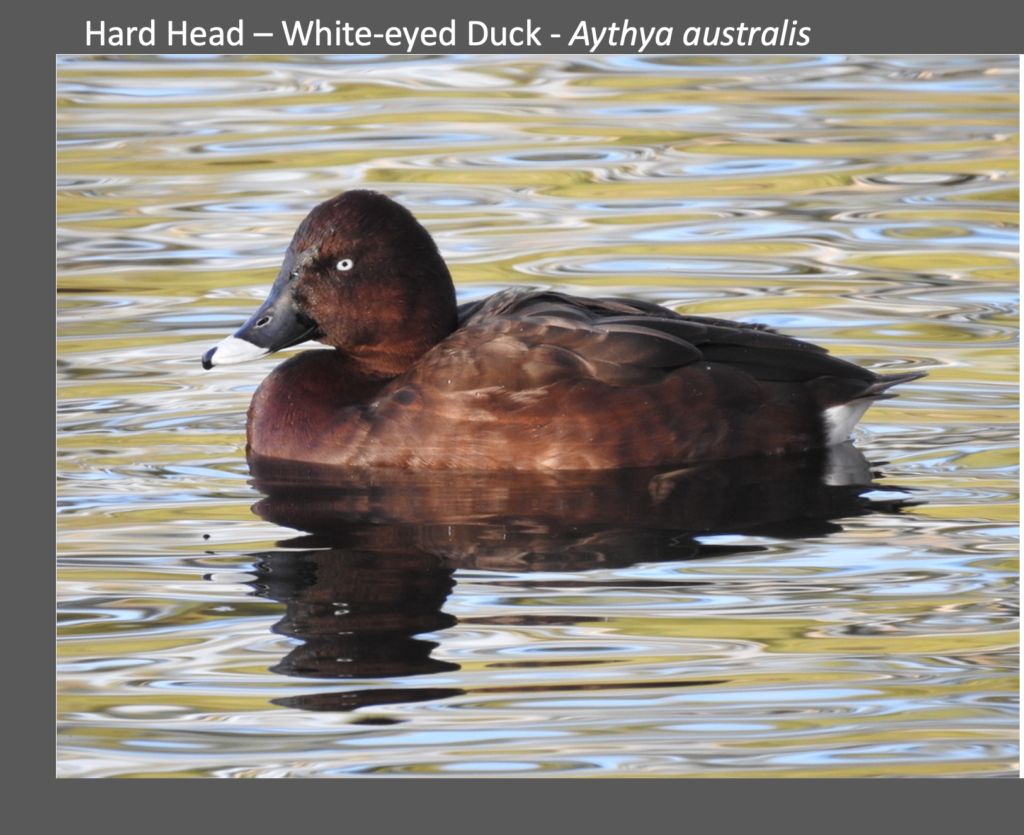
Photographs were shown of; White-eyed Ducks (Aythya australis), Black-fronted Dotterels (Elseyornis melanops), Yellow-billed Spoonbills (Platalea flavipes), White-headed Stilts (Himantopus leucocephalus), Great Egrets (Ardea alba), Australasian Shovelers (Anas rhynchotis) and even a Pelican (Pelecanus conspicillatus) and Great Cormorant (Phalacrocorax carbo).
Some of the more unusual behaviours shown on video included a Musk Duck (Biziura lobata), with its stiff tail feathers, going round and round in circles on its back, plus a Magpie Lark (Grallina cyanoleuca) doing a tap dance on the sand to stimulate insects to come to the surface. The talk finished with us watching the courting display of two Swamphens (Porphyrio porphyrio) who danced in front of the camera while a Spoonbill was being videoed and stole the show!
Rachel and Mike thank Kathryn Johnson and David O’Brien from the Shire of Mundaring for getting them involved and supporting them. We thank Rachel and Mike for an informative talk and superb illustrations. Your enthusiasm has rubbed off on us!
Arlene Quinn