

Susan and Vernon Stocklmayer presented an account of their Coates Wildlife Tour to Sri Lanka (March 2013) to an enthralled audience. It’s always great to see another country through the eyes of fellow ‘Nats Club’ members!
First Vernon gave us an outline of the geology and geography of the island — which sits on the same geological plate as India and has only truly been separated from it since the 15th century CE, when a severe storm destroyed a connecting reef. There have been 3,000 years of recorded modern human history on Sri Lanka, though evidence of Homo erectus has been found dating back 37,000 years. Currently the population is 20 million — a mixture of Sinhalese, Tamils and Sri Lankan Moors (descended from Arab traders) who are variously of Buddhist, Hindu, Christian and Islamic religion. Many ruins date from the 11th and 13th century CE and later European influences include Portuguese, Dutch and British; the nation gained independence from the latter in 1948.
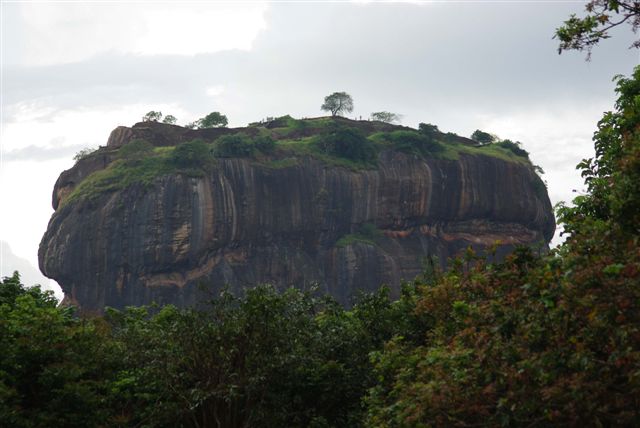
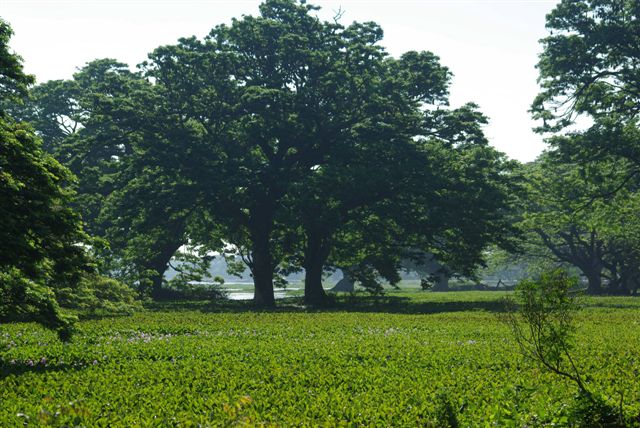
The island is mostly made up of granites and high grade metamorphic rocks such as charnockites, formed up to 50 km beneath the surface, though the northern fringe (closest to India) is limestone. There are many granite monadnocks across the country, which are residual outcrops that rise from otherwise flat terrain — see photo. The rainfall is seasonal (two monsoon seasons) but very heavy in the central highlands — as much as 5000 mm per annum. Elsewhere gets a mere 1000-1500 mm and many parts of the country are extensively irrigated by a system of reservoirs, ‘tanks’ and ‘moats’, which have been in place since the 4th century BCE. The group found that the tanks offered a great opportunity for bird watching — see photo.
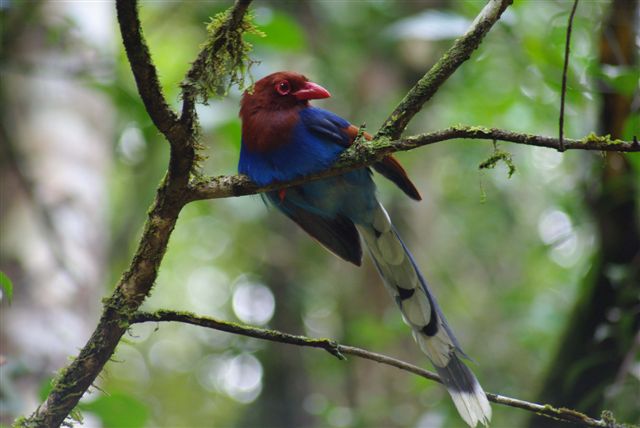
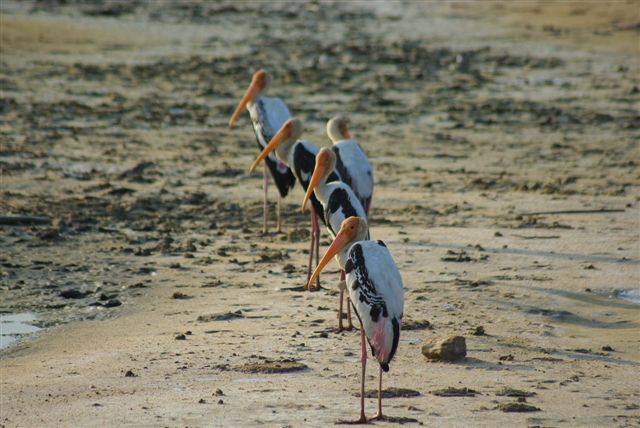
Susan presented us with an outline of the wide array of flora and fauna they encountered on the 18-day trip, which was accompanied by expert local guides. There is a large range of habitats on Sri Lanka and the tour visited five national parks, seeing 207 of the 433 bird species present on the island. These included birds such as the iconic Sri Lanka Junglefowl (Gallus lafayetii) which is the country’s national bird and a relative of our domestic chicken, the stunning Sri Lankan Magpie (Urocissa ornata) — see photo, the Yellow-wattled Lapwing (Vanellus malabaricus), the Black-capped Kingfisher (Halcyon pileata), the White-breasted Waterhen (Amaurornis phoenicurus), the Garganey (Anas querquedula), the odd-looking Asian Openbill Stork (Anastomus oscitans), the Pheasant-tailed Jacana (Hydrophasianus chirurgus), Purple Heron (Ardea purpurea), the Painted Stork (Mycteria leucocephala) — see photo, and the instantly recognisable migratory Hoopoe (Upupa epops).
Amongst the reptiles seen were a large land-dwelling monitor lizard, the Indian Land Monitor (Varanus bengalensis bengalensis) that grows up to 1.5 m, the Marsh Crocodile (Crocodylus palustris), also known as a ‘mugger’, that can grow to over 4 m and which feeds mostly on fish, and the Indian Star Tortoise (Geochelone elegans), which stores fat reserves under the high dome of its shell.
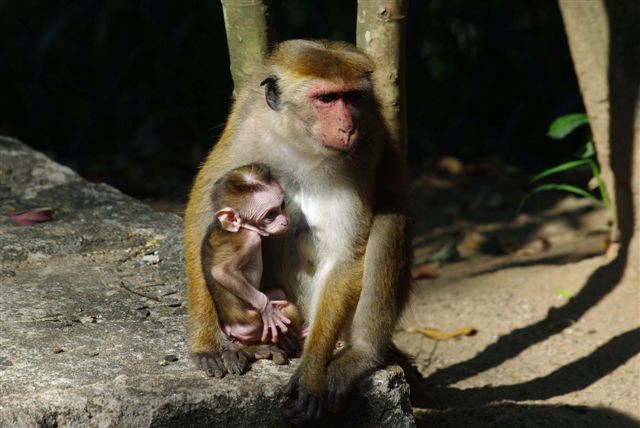
Quite a few mammals were seen by the group, including the Toque Macaque (Macaca sinica) — see photo — and the Sri Lankan Grey Langur (Semnopithecus priam thersites) which are two of three species of monkey endemic to Sri Lanka. They also saw Sri Lankan Spotted Deer (Axis axis ceylonensis) and Sambar (Rusa unicolor). The Sri Lankan Elephant (Elephas maximus maximus), which is an endemic subspecies of the Asian Elephant and whose total numbers stand at only around 3,000 individuals, and the endangered Sri Lankan Leopard (Panthera pardus kotiya), whose population has dwindled to about 500 animals, were also seen and photographed.
A visit to the Royal Botanic Gardens at Peradeniya, near Kandy, offered more information about the flora of the island. Begun as a garden by the British in 1821, it covers 147 acres and it is home to some 10,000 trees. The most important work of the gardens has been research on the endemic flora and the introduction of various commercial plants. Between 1850 and 1890 the island saw the introduction of rubber, cacao, cinchona, vanilla, various fruit and vegetables, camphor, shade trees, mahogany, sandalwood, durian and spices like cloves and nutmeg. Tea (Camellia sinensis) was introduced in 1867 and quickly became the iconic crop for the island nation. It’s just as well it was so successful, as prior to that coffee was the main crop, until a leaf virus wiped out all the plantations in the country.
Tanya Marwood