

Darling Range Branch, 9 October 2026
Dr Cheryl Lohr, Senior Research Scientist in the Animal Science Program at DBCA, gave a fascinating presentation to the Darling Range Branch (DRB) in October.
Cheryl became the DBCA scientist for Matuwa (formerly Lorna Glen) in 2017. Her talk highlighted decades of research showing that native animals can survive alongside feral cats when cat activity is kept at or below ten cats per 100 linear kilometres. Species such as Bilbies can persist at this threshold, while more vulnerable animals, including Mala, may require even lower cat numbers.
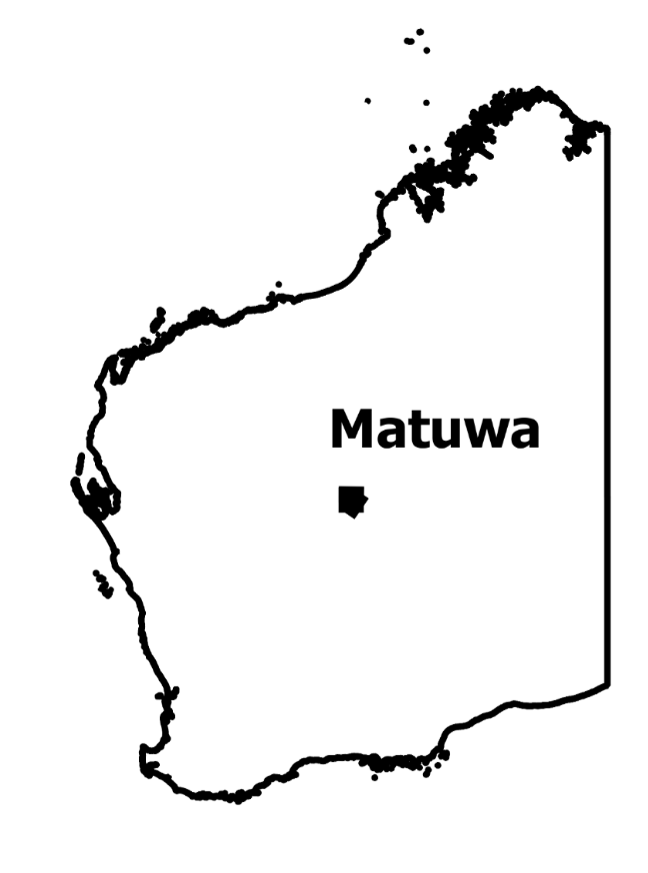
This finding underpins conservation work at Matuwa Kurrara Kurrara National Park, a vast former pastoral landscape in the heart of Western Australia.
Matuwa – Image by Dr Cheryl Lohr
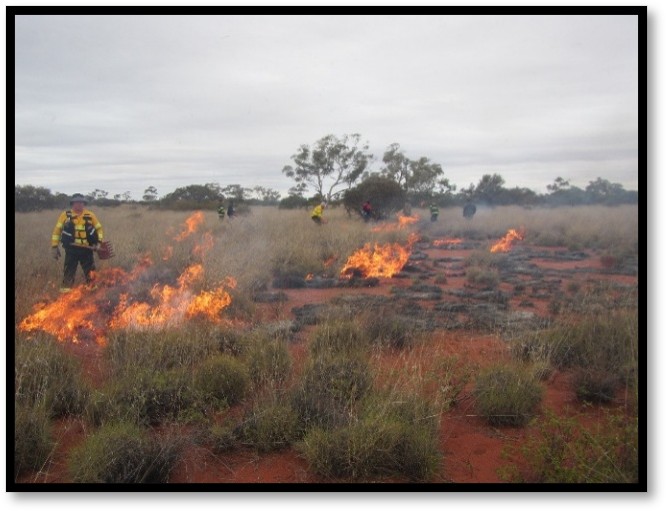
The park covers more than 6,000 square kilometres, with Matuwa alone spanning 2,500 square kilometres, and is managed jointly by DBCA and Martu Wangka Rangers. The property was acquired for conservation in 2000. Early management removed feral herbivores, fenced against wandering stock, and used strategic burning to break up Spinifex grasslands that can carry wildfire across enormous distances. With these pressures reduced, attention turned to feral cats and foxes.

Feral cat control began in 2003, with aerial baiting using Eradicat® baits (containing 1080) from 2007. Because 1080 occurs naturally in many south-western native plants, many native animals have evolved tolerance, making the bait comparatively selective against introduced predators. Tolerance varies greatly: a Western Australian Brushtail Possum would need about 54 baits for a lethal dose and can metabolise or “defluorinate” the toxin, while Bilbies, Mala and Boodies would need about 8, 5 and 3 baits respectively.
Eradicat® baits
The Golden Bandicoot is the key exception. With a lethal dose of only 0.5–1.3 baits, it could theoretically be at risk. This was rigorously tested in Matuwa’s feral-predator-free refuge, where Cheryl’s team tracked 40 animals after laying baits in a pattern mimicking aerial delivery. Despite 13% of Bandicoots chewing baits, 37 of the 38 animals later relocated survived. Baiting was found to be beneficial where cats kill more than 3% of a Bandicoot population.
Monitoring cats across such a vast landscape is difficult. Researchers rely mainly on track surveys, smoothing sandy roads and counting fresh tracks over consecutive mornings (often in freezing temperatures). Camera traps have proved unreliable, as cats appear to detect camera noise, although cat-urine lures greatly improved detections.

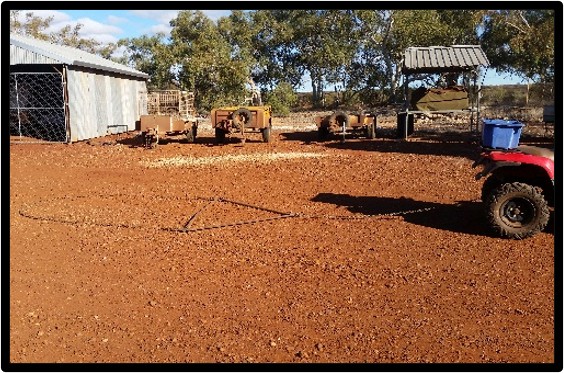
Matuwa fence.

Cat tracks,

Interestingly, the long-term data revealed that baiting removed mostly young cats and breeding females, leaving experienced adult males that rarely took baits. Targeted leg-hold trapping removed 259 cats and restored baiting effectiveness. Matuwa now uses annual aerial baiting, regular monitoring and additional control when numbers exceed ten cats per 100 linear kilometres.
More than a dozen threatened, and priority species have returned, including Bilbies, Mala, Boodies, Golden Bandicoots, Sandhill Grasswrens and Long-tailed Dunnarts. Even the Little Red Kaluta, formerly considered a Pilbara endemic, has appeared—possibly a previously overlooked Goldfields population. Matuwa demonstrates that, with patience and commitment, Australia’s desert wildlife can return.
Diana Papenfus