

Darling Range Branch, 13 November 2026
Did you know some caterpillars wear stacks of their old heads as helmets? Or that others employ ant bodyguards with sugary rewards? Jasper Dean’s entertaining presentation explored venomous spines, insect alliances, metamorphic memories, and even caterpillar-inspired poetry, proving these humble larvae are far stranger and cleverer than most people realise.
Members who attended the Kalamunda meeting on 13 November were treated to an entertaining and thought-provoking presentation by Jasper Dean, titled The Wondrous World of Caterpillars. Blending science, humour, storytelling and even poetry, Jasper took us on a fascinating journey into the hidden lives of these often-overlooked insects.
The evening began with an exploration of caterpillar defence strategies. Among the highlights was the Gumleaf Skeletoniser (Uraba lugens), affectionately nicknamed the “Mad Hatterpillar”. These remarkable caterpillars retain the shed head capsules from previous moults, stacking them on their heads like a bizarre hat. Research suggests these towers act as both decoys and defensive weapons, helping the caterpillars fend off insect predators.
Jasper then introduced the audience to the family of Cup Moth caterpillars (Fam. Limacodidae), some of Australia’s most formidable larvae. Armed with retractable venomous spines, these caterpillars possess sophisticated chemical defences that can cause considerable pain to would-be attackers. Recent research has revealed that the venom of the Mottled Cup Moth (Doratifera vulnerans) contains an astonishing array of toxins unlike those previously documented in other venomous animals.
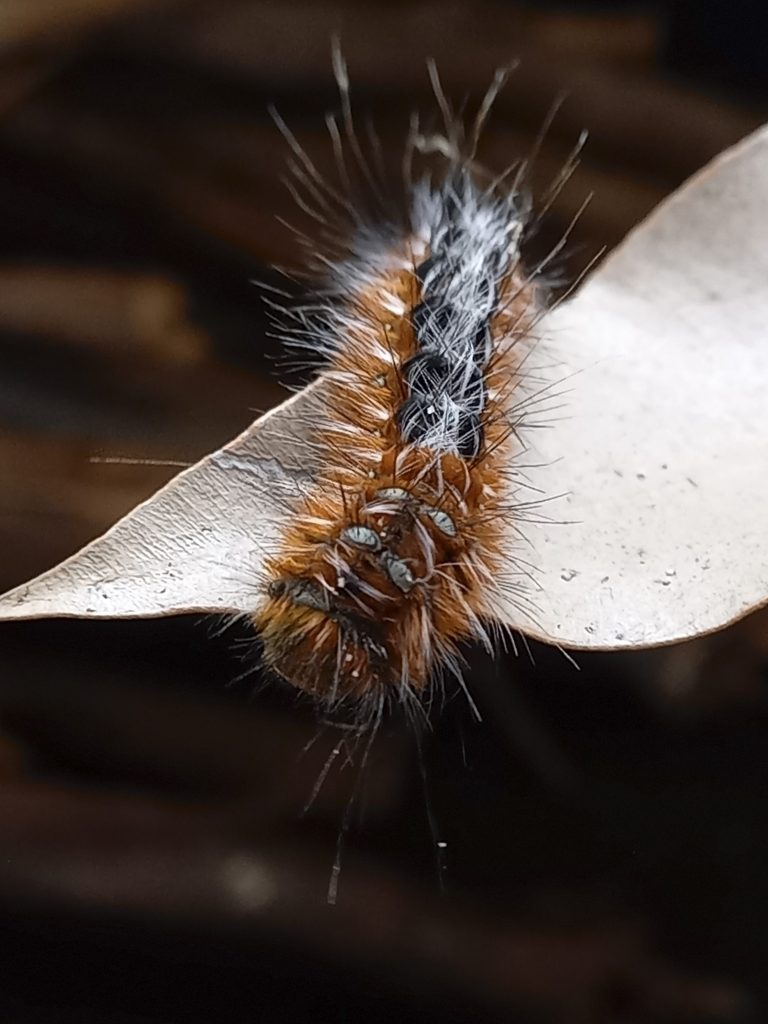
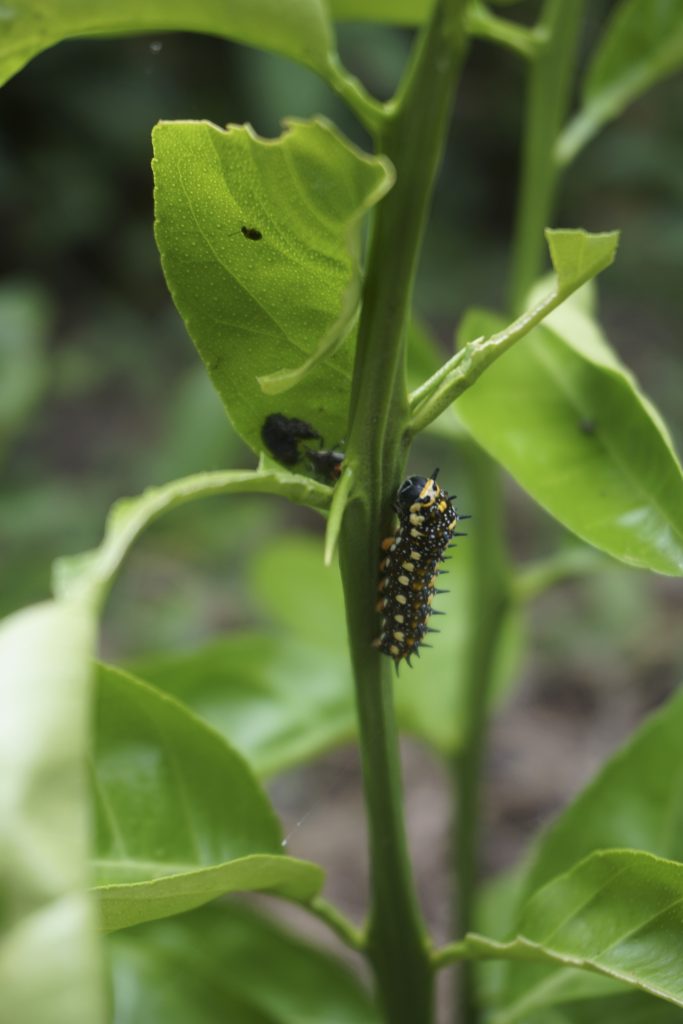
The second part of the talk, “Muscles for Hire”, focused on one of nature’s most intriguing partnerships: the relationship between Lycaenid caterpillars and ants. By producing nutritious sugary secretions, these caterpillars effectively recruit ant bodyguards to protect them from predators and parasites. Through specialised glands and even vibration-based communication, they maintain a mutually beneficial alliance that has evolved over millions of years.
A particularly creative interlude featured Jasper’s original prose piece, Crepuscular Procession (May 2026), written from the perspective of the attendant ants themselves. The work offered a unique and imaginative insight into the complex world of insect interactions.
The final section examined the fascinating question of whether memories can survive metamorphosis. Studies on moths have demonstrated that caterpillars can retain learned behaviours after transforming into adults, challenging the long-held popular belief that the caterpillar is entirely dissolved and rebuilt during pupation. Jasper also shared the inspiring story of Japanese student researcher Jo Nagai (age 8), whose experiments with Swallowtail Butterflies contributed valuable new insights into memory retention across life stages.
Throughout the evening, Jasper’s enthusiasm for insects was infectious. Combining rigorous science with humour and storytelling, he encouraged members to look beyond the common perception of caterpillars as simple leaf-eating larvae and instead appreciate them as complex, resilient and often astonishing creatures.
The presentation was both informative and highly entertaining, leaving attendees with a renewed appreciation for the extraordinary adaptations and behaviours found within the world of Lepidoptera.
Created by Arlene Quinn and AI from notes by Jasper Dean