

A good turnout of 14 members and visitors joined hosts Bob and Lynette Goodale on a fine autumn morning. Bob provided a rundown of its history and the flora and fauna for new visitors to the property. He explained that the low rainfall over autumn meant the lakes were still dry and no water birds were present. It also meant that there would be very few fungi to be found.
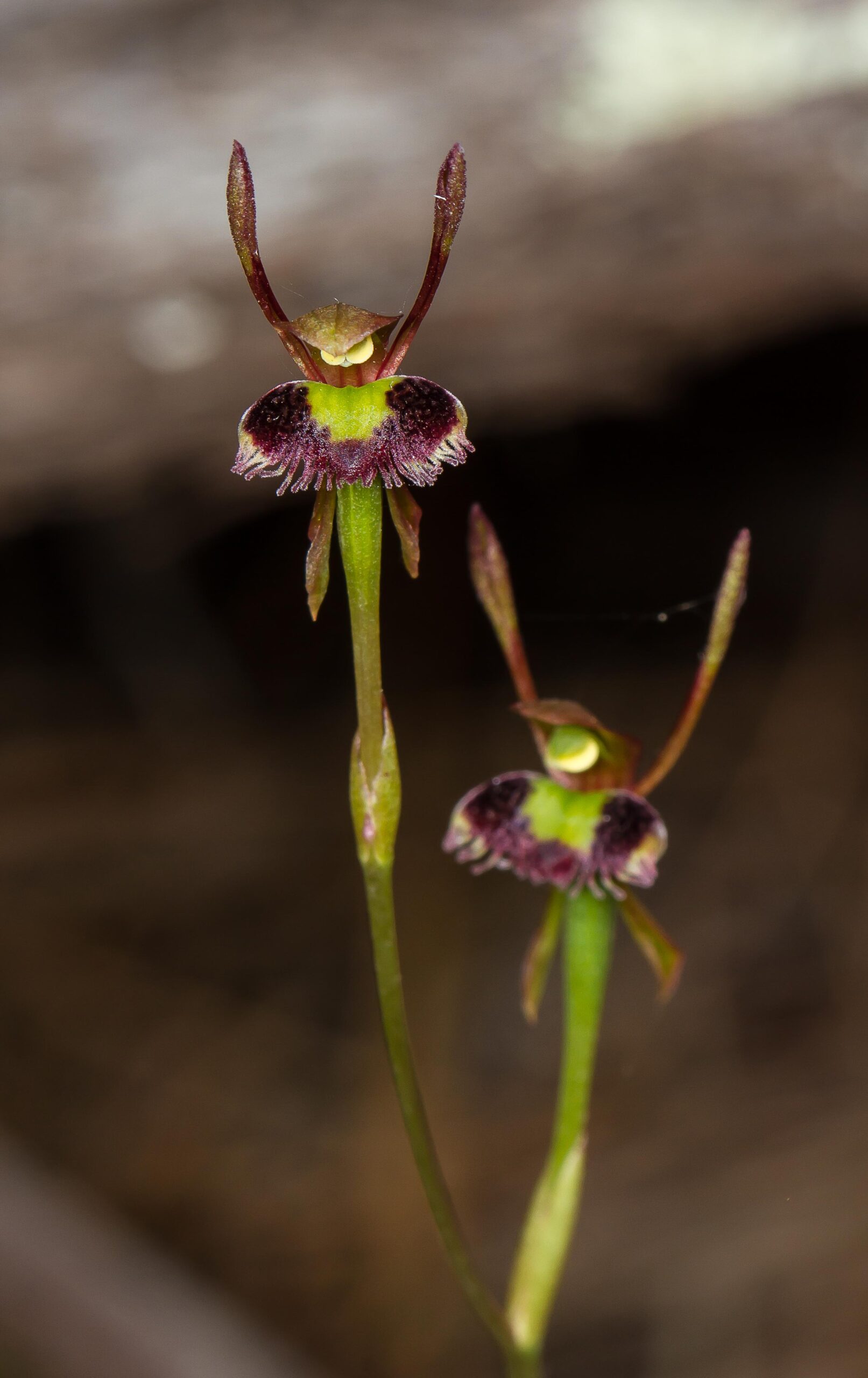
Bob then took us to a spot about 10m from the carpark where a nice group of Hare Orchids (Leporella fimbriata) were in flower.
As we left the Hare Orchids, we found a small clump of tiny Pygmy Droseras, believed to be Drosera pulchella, that appeared to be in bud.
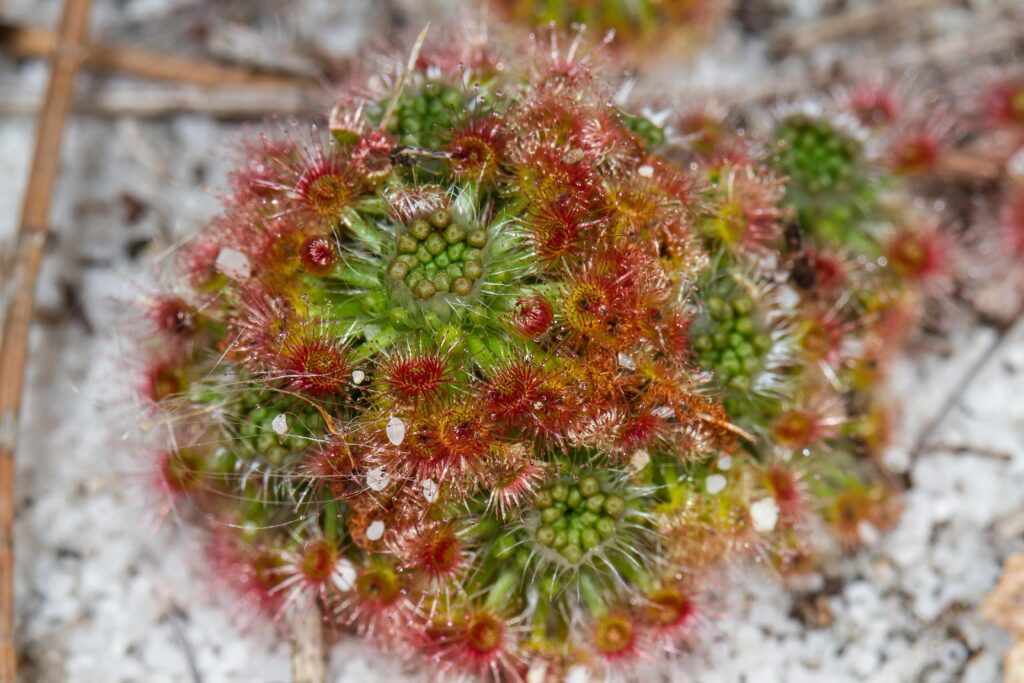
The buds were, in fact, Gemmae, which the plant produces at the start of winter and that provide a means of asexual reproduction. The plant can produce up to two dozen gemmae, each producing a new plant. If conditions are right, this can result in new mature plants within six months, enabling a group of Pygmy Droseras to expand at a fast rate.
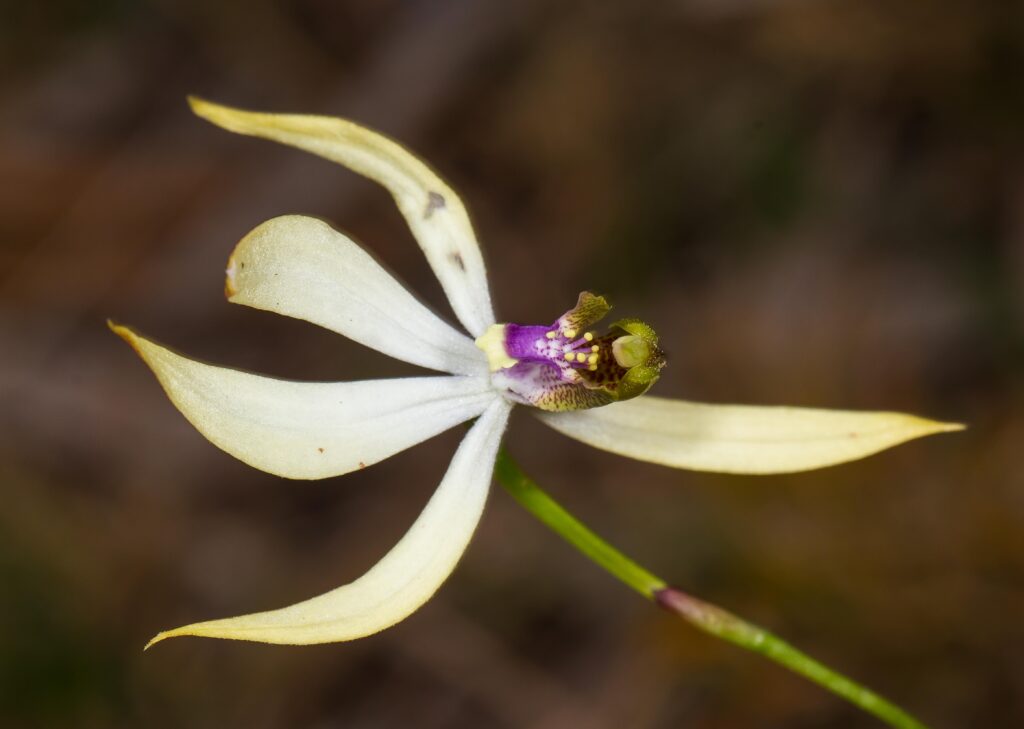
Bob next led us to a spot where a Leafless Orchid (Praecoxanthus aphyllus) was still in flower, a definite bonus as it was expected that they would have all been finished. This allowed many of our group to get their first look at this pretty orchid species. We then made our way along the limestone track to the back boundary of the property. On the side of the track, a little white heath-like flower, Styphelia propinqua, was in flower. Other groups of Hare Orchids would also be seen throughout our walk.
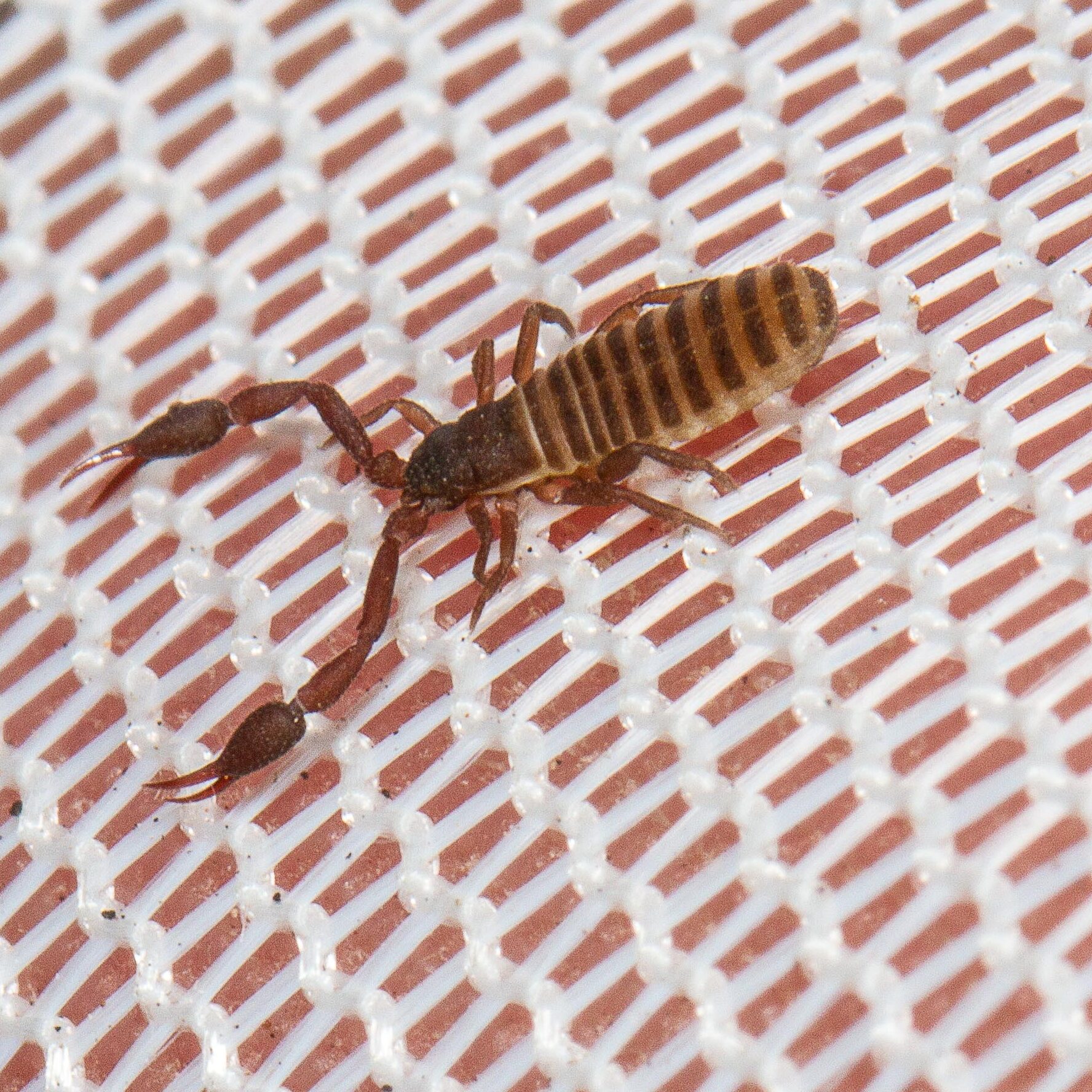
Daniel Heald was putting our butterfly nets to good use, and on a small hakea shrub, he found Red and Blue Beetles (Dicranolaius bellulus), a nice sighting. He also found some Dolichoderus niger ants farming honeydew (see Daniel’s Post). He commented that this is a rarely collected species. We also found an Anthelid moth caterpillar, Pterolocera sp. At the start of the parallel track that would take us back towards the lake, Daniel shook some fronds of a grass tree (Xanthorhoea sp.) and found a large number of Brown Shield Bugs (Dictyotus caenosus) plus two tiny Chernetid Pseudoscorpions from the family Chernetidae. Also, in the same area, we found two beautiful specimens of Southern Oyster Mushroom (Pleurotus australis) on the trunk of a Eucalypt, a surprising find given the dry conditions.


Arriving at the boardwalk that goes out to the lookout over the lake, we made our way out to the lookout and looked out onto the dry lakebed. A small shrub, Astartea fascicularis, was in flower along the boardwalk. Other plants in flower were Menzies Banksia (Banksia menziesii), Hibbertia hypericoides, Calytrix Fraseri, the Matted Trigger Plant (Stylidium repens) and the Common Bunny Orchid (Eriochilus dilatatus subsp. multiflorus).
From the lake, we returned to the house for a well-earned cuppa and some snacks (a special thank you to new member Sabine for bringing the cherry pie). Bird sightings had been rather few in the early part of our visit, but thanks to Gillian Beadell, our bird list would rise to a total of 22 species as follows: Wood Ducks, Carnaby’s Black Cockatoo (heard only), Galahs, Australian Ringnecks, Splendid Fairy Wrens, Weebills, Western Gerygone, Inland Thornbills, Red Wattlebirds, Brown Honeyeater, Western Spinebills (male & female), Scarlet Robins (male & female), Grey Shrike Thrush, female Rufous Whistlers, female Western Whistlers, Grey Fantails, Willie Wagtail, Black-faced Cuckoo Shrike, Australian Magpies, Australian Ravens, Tree Martins and Silvereyes.
As always, it was great to visit this wonderful property. Thanks to Bob and Lynette for hosting the visit. It was much appreciated by all involved. For more photographs from the visit, check out Sophie Xiang’s post on the KRMB Facebook Page Sophie’s Post.
Colin Prickett
All images by Colin Prickett