

Our fingers were crossed when we decided to advertise our May meeting as Frogs, Specimens and Books. We knew the frogs would come out if it rained, but would our members do the same? They did, and instead of rain, we had a perfect night for a walk around Star Swamp, with the temperature at 8.30 pm hovering around 18° C . Of course, this was not good weather for frogs. We had hoped for three or four species, but despite our circumnavigation, we had only heard the very distinctive call of one species, the Moaning Frog. Although we heard maybe as many as six individuals, none was close enough to the swamp’s edge to record on the FrogID app, which most people had loaded onto their phones before leaving the Environment Centre (HEC).
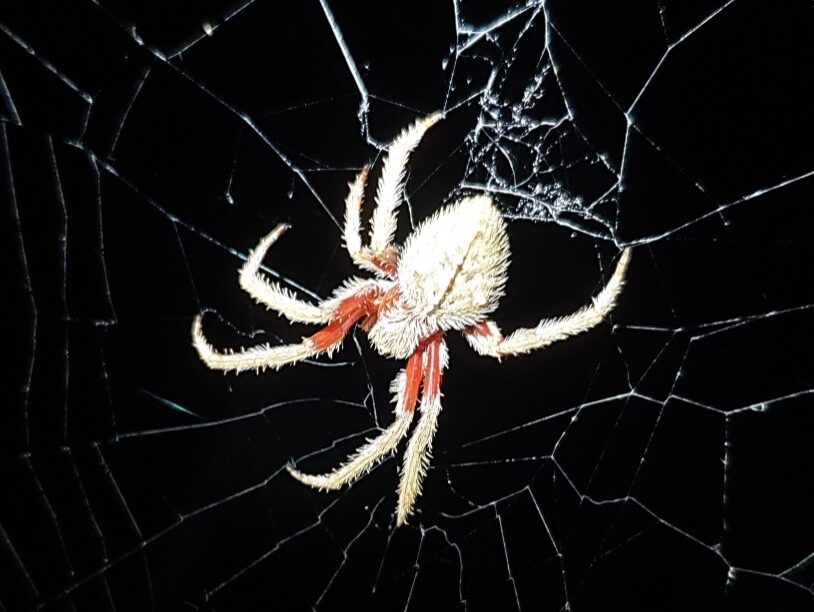
The walk did come up with some other interesting observations. We saw several Leaf Curling Spiders, but the ones to show up in our torchlight were the female Garden Orb Weavers with their brilliant red legs.
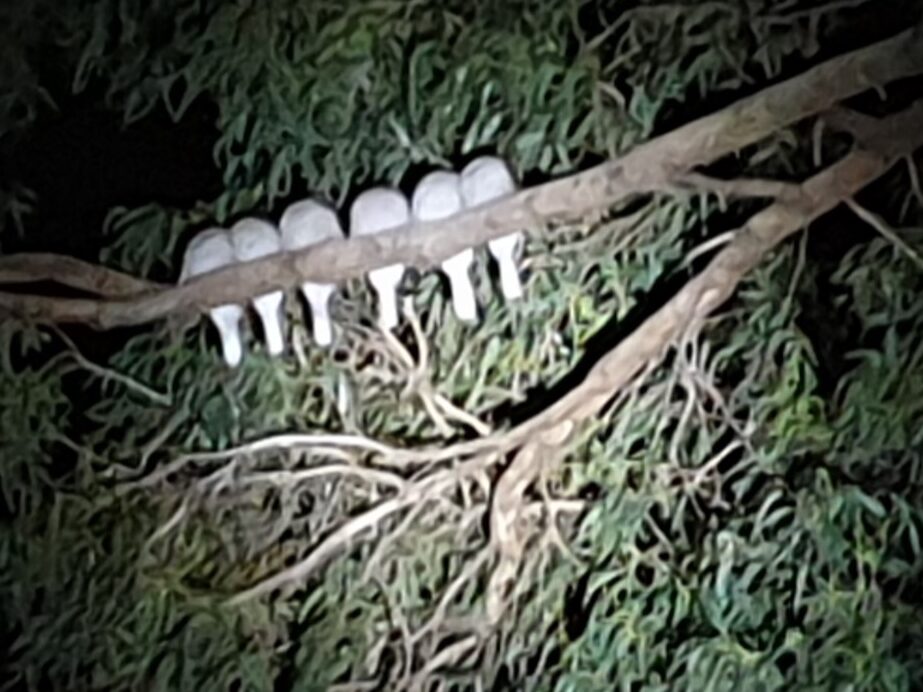
However, the ” find” of the night was by chance. While flashing her spotlight into the high branches of a Tuart tree, Sylvia Tetlow chanced upon six white fluffy bellies and tails of a family of Kookaburras perched only centimetres apart. As we watched, they were joined by a seventh family member. But of course, because no one had a camera with a long-distance lens – we were all carrying phones (so we could use the FrogID app) – a great photo opportunity went begging. Given the circumstances, I must credit Pam Ghirardi for her phone shot.
Back at the HEC, members were given the rest of the night to discuss specimens and books they had brought along.
Margaret Szymakowski would have been the probable winner if there had been a prize. Margaret brought along her mother’s Zoology and Biology exercise book, which contained dozens of detailed hand-drawn illustrations in Indian Ink and water colour.
Hand-coloured illustration by Thelma Mason, Perth Girls School, 1925.
Image by Margaret Szymakowski
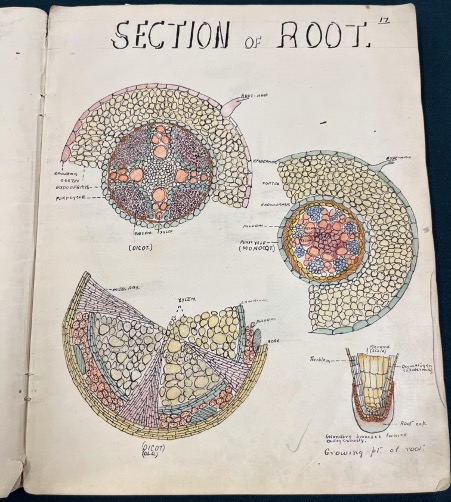
The book is almost one hundred years old. It demonstrates how children of that time learnt by copying and sketching specimens, cross-sections and the detailed structure of natural history and biological specimens.
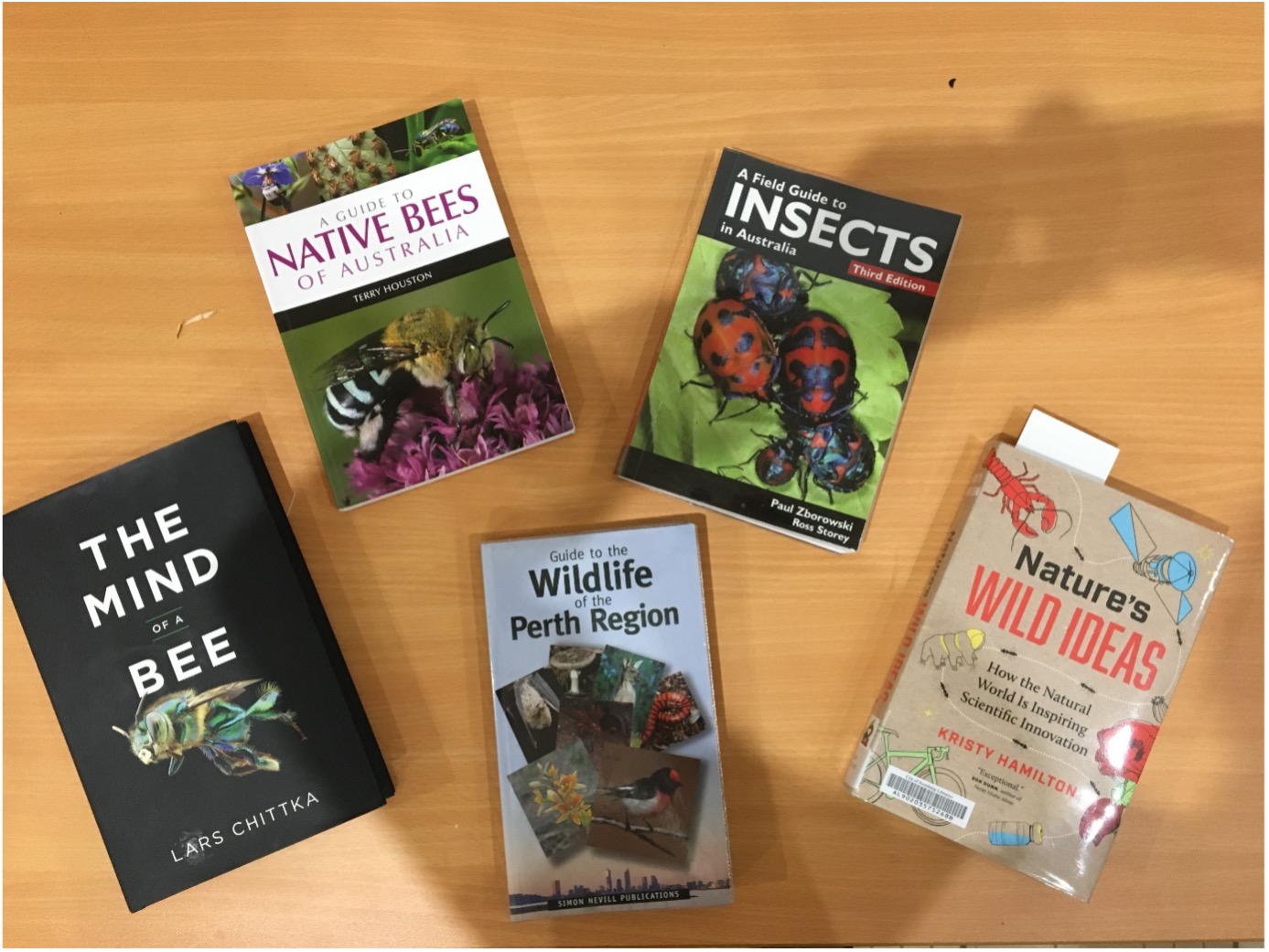
Terry Houston, our bee expert, spoke enthusiastically about a new book, The Mind of a Bee, by Lars Chittka, an author he was unfamiliar with. He admitted he was finding out things that, even with so many years of knowledge, he was astounded to learn.
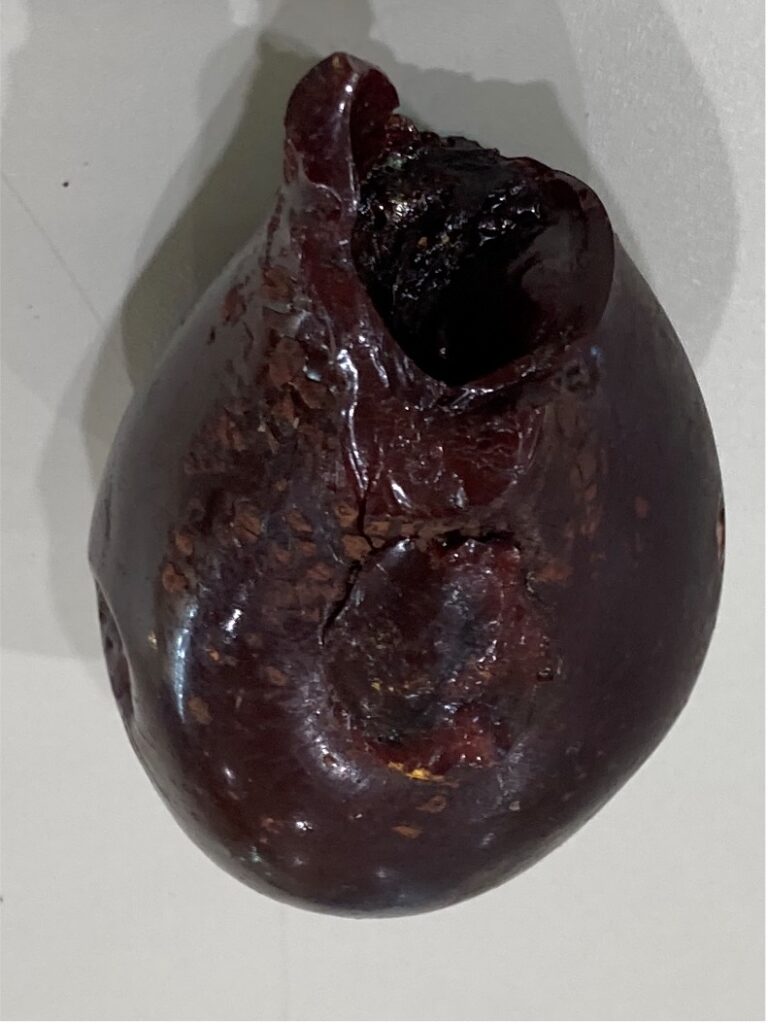
A large, 10cm tear-shaped piece of ruby-red resin from a grass tree was among the specimens. Don Poynton explained that not all grass tree resins were red, as the name Xanthorrhoea means “yellow flow”.
Image by Christine Curry
Don also explained the term “Hard Yakka” comes from the 1920s when non-indigenous men in the eastern states undertook the strenuous work of cutting down the local species known as ‘Yacca” or “Yakka” and separated the resin for use in explosives, varnish, incense and even as an alternative to shellac gramophone records. A night with a difference but enjoyed by all.
Don Poynton