

DRB Nats 11 February 2022
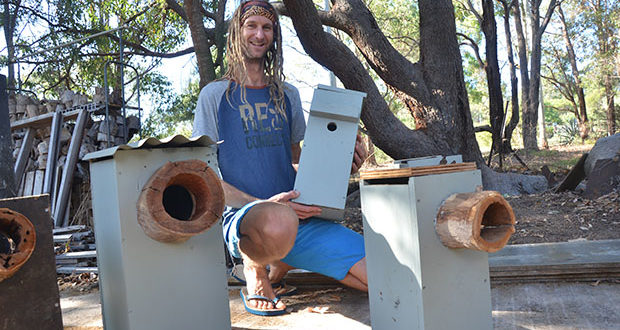
Simon Cherriman is well known for his in-depth knowledge, understanding and devotion to Wedgetail Eagles. However, at the DRB, we discovered he also knows an enormous amount about the importance of tree hollows and is currently finishing a book on the subject.
picture courtesy Echo News
Simon covered a great deal of information and presented a historical perspective of land clearing and colonisation attitudes and their negative impact on wildlife. Here are just a few of the key points he raised:
- Tree hollows can take a very long time to develop, not ten years, not 50 years but in some cases over 200 years. This means that a tree planted when the colony was begun would only now give us the best tree hollows.
- It is very important to preserve our old trees and not just plant new ones.
- Marri trees are more prone to termite attack than jarrah trees and are more likely to develop hollows.
- Hollows are used by a variety of wildlife and are essential for their survival.
- Not all dead trees or dead tree limbs automatically have hollows in them. Some live trees do have hollows in them.
- Nest boxes need to vary in style, size, and structure. It is best not to think that “this is a red-capped parrot box” but instead be open to whatever uses the box.
- European honeybees are the biggest cause of problems for nest boxes and can damage or destroy other wildlife.
- Through his business Re-Cyc-Ology, Simon has now developed ways to reduce the invasion of bees in his boxes. He puts metal roofs on them, which get too warm for the bees, and he leaves a slight gap at the top so light, and air can get in, which the bees don’t like.
- The increasing intensity of forest fires is not just due to climate change. Some of it is due to land clearing and the removal of the big old trees. In a fire, the big old trees burn more slowly. If these are removed, the remaining younger trees are like the kindling on a fire – they burn more quickly. We need to keep our old trees. Full stop.
- Many wildlife habitats are destroyed by fire, and it is vitally important to replace the habitat as quickly as possible after the fire. Simon has an impressive record of having personally installed 250 nest boxes across 25 properties immediately after the Wooroloo fires.
His talk was a brilliant start to 2022, and many will be eager to read his book “Hollowed Out?” when it’s finished. Thank you, Simon!
DRB Team
Further information:
To go on Simon’s mailing list for updates about the book: aquila84@iinet.net.au
To find out about tree hollows, nest-boxes, habitat creation or school/community group environmental education packages and workshops, contact Danielle: re-cyc-ology@iinet.net.au